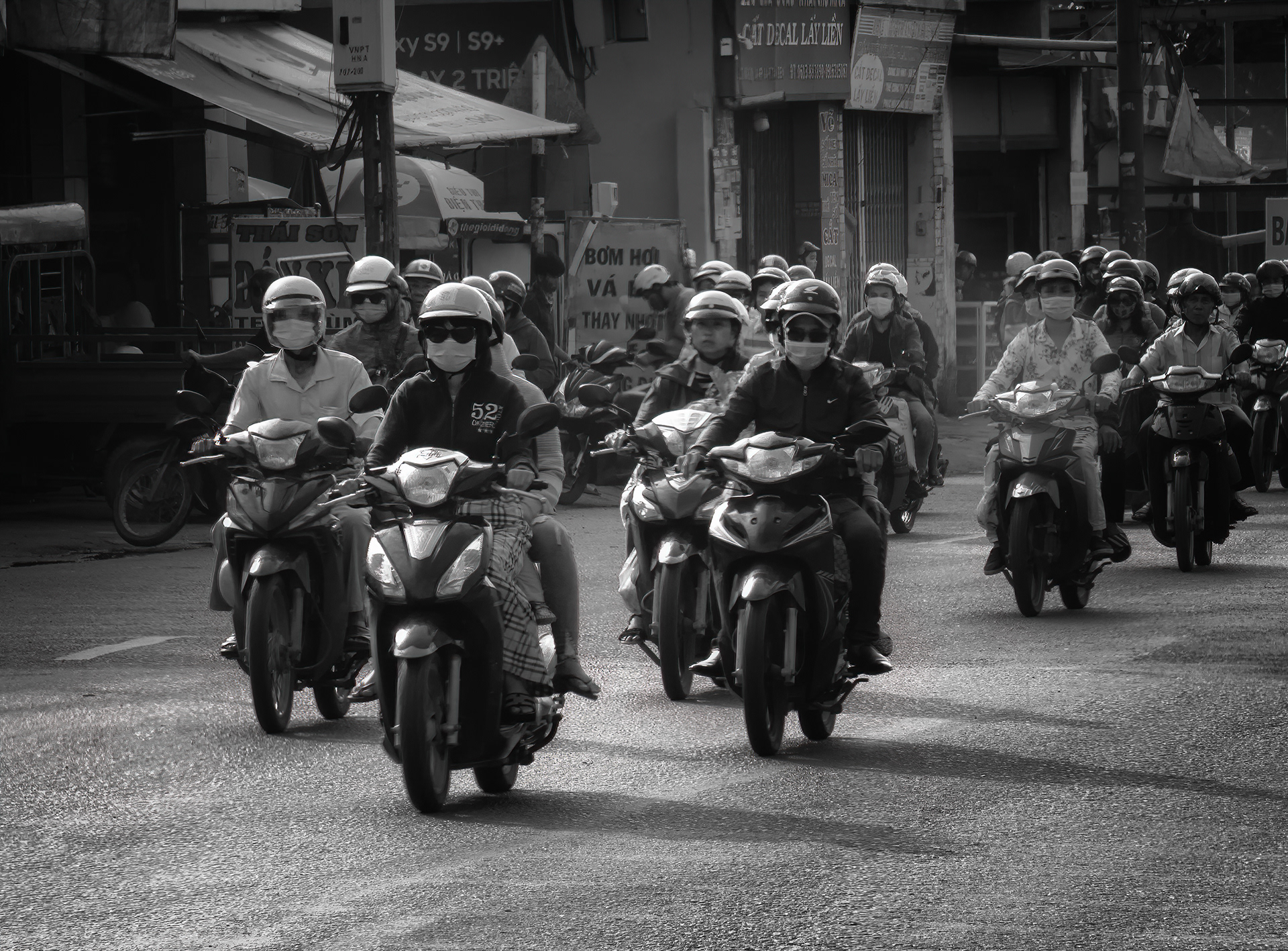
Biên Hòa, Vietnam. Seventy-seven million motorbikes in this country — more per person than almost anywhere else on earth, 85 to 90 percent of all traffic. I'd been in the country a couple of days and wasn't ready for it. I pulled my rented bike to the curb just to watch. Eventually I stopped fighting the current and learned to move with it. After that I felt safe. Well — safer, if we're being honest about it.
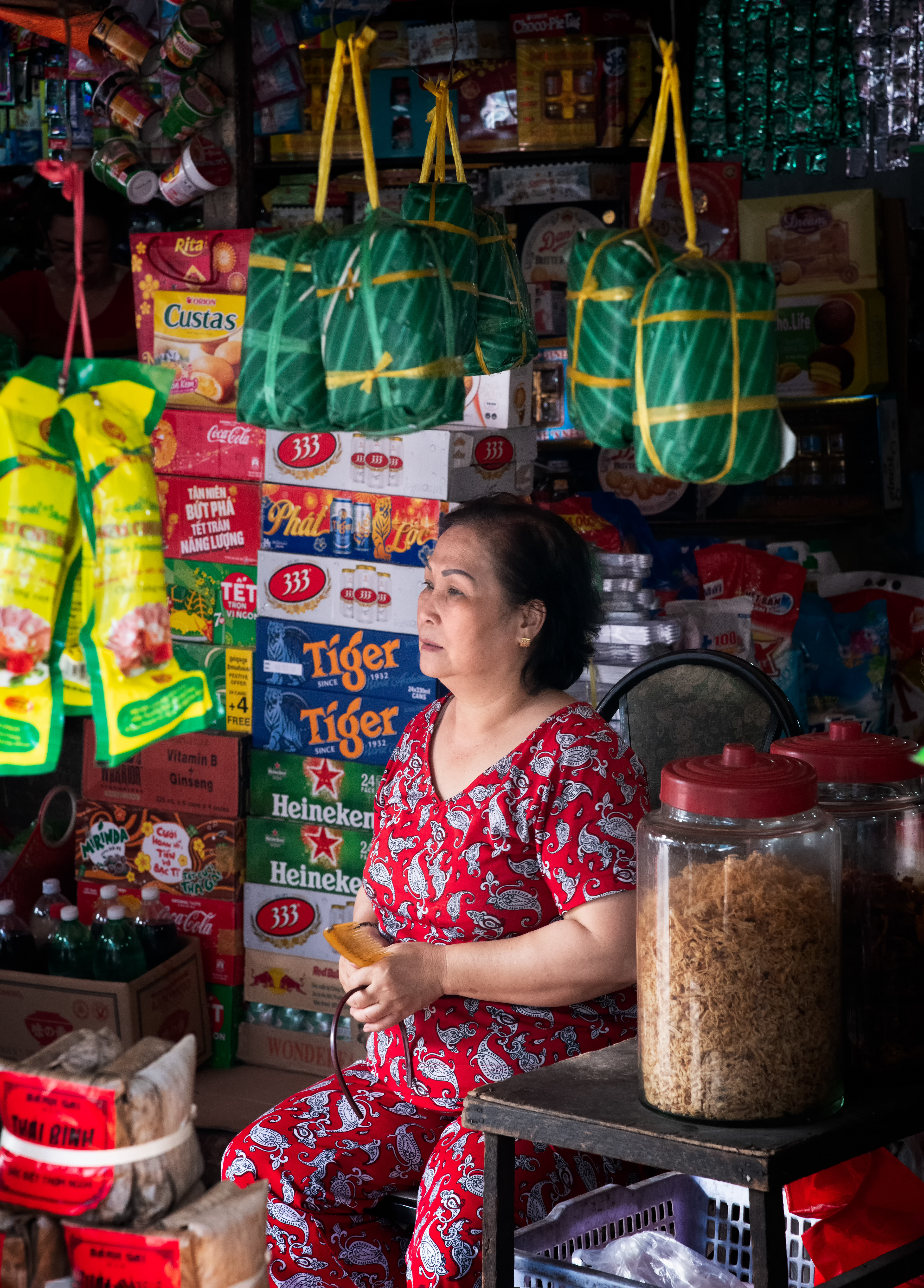
A shopkeeper on the road, Biên Hòa — bánh tét hanging behind her, sticky rice and pork wrapped in banana leaf, boiled half a day. Best known as Tết food, but eaten here year-round. In the south they say the cylinder shape stands for the sky, the way the north's square version stands for the earth.
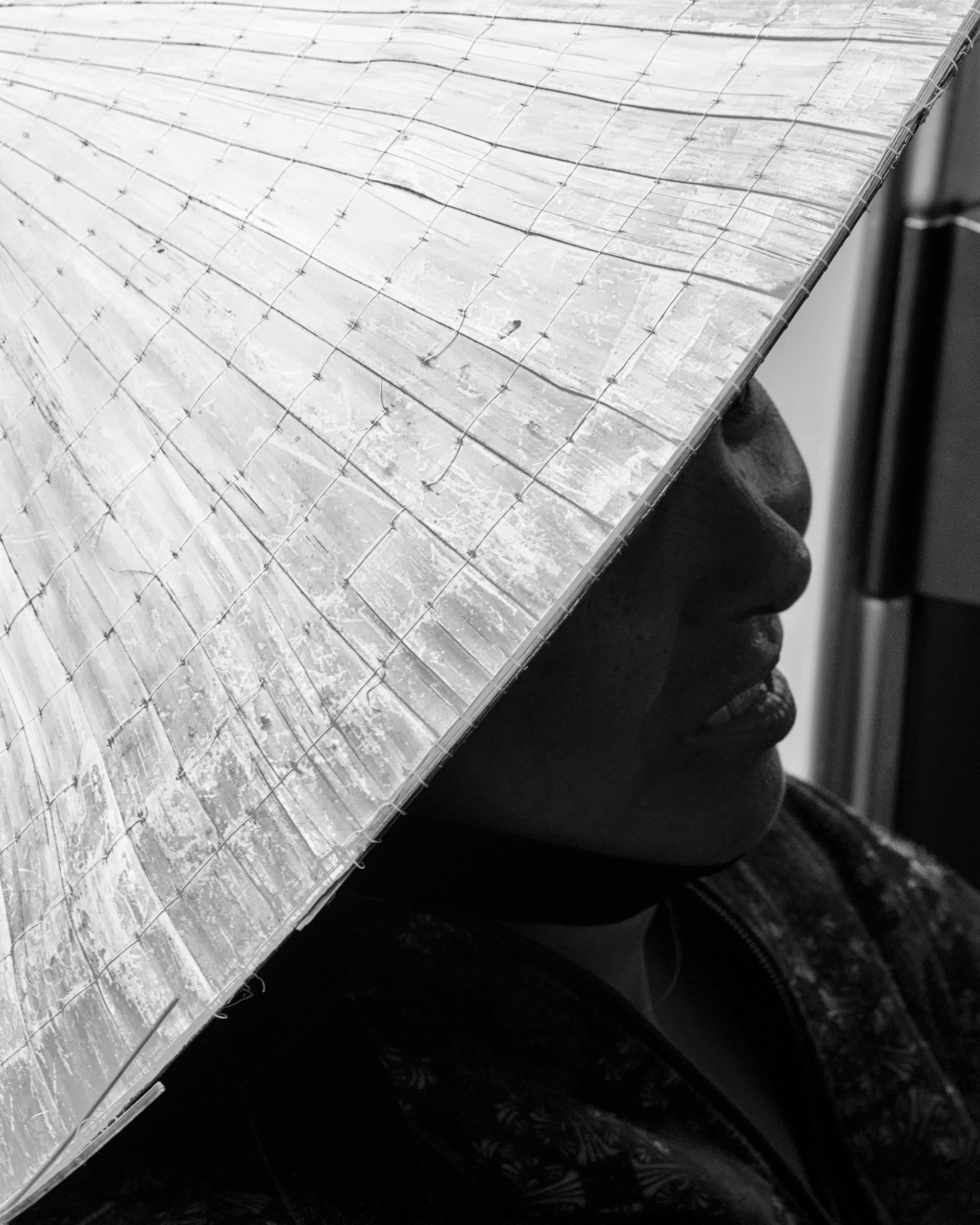
A woman under a nón lá, Biên Hòa — caught while walking the streets. The hat's shape goes back over 2,500 years; bronze figures wearing them show up in ancient rain ceremonies for the harvest. Palm leaf stitched over bamboo rings, tilted just enough to leave half a face in shadow.
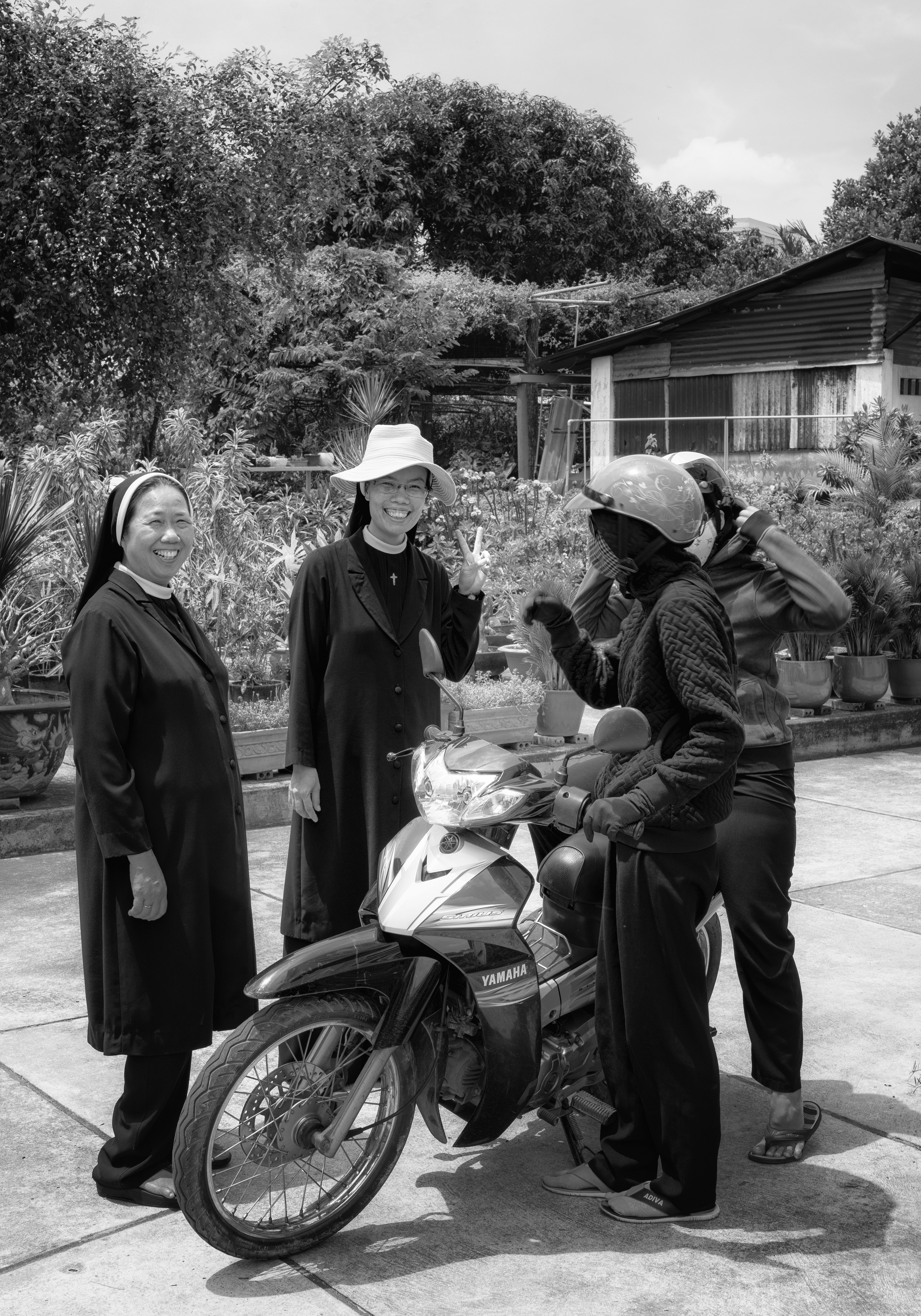
Saigon, 2018 — my aunt's Jubilee, call it Golden (fifty years, more inference than fact), though nobody actually confirmed it. Meanwhile, unbothered by any of this: two sisters laughing, one throwing up a peace sign, two more half in their helmets, ready to ride off like none of it happened.
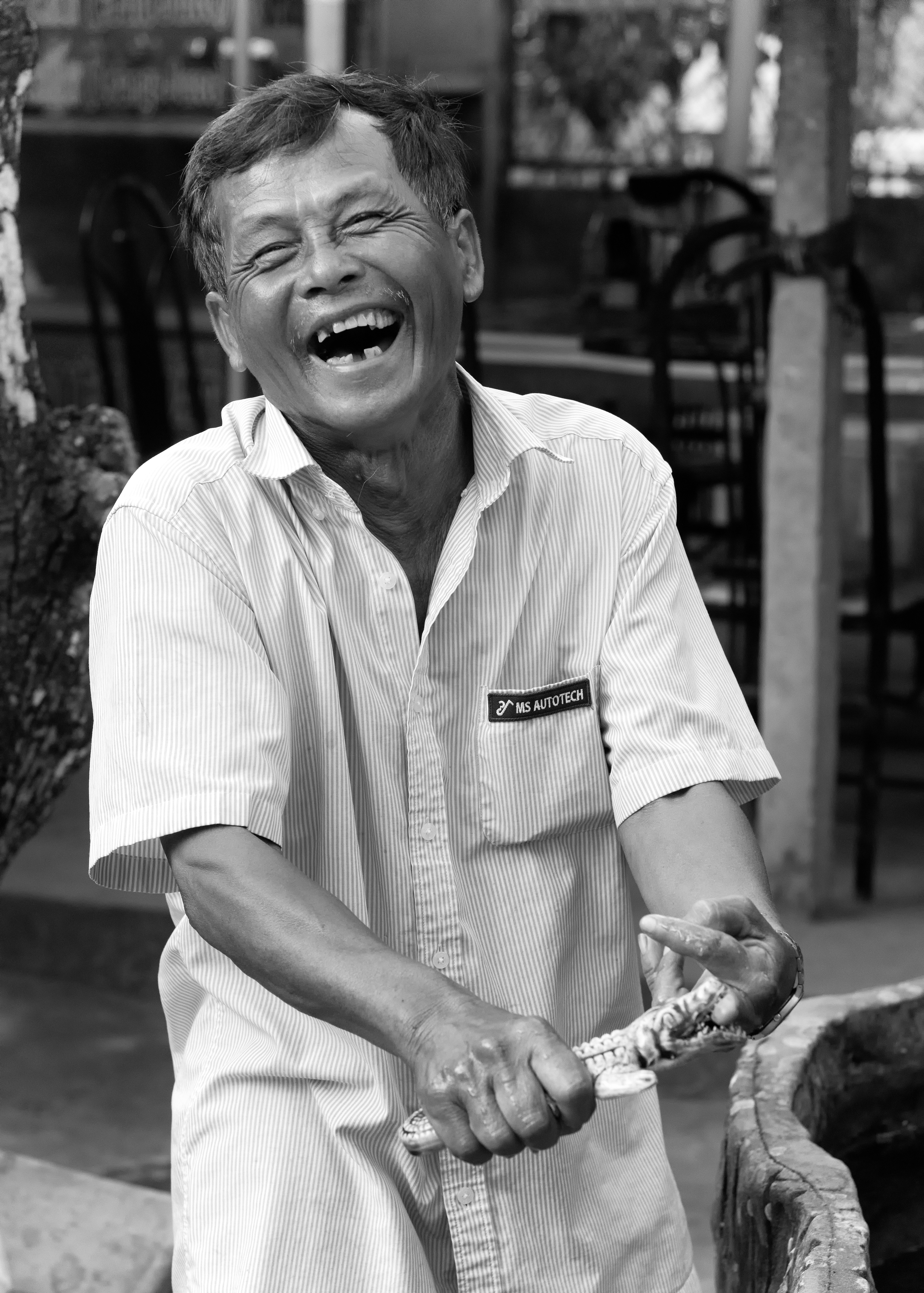
The captain of my boat into the Cai Rang floating market — Mekong Delta, near Cần Thơ — spoke maybe four words of English, which turned out not to matter. At some point, apropos of nothing, he pulled a plastic alligator from his pocket and staged a full assault on his own middle finger, laughing the entire time — which is more or less the whole story, and somehow enough.

A woman making rice paper near Cần Thơ, Mekong Delta — a stop along the way to (or from, I genuinely can't recall which) the floating market. Batter spread into a circle with one sweeping motion, steamed under a bamboo lid for less than a minute, then lifted off with a stick before it goes out to dry in the sun — a craft some villages here have kept going, more or less uninterrupted, for over 200 years.
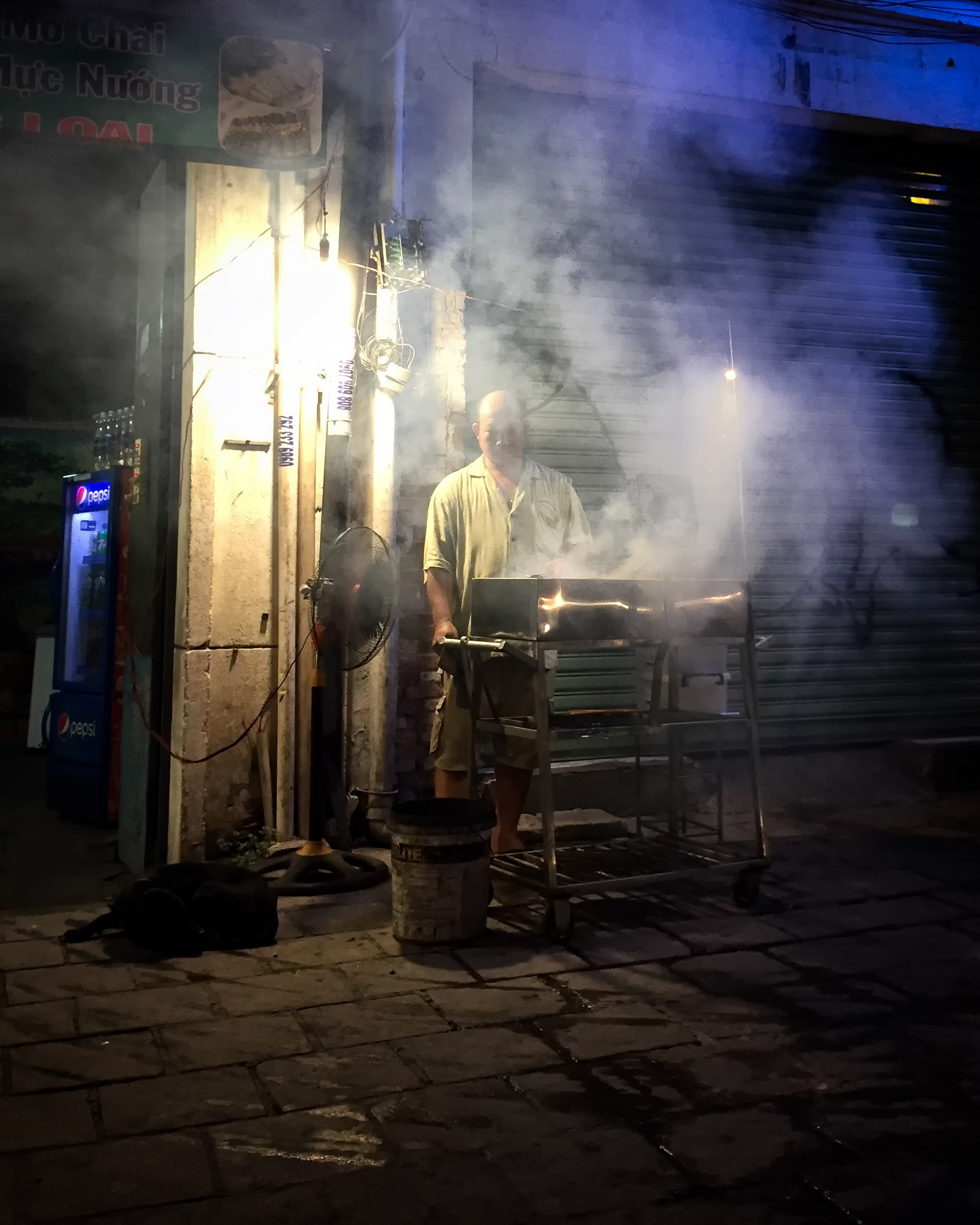
A street vendor grills bò lá lốt in an older residential district of Saigon — maybe District 3, though I'm not certain — beef wrapped in wild betel leaf and cooked over open flame until the whole block smells like it. Real betel leaf, the kind chewed with areca nut, is a different plant entirely — this one's just the fragrant cousin.
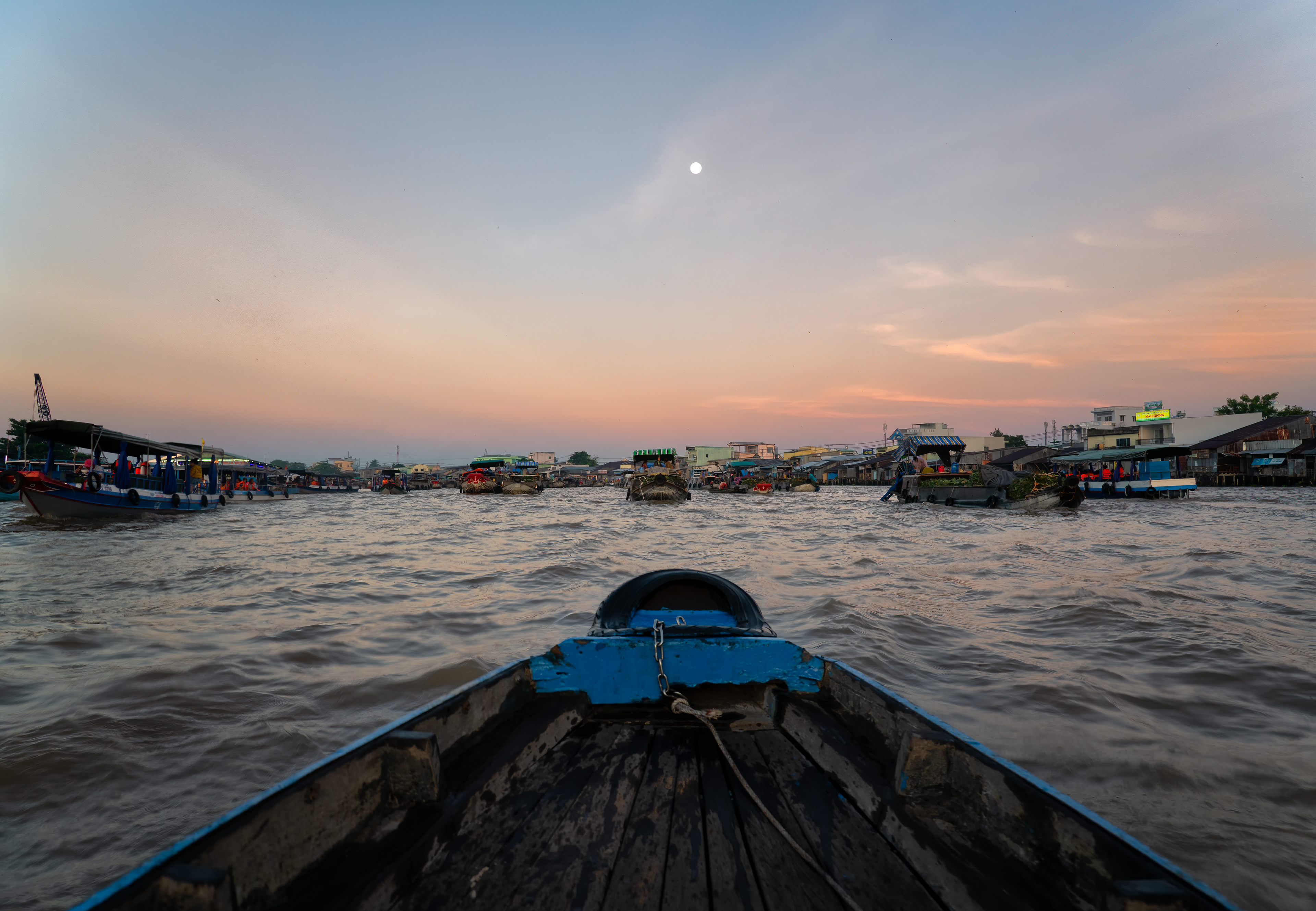
Approaching Cai Rang, the largest floating market in the Mekong Delta, at first light. Vendors here don't shout their goods — they hang a sample from a pole so you can see it from the water. Same boat, same captain, same morning. I don't know where his alligator is.

Mekong Delta. A woman sits in her boat, studying her own open hand — a splinter, maybe, or a blister, I couldn't tell. Her toes had worked their way out through her socks, which struck me as funny in its own small way. Not the reason behind it. Just the toes.

Mekong Delta, daytime — though you'd never know it here. A man cuts tile under a bare bulb, working in deep shadow with a concrete mixer waiting behind him. Dust hangs in the air like it has nowhere else to go. He never looked up — just kept working.
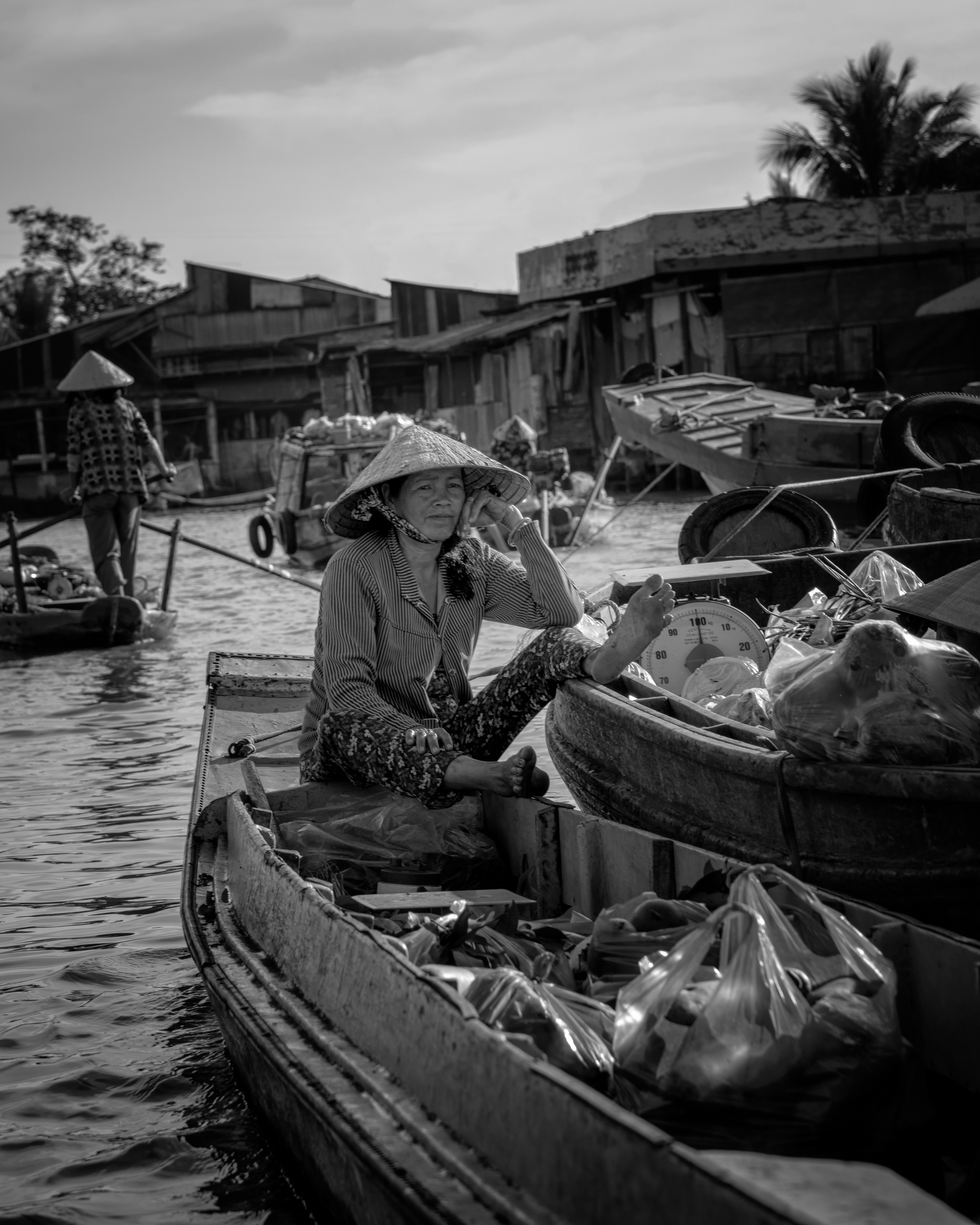
Cai Rang floating market, mid-morning. A vendor sits with her produce bagged and ready, the scale hanging beside her — but the buyers hadn't shown up yet. It was already warm, and she looked like she'd been waiting a while.
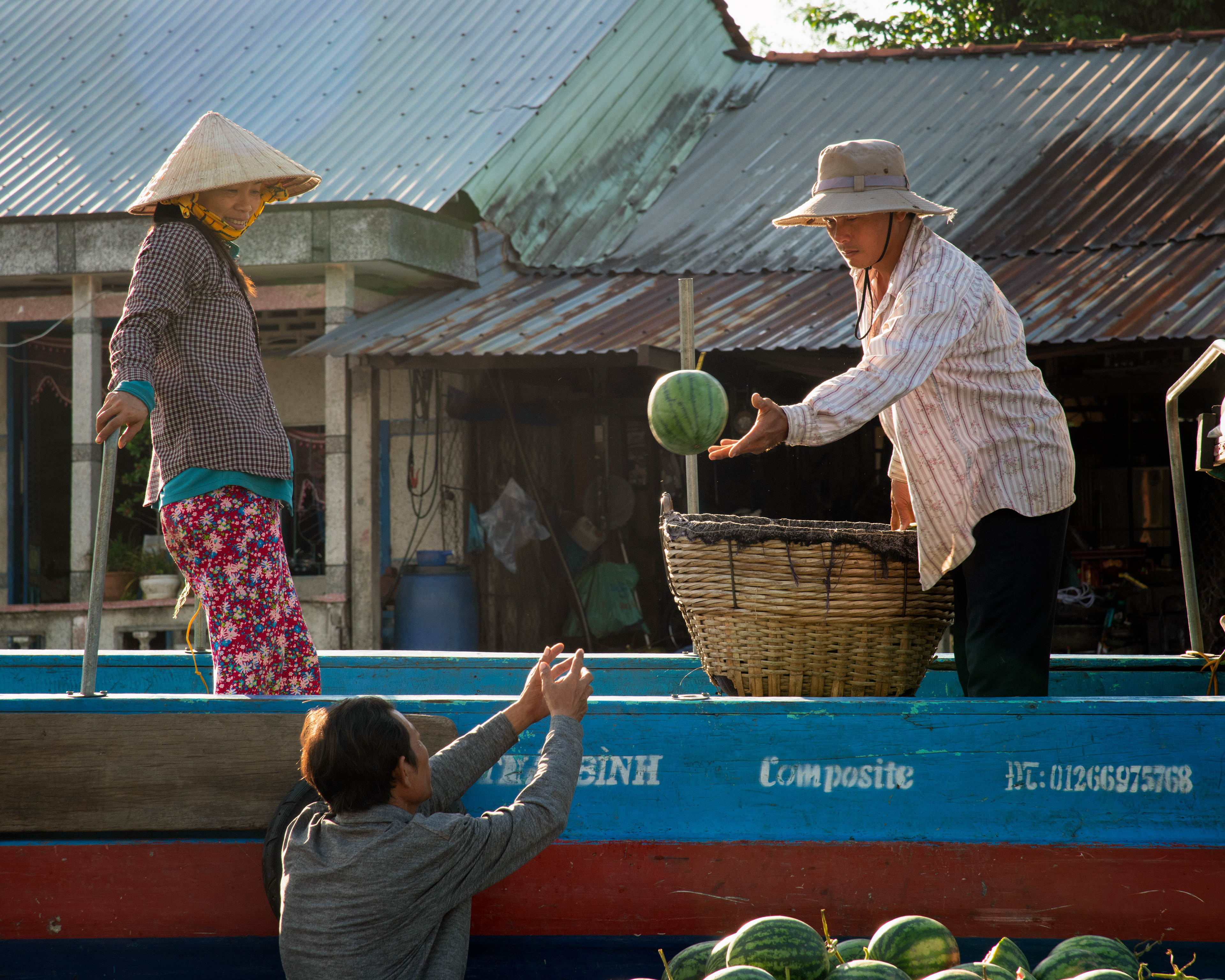
Cai Rang floating market. Two men toss watermelons hand to hand, boat to boat, faster than they look like they should. A woman looked on, smiling the whole time.
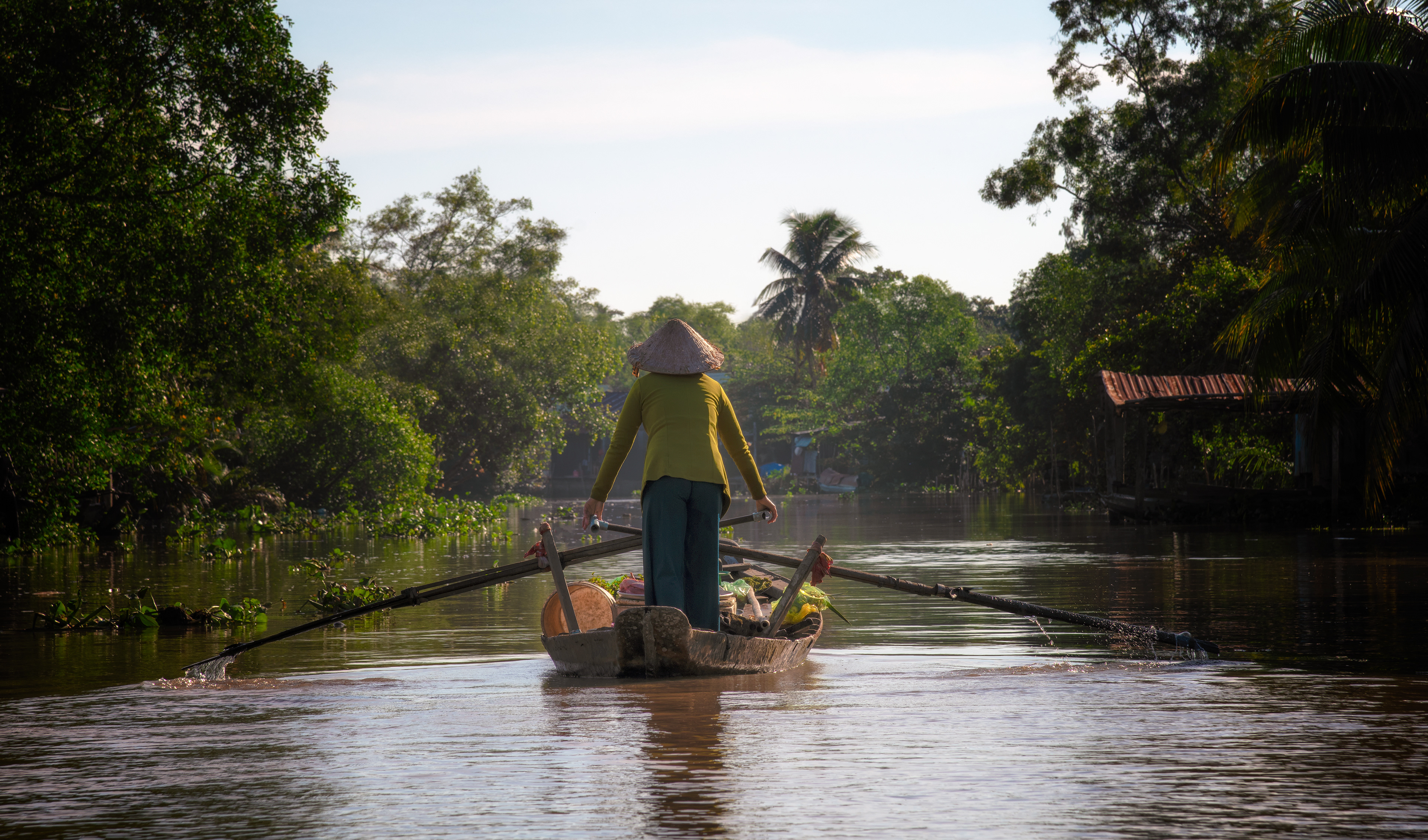
A canal in the Mekong Delta, the trees along it thick with fragrant flowers — the alligator man idling well back so I could shoot this on a longer lens without breaking the quiet of it. One of my favorites from the trip — not for anything technical, just the calm of the whole place.
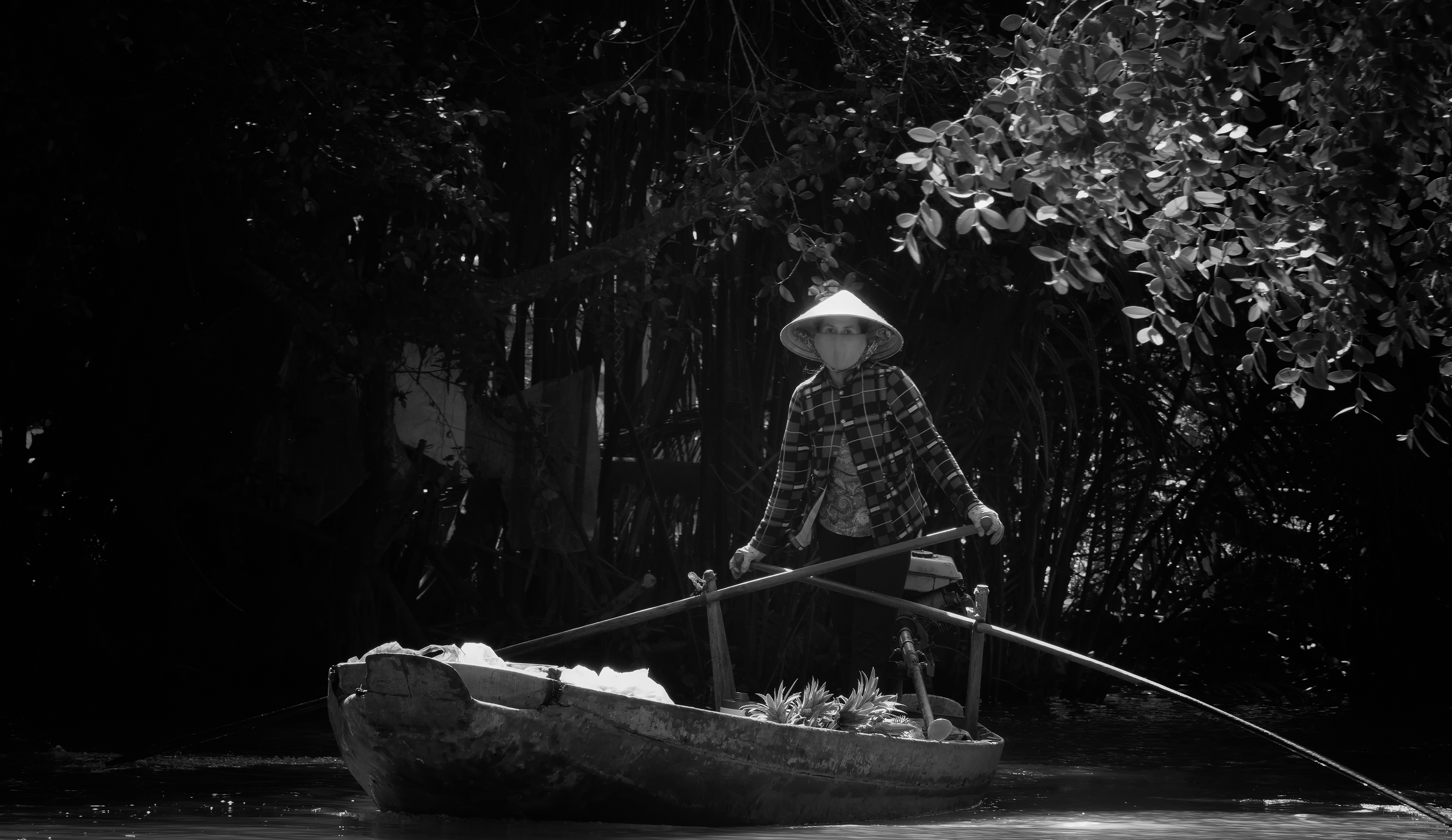
A smaller canal branching away from the main river and market. She was heading home with fresh produce — pineapples visible in the boat — caught for a moment in a shaft of light before disappearing back under the trees.