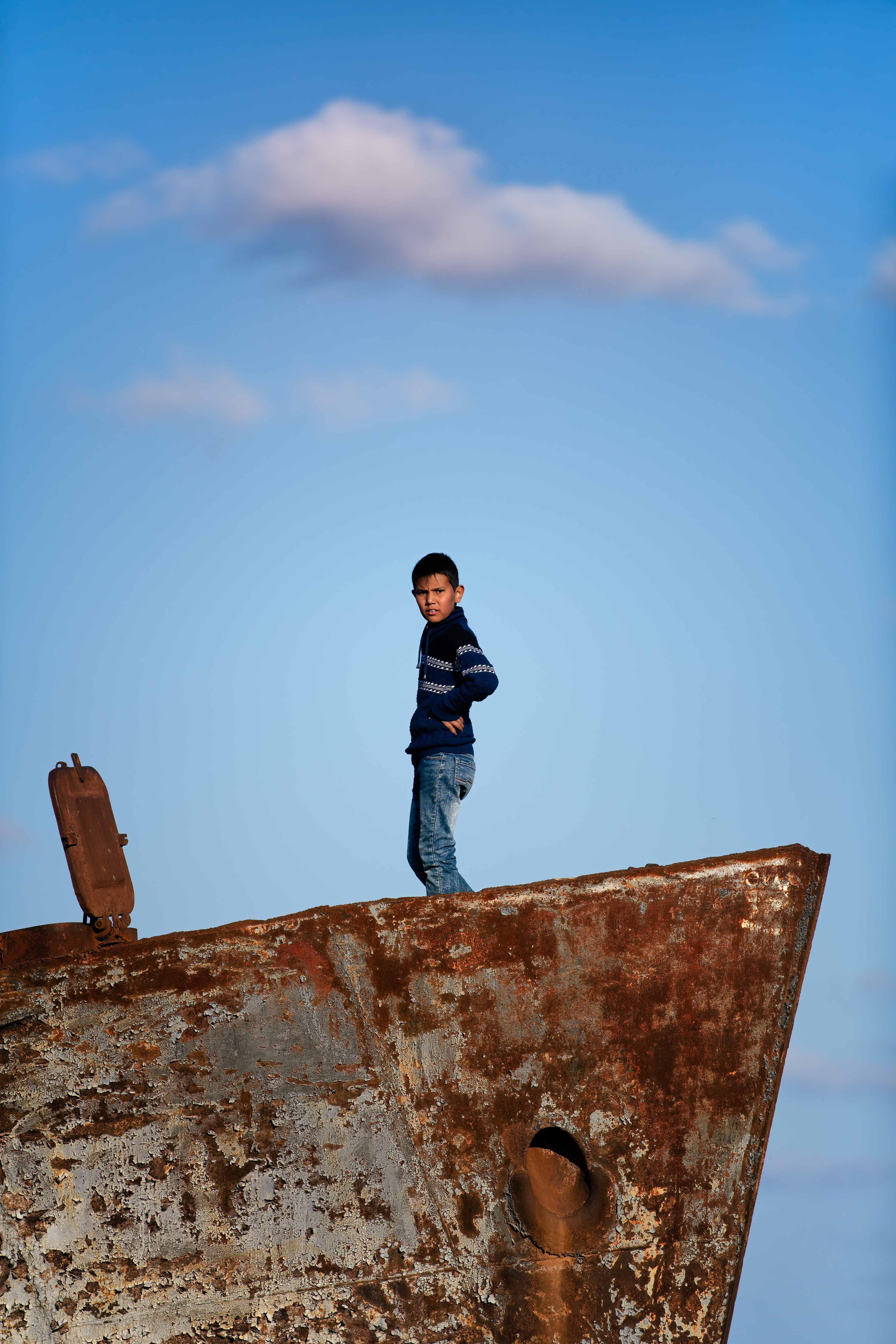
Moynaq, on what used to be the Aral Sea — the fourth-largest lake on earth, before Soviet engineers rerouted the rivers that fed it toward cotton fields. By the late nineties it had shrunk to under a tenth of its size, and ten thousand fishing jobs went with it. The water now sits more than a hundred kilometers away, which is to say: not close, just gone. What's left are these rusted hulls in the sand — and kids climbing all over them, waving me over for a picture.
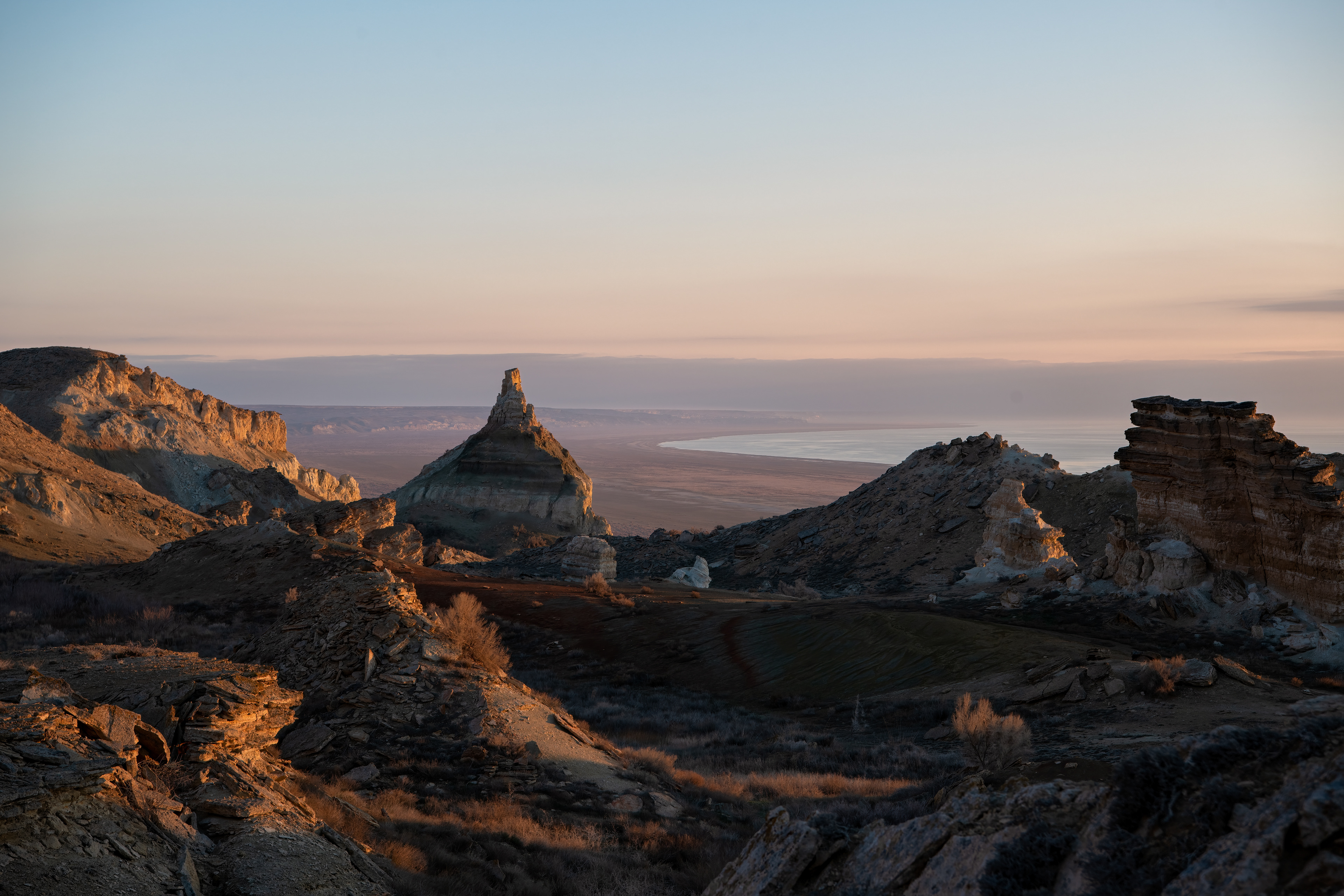
The Ustyurt Plateau. We stayed the night in a yurt camp perched on its edge, the cold cutting through everything — ground that's carried people since Neolithic fishing settlements, six or seven thousand years back, long before there was a sea here to lose.
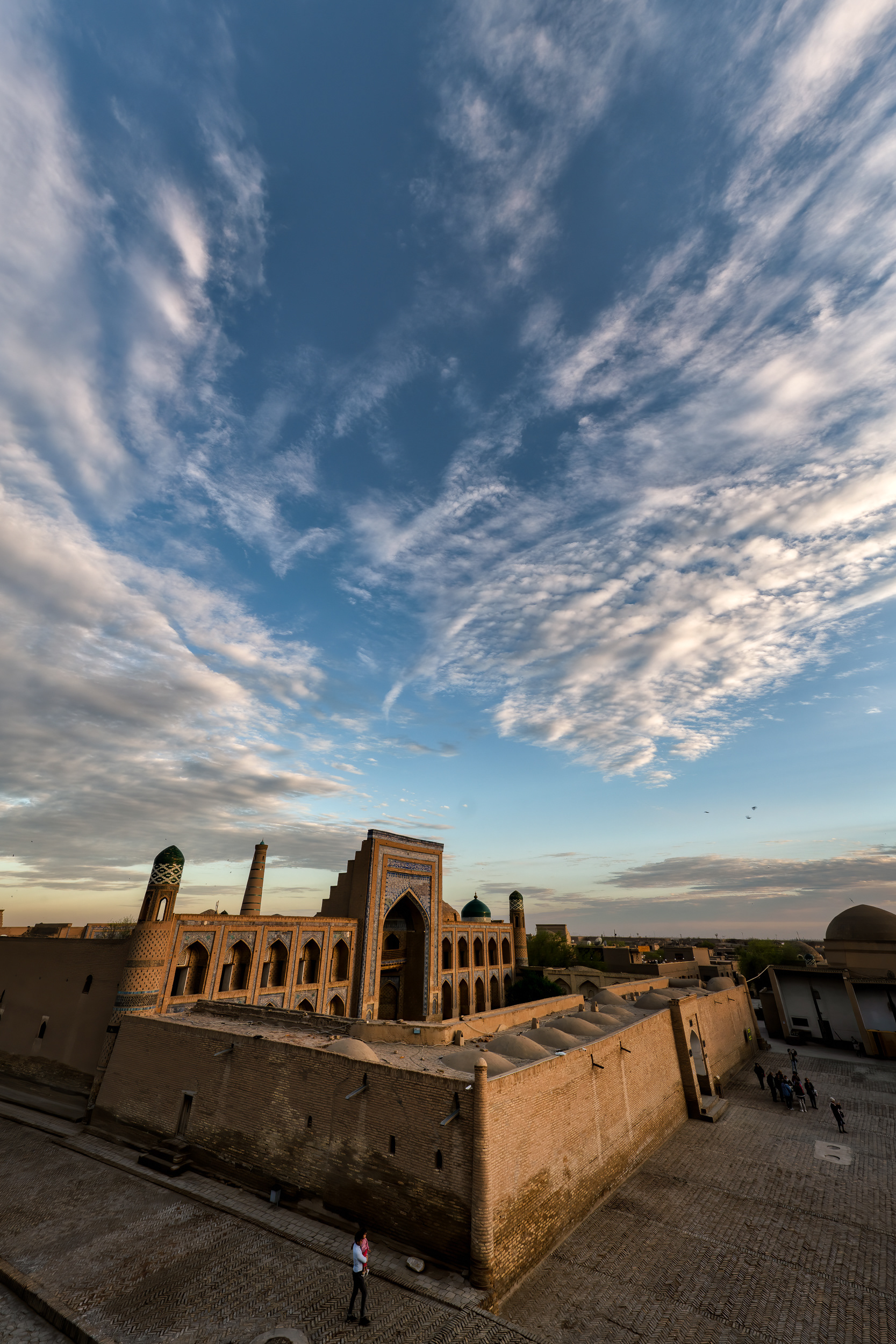
This is the Muhammad Amin Khan Madrasah, sitting across the plaza from the Kunya-Ark, the old citadel, at the gates the locals call Ata-Darvaza. I remember watching this from a bar across the street, which is either the least reverent or the most honest way to take in nine hundred years of architecture, depending on your mood.
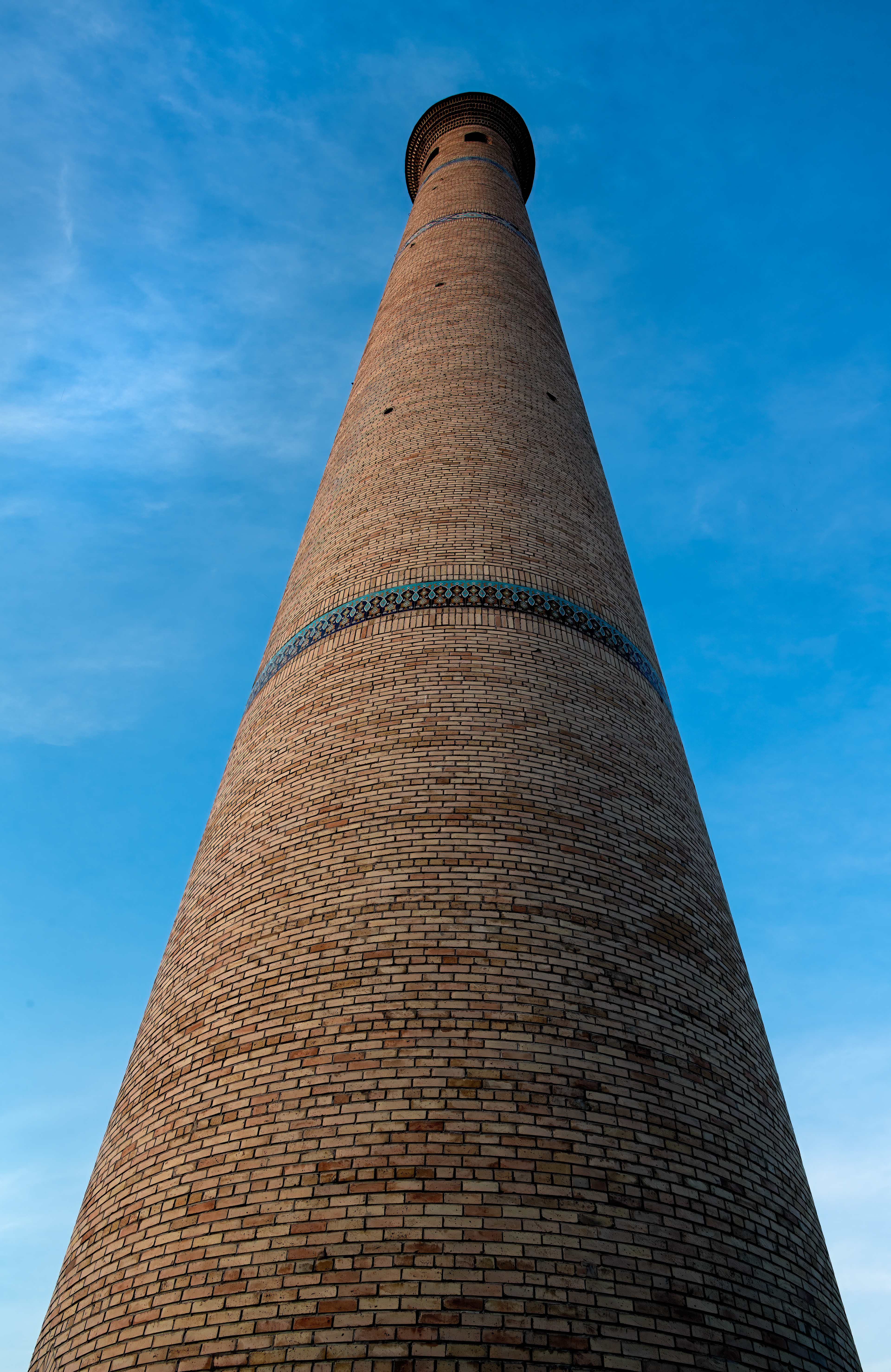
Built in 1127, the Kalyan Minaret has stood watch over Bukhara for nine centuries — long enough that Genghis Khan, of all people, ordered it spared when he leveled everything else around it. It earned a darker nickname later, the Tower of Death, for what got thrown from the top. None of that shows here. Just brick, sky, and a turquoise band circling the tower like it's holding its breath.
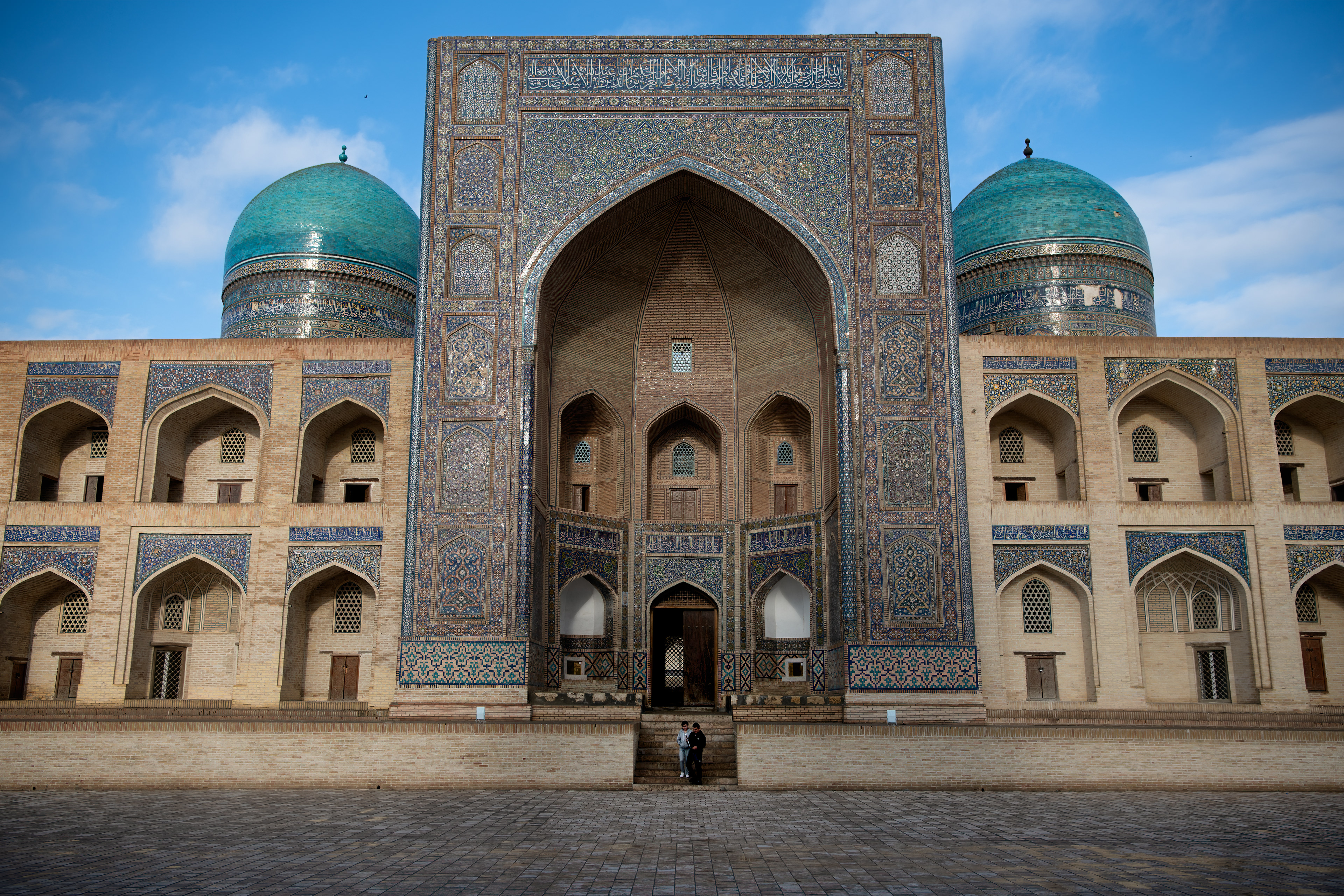
Built in 1535, funded (the story goes) by selling three thousand Persian captives, the Mir-i-Arab has never stopped being a madrasah — through khanates, through the Soviets, who let exactly three religious schools in Central Asia keep operating and made this one of them.
They call it abr — Persian for cloud — because the dye bleeds into patterns that are supposed to look like clouds reflected in a river, not because anyone was being poetic for its own sake. The technique is resist-dyeing: bind sections of thread before it ever touches color, so the pattern exists before the weaving does. Bukhara's been one of the centers of it for a couple hundred years, and from the look of these two, still is
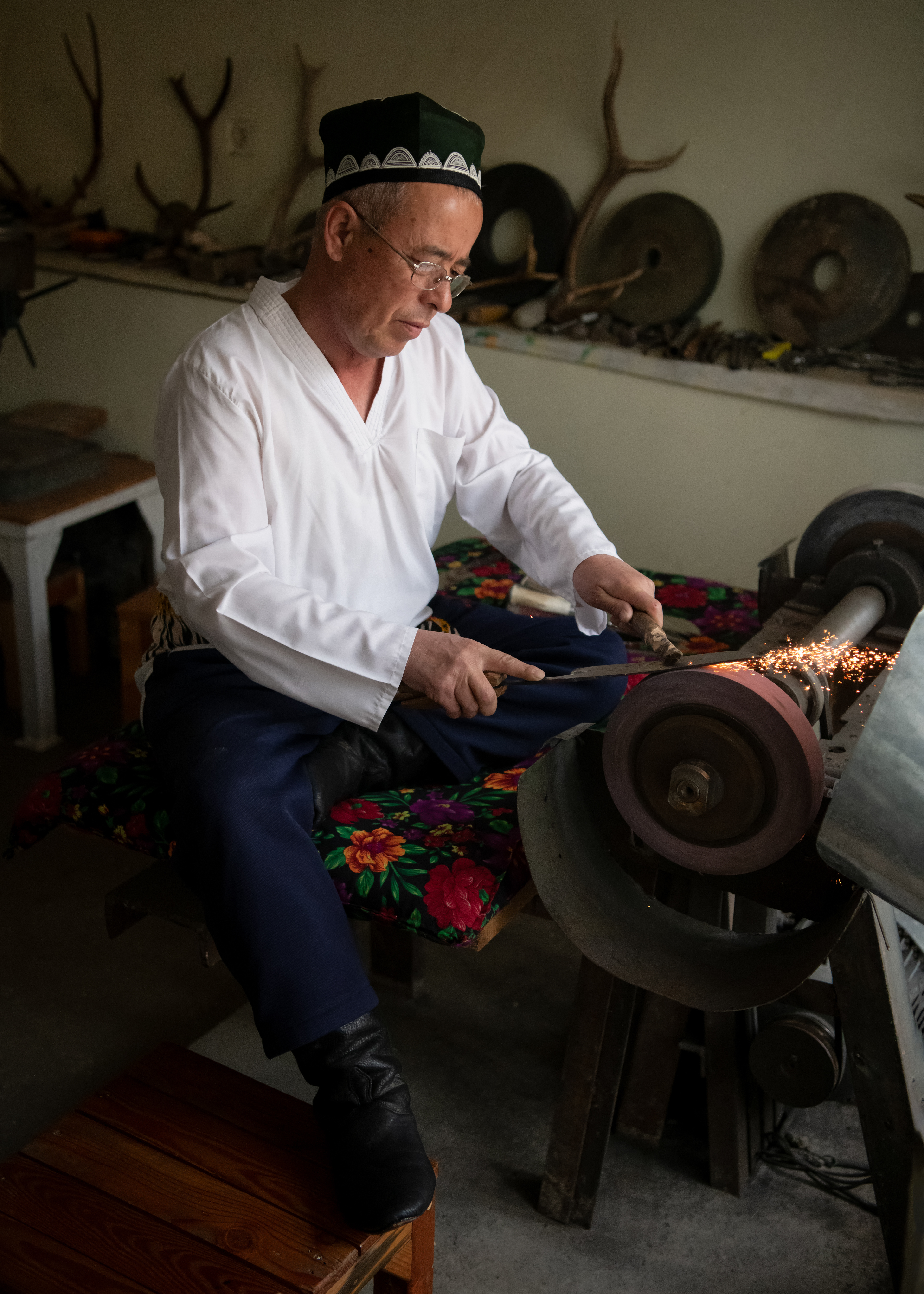
This is Chust, in the Fergana Valley — twelfth-century Chinese travelers on the Silk Road were already logging these blades as the sharpest steel between Damascus and Kashgar. UNESCO added the craft to its intangible heritage list in 2019, the same year this was taken, which is either a coincidence or the closest thing to good timing I've got for this trip. The blade gets quenched in fermented mare's milk brine — nobody fully explained why, and I didn't ask hard enough
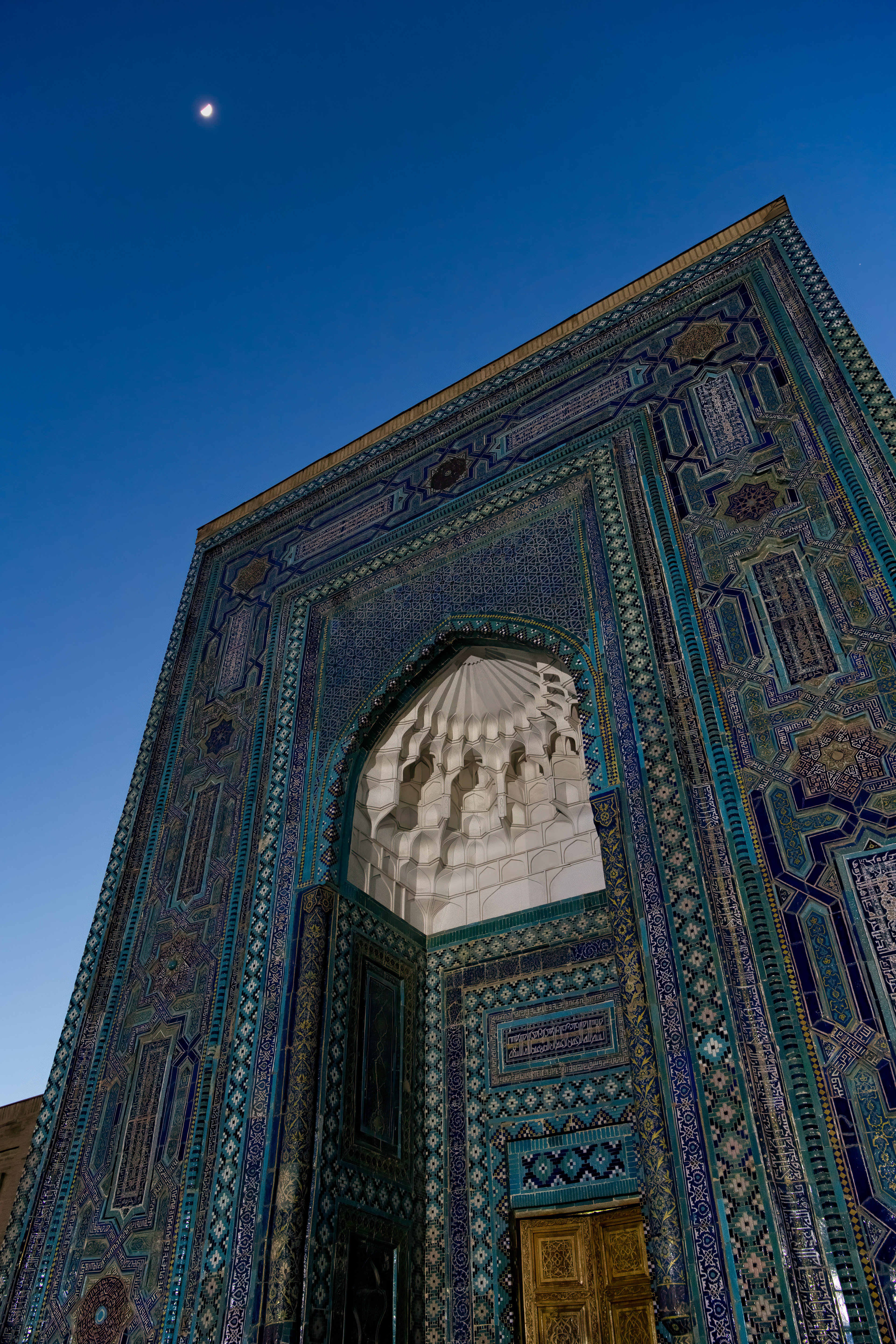
Shah-i-Zinda means "the Living King," named for Qutham ibn Abbas, a cousin of the Prophet Muhammad who — according to the story, and I want to be clear this is the story, not a claim — was beheaded mid-prayer, picked up his own head, and walked into a well here, where he's said to still be living. Whatever you make of that, people have been building tombs around it for eight centuries. The moon just happened to be up when I was.
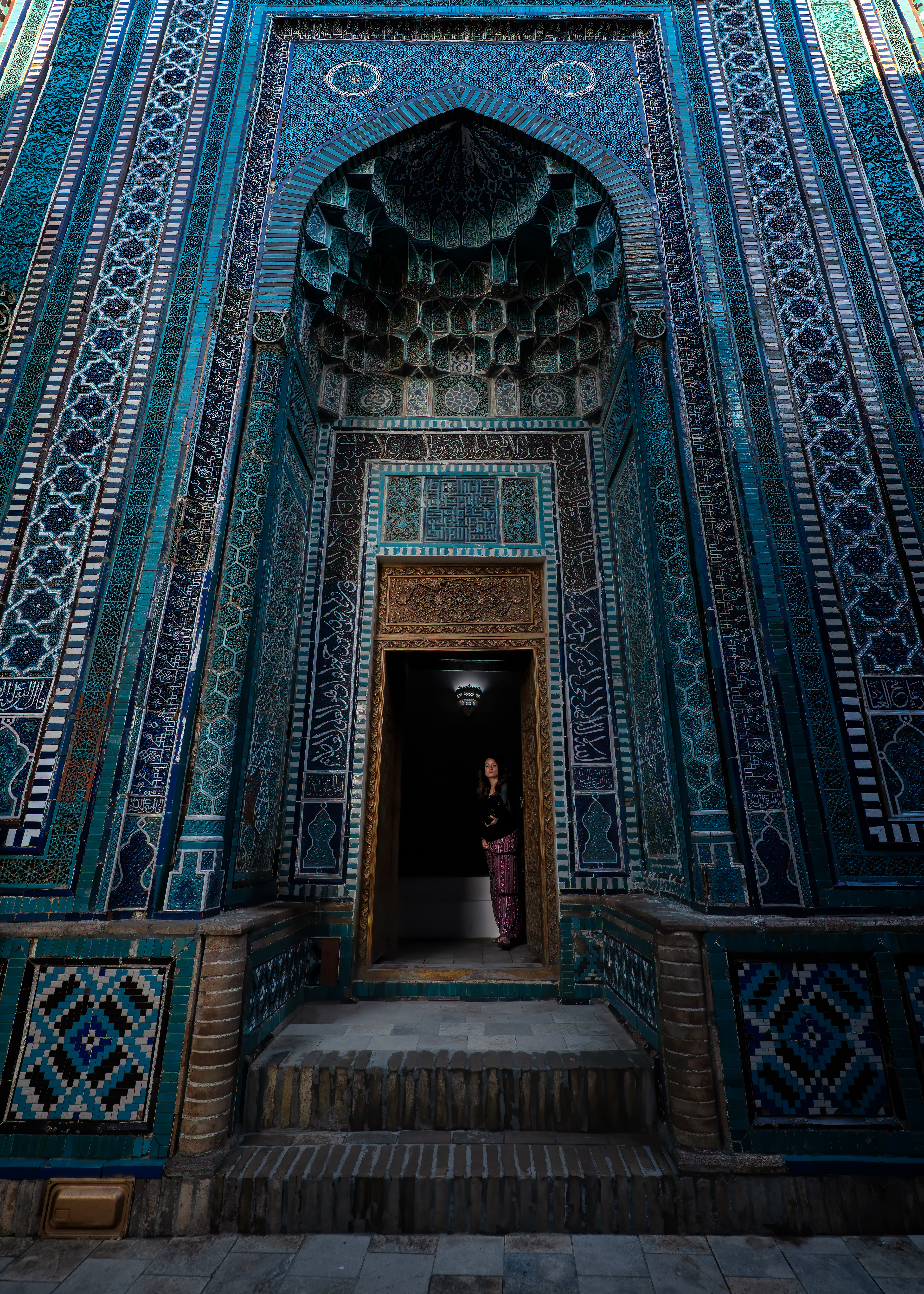
Locals will tell you a pilgrimage here counts the same as a hajj to Mecca — which is either devotional math I'm not qualified to check, or the best explanation for why this is still an active shrine and not just a tourist stop with good tile. The muqarnas work in that niche is meant to look weightless, all those honeycombed cells stacked to catch the light differently at every hour.
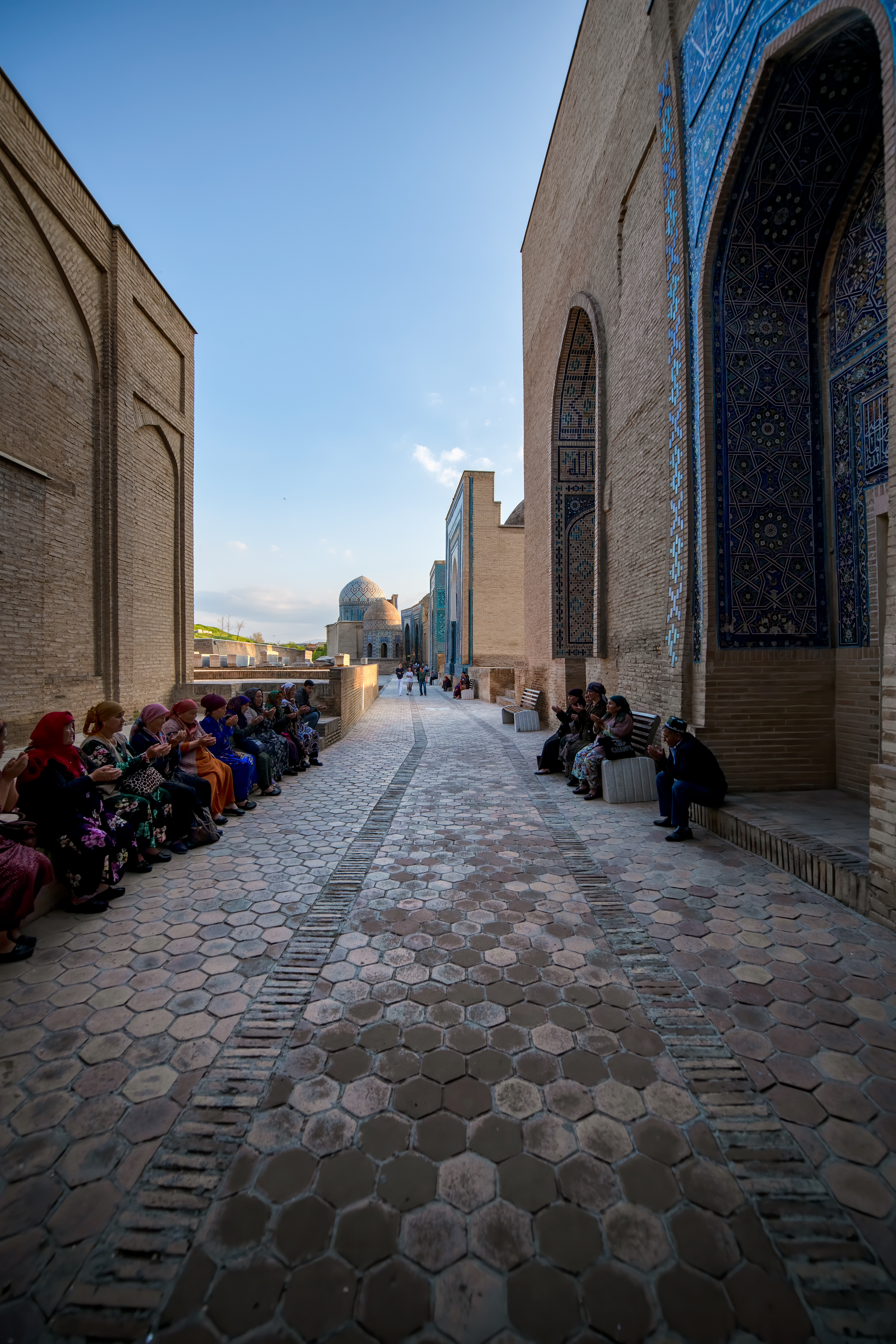
There are forty steps leading up into this corridor, and the tradition is to count them going up and count them again coming down. Match the number both times and you're supposed to walk away free of sin — which either means everyone sitting along these walls has genuinely lost count, or they know something about their own math I don't. Some pilgrims used to take forty days to climb them, one step a day. Everyone in this frame just looks like they're taking a break
There used to be a whole vocabulary in how a woman wrapped her scarf here — you could tell a young girl from a bride, a new mother from a grandmother, just by the fabric and the fold. These five have aged past needing to advertise any of it, which might be its own kind of privilege. They were just waiting out the golden hour on a bench, same as anyone.
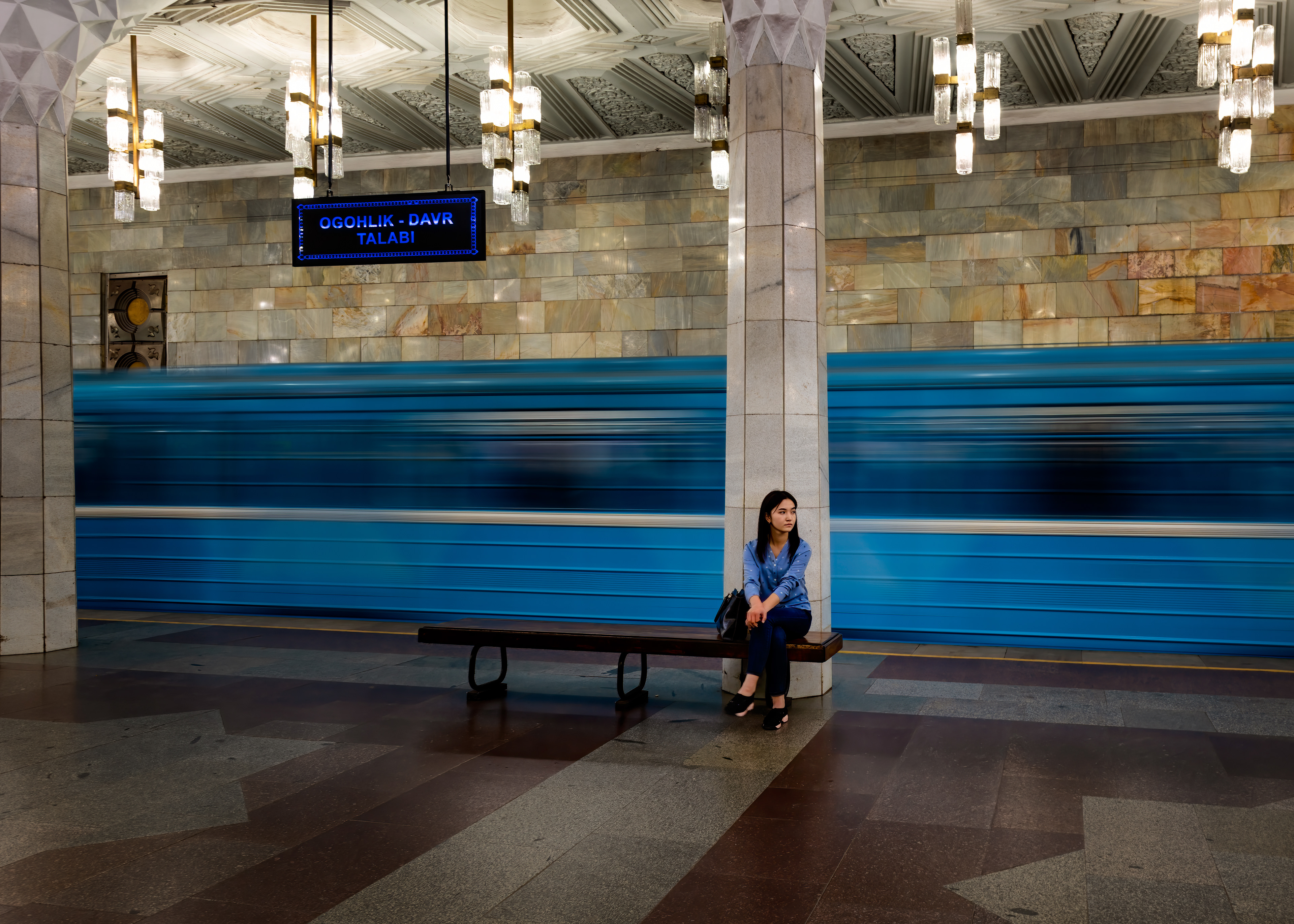
Opened in 1977, the first metro in Central Asia, and also — this is the part that explains the mood of the place — a nuclear bomb shelter, which is why photography down here was illegal for 41 years. The ban only lifted in June 2018. I got this less than a year later, which means for most of this station's existence, taking this exact picture would've gotten me arrested.
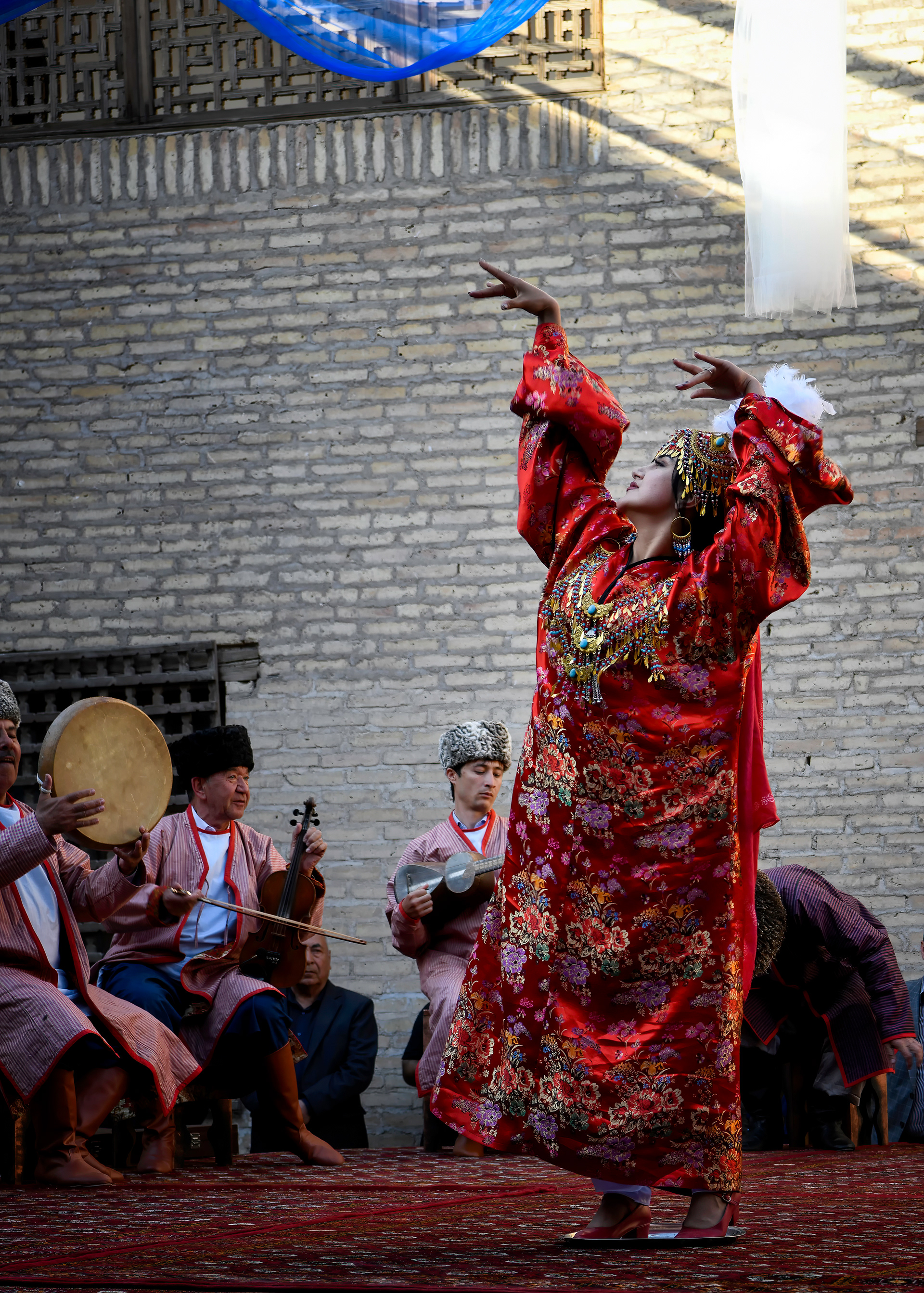
The legend behind Lazgi says it started when a soul, newly poured into clay, was too frightened to move — until it heard a melody from heaven, and the fingers came alive first, then the wrists, then the whole body followed. That's supposedly why the dance still starts exactly like that: hands and wrists waking up before anything else joins in, then building until it's over almost as abruptly as it started. UNESCO didn't add it to the world heritage list until December of that year — eight months after this was taken.
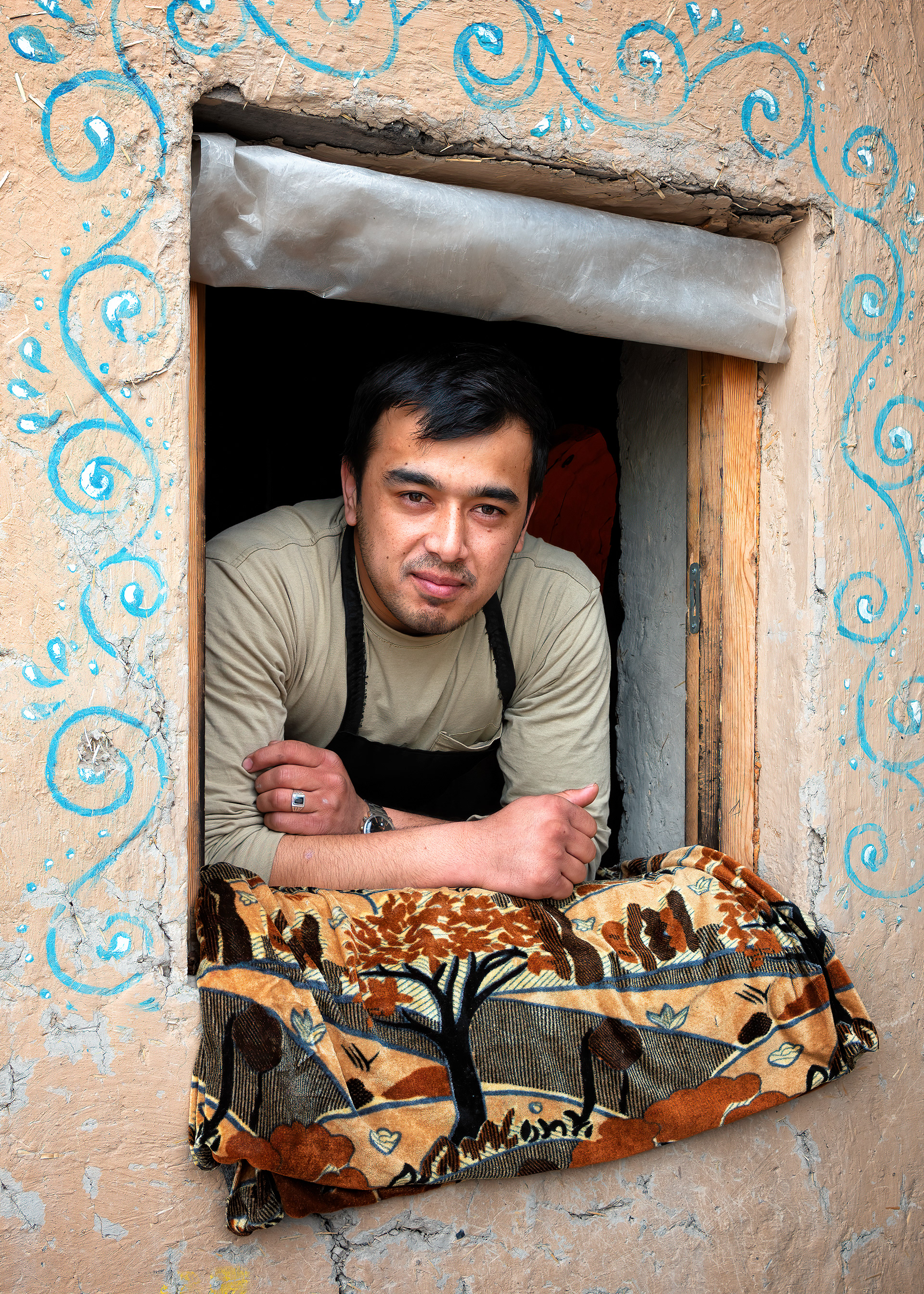
He was working the service window of a bakery — the man in the apron, the tandir glowing behind him just out of frame. I ended up having lunch with the small crew that ran the place. Simple, and genuinely good, the kind of meal that doesn't need a legend or a plaque to be worth remembering.
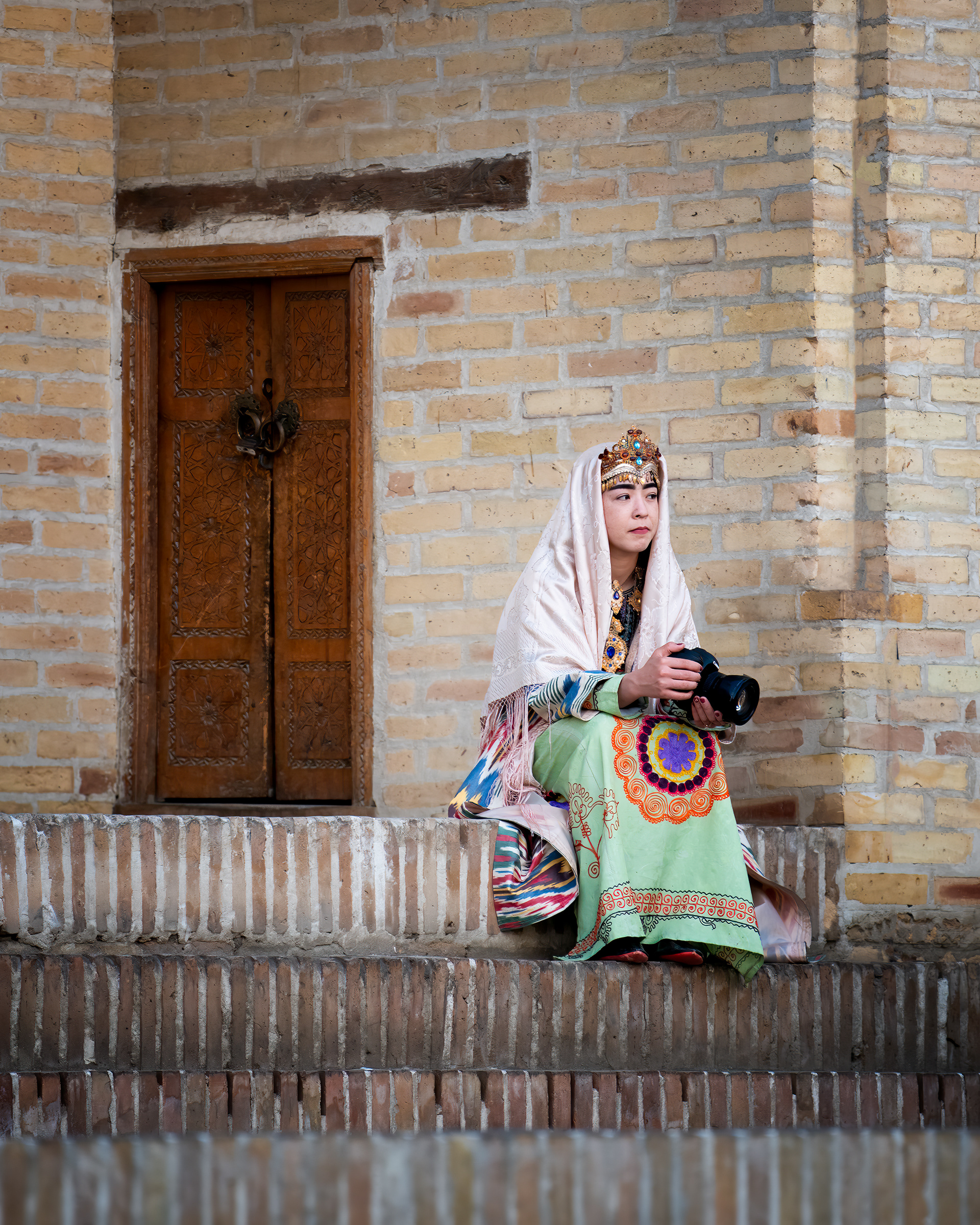
She's dressed like she stepped out of a miniature painting — the crown, the ikat robe, the carved door behind her doing its part — except for the camera in her hands, which is newer and probably better than mine. I don't know if that's irony or just what tourism looks like now: the past gets put on as a costume, and everyone still brings their own gear.
↑Back to Top