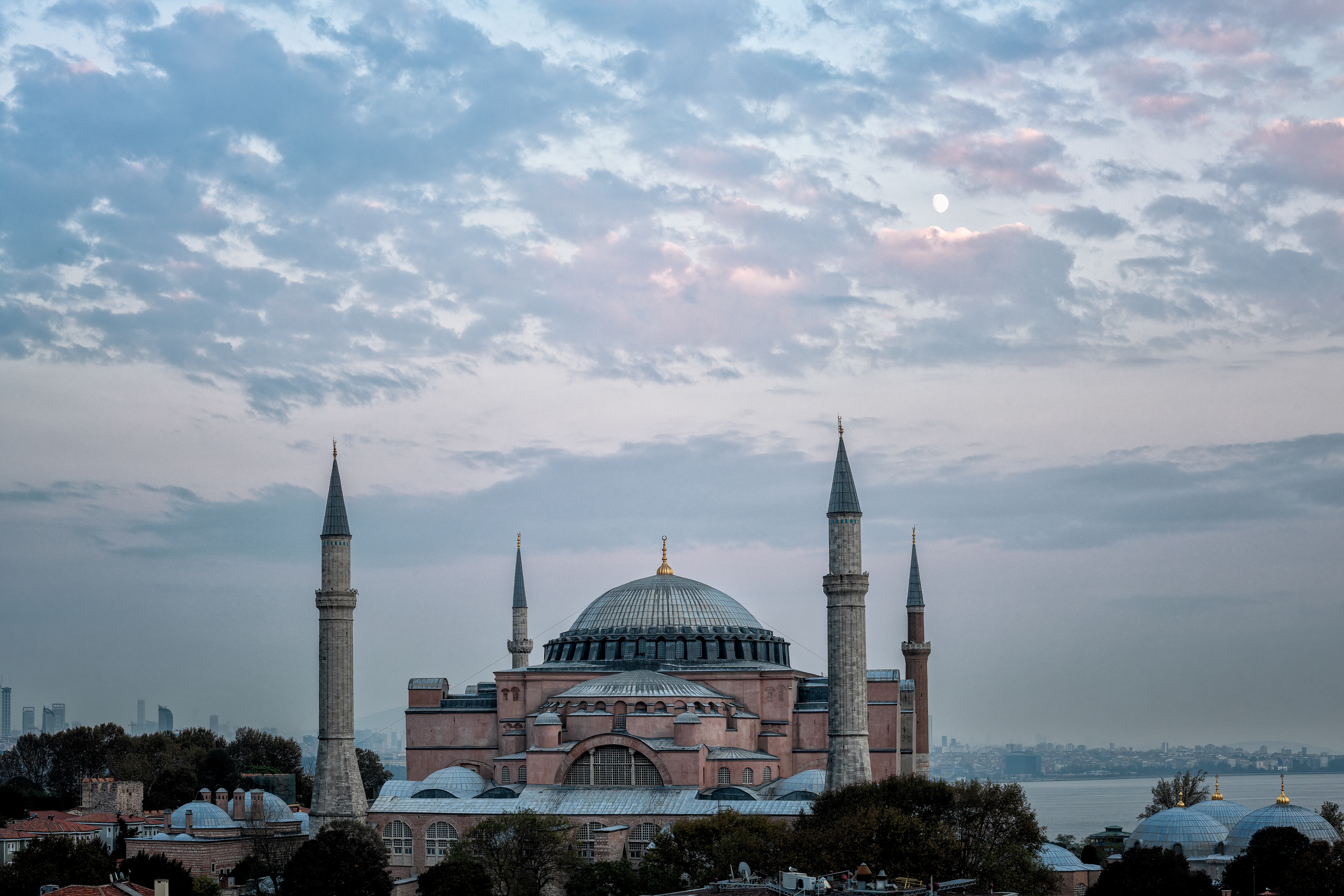
Hagia Sophia, dusk, with the moon over it. Built in under six years under Justinian, finished in 537, with a dome that was never supposed to look like it's floating and does anyway — forty windows ringing the base, cutting the wall into a band of light so the whole thing seems to hover with no visible support. It converted to a mosque in 1453, museum in 1934, and mosque again in 2020, which means this photograph, taken in 2018, caught it mid-museum — a status that turned out to be temporary, like almost everything else this building has ever officially been

Blue Mosque courtyard, night. Built 1609 to 1616 for Sultan Ahmed I, and immediately controversial for having six minarets — a number until then reserved for Mecca's Great Mosque, Islam's holiest site. The sultan's fix wasn't to remove one of his own. He paid to add a seventh minaret in Mecca instead, solving the problem of having too much by giving everyone else more.
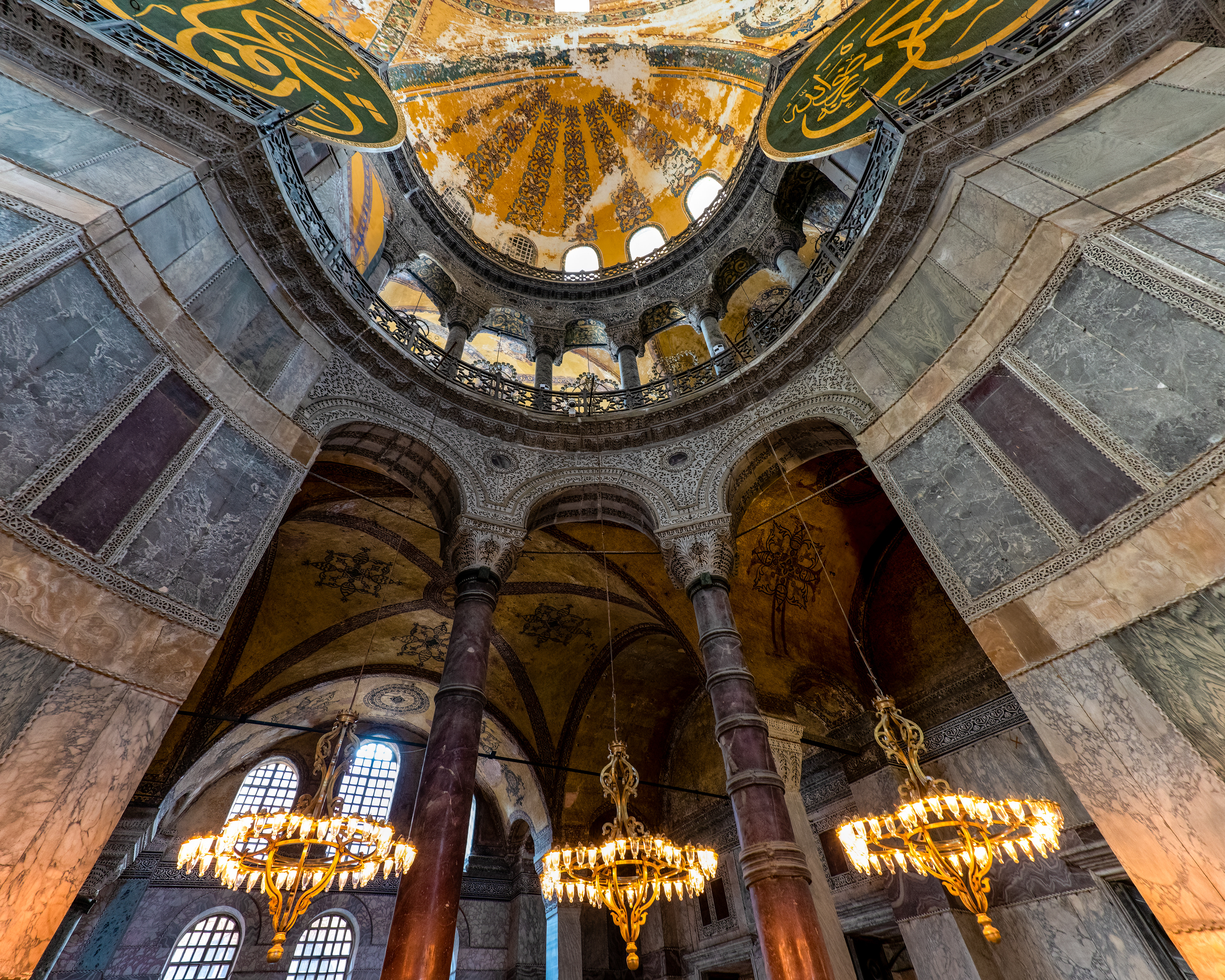
Hagia Sophia, dome and columns. A hundred and forty columns hold this place up, and almost none of them were built for it — eight purple porphyry ones came from Egypt, eight green ones from the Temple of Artemis at Ephesus, one of the ancient world's Seven Wonders, repurposed rather than replaced. No two capitals match. Near the northwest exit there's a "sweating column" people still put a thumb into and twist, on the belief that if it comes back damp, whatever they wished for is coming
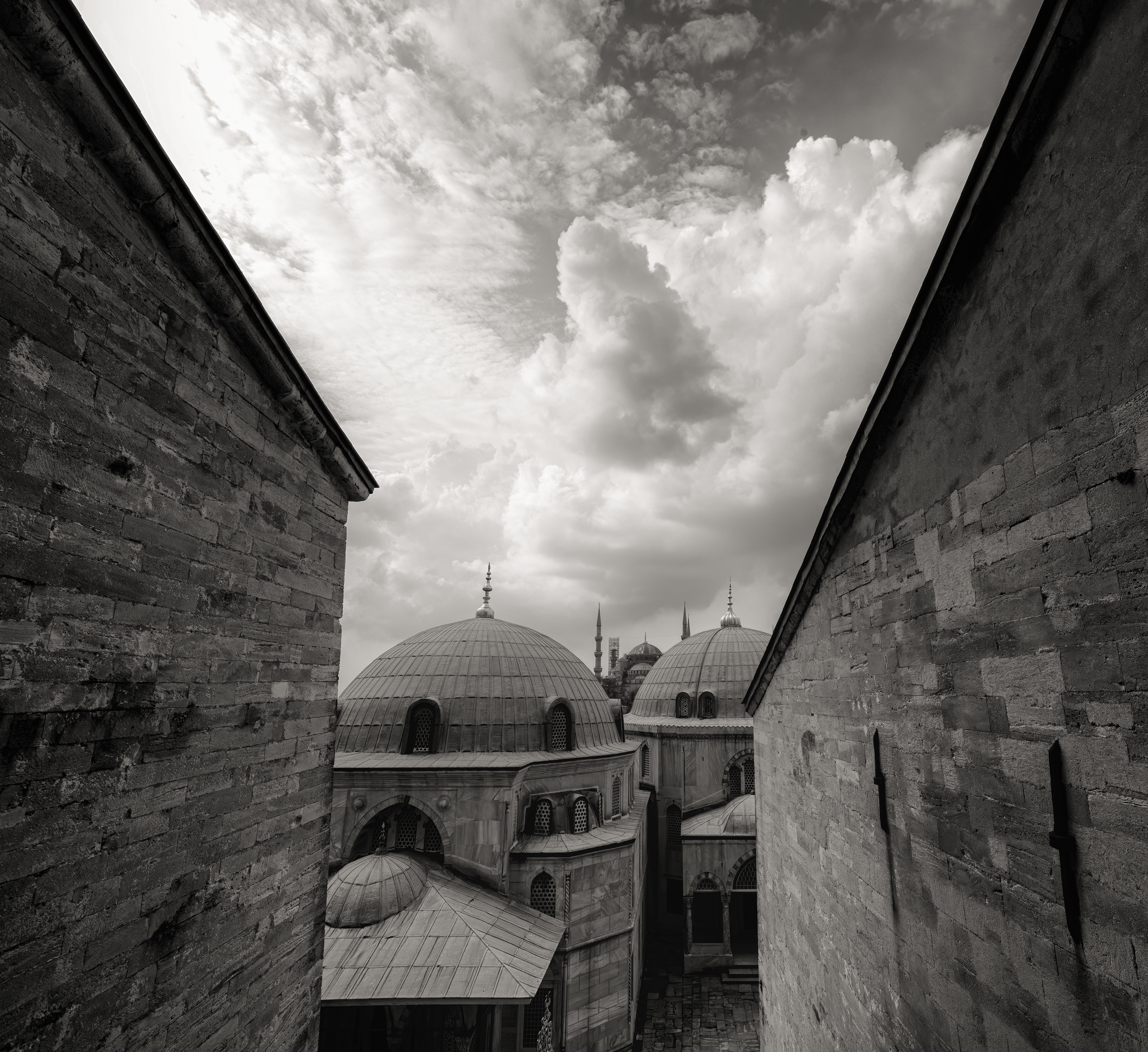
Domes, storm clouds moving through, black and white. Hagia Sophia's cascading domes and semi-domes — one central dome stepping down into smaller ones, buttressed outward in tiers — became the template Ottoman architects reused for centuries afterward, the Blue Mosque included. Different faiths, same skyline logic, borrowed wholesale.
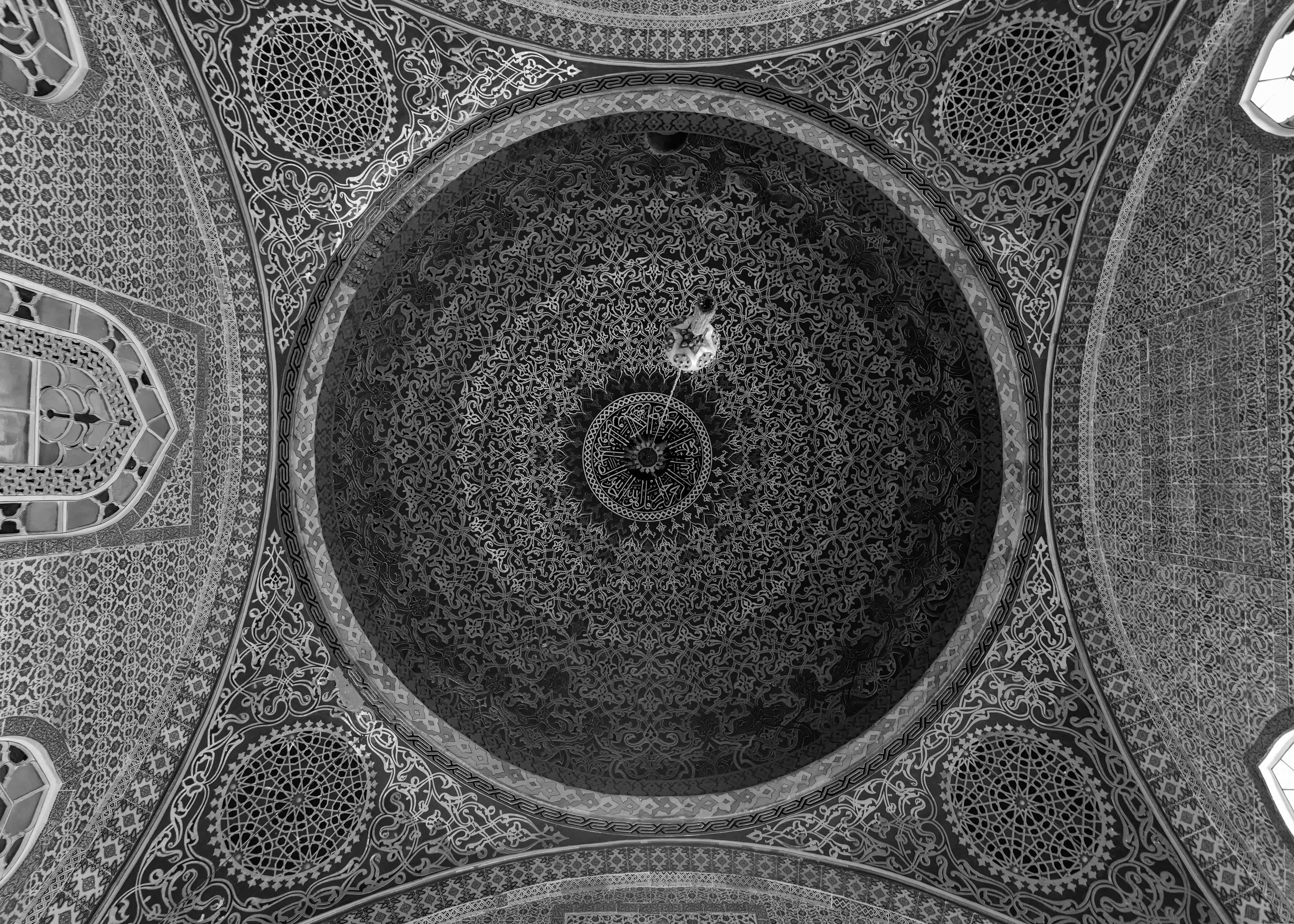
Blue Mosque, straight up into the central dome. More than 200 stained-glass windows were originally set into this space, a diplomatic gift from Venice meant to show off the best glasswork Europe had. Most have since been replaced, over the centuries, with windows that have basically no artistic value by comparison — the light still gets in, it just isn't Venetian anymore.
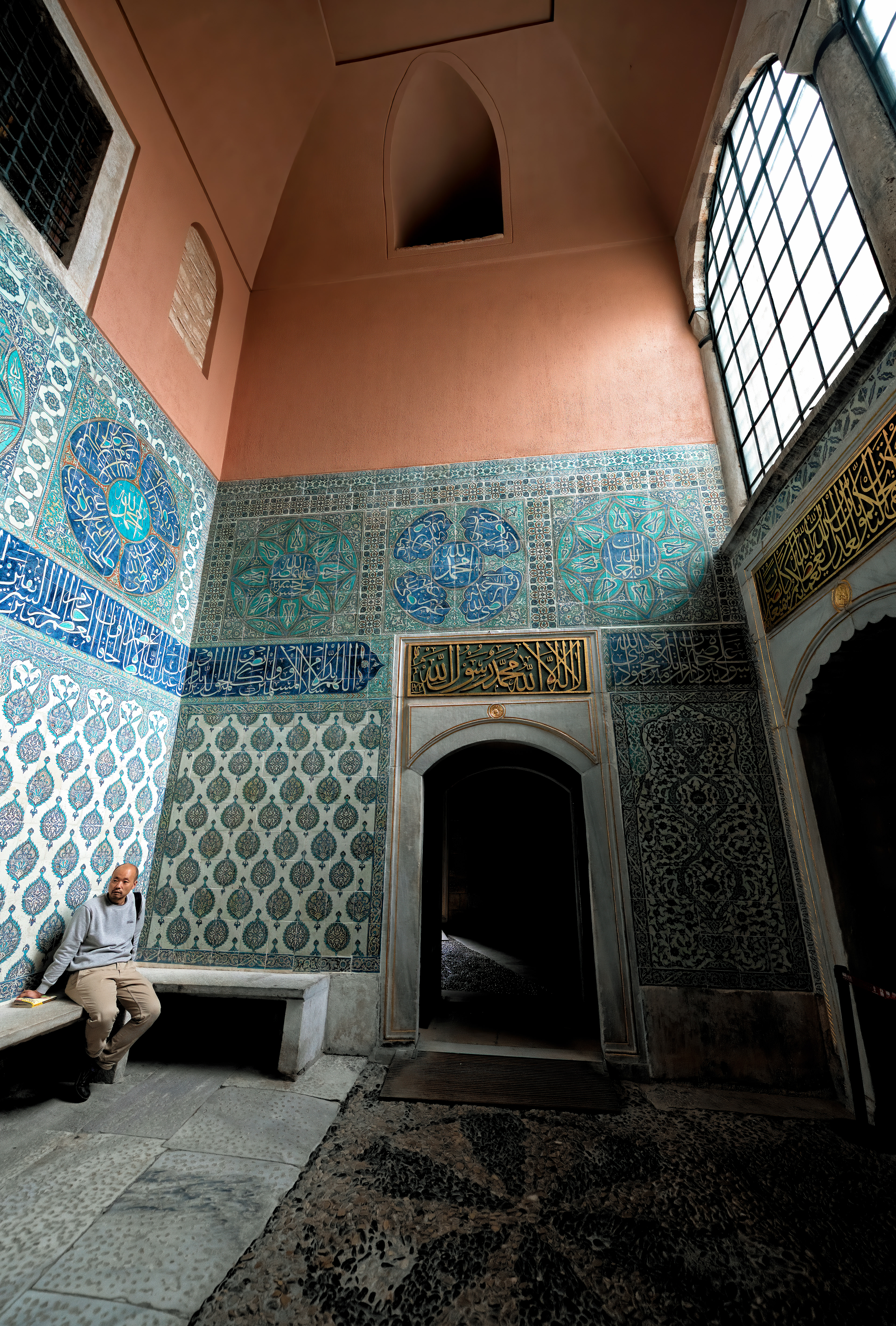
Topkapi Palace, the Circumcision Room. Built under Suleiman the Magnificent, given its current form under Sultan Ibrahim in the 1640s, and tiled with a mix of 16th- and 17th-century İznik work — a full century of production layered onto one small chamber. Some of the tiles carry chi-lin figures, a mythical Chinese chimera, rendered in the Ottoman "saz" style — a small, permanent record of exactly how far Ottoman decorative taste had reached to find its influences.

Topkapi Palace, one of the inner courtyards. Sultan Mehmed II wrote silence into the palace's actual code of law in the 1470s — officials and visitors moved through these courtyards quietly, by rule, not habit. At the Gate of Salutation leading in, everyone dismounted their horse except the sultan himself, the one person specifically permitted to ride through. And from the Tower of Justice overlooking the courtyard, he could watch his own Imperial Council conduct state business without being seen doing it.
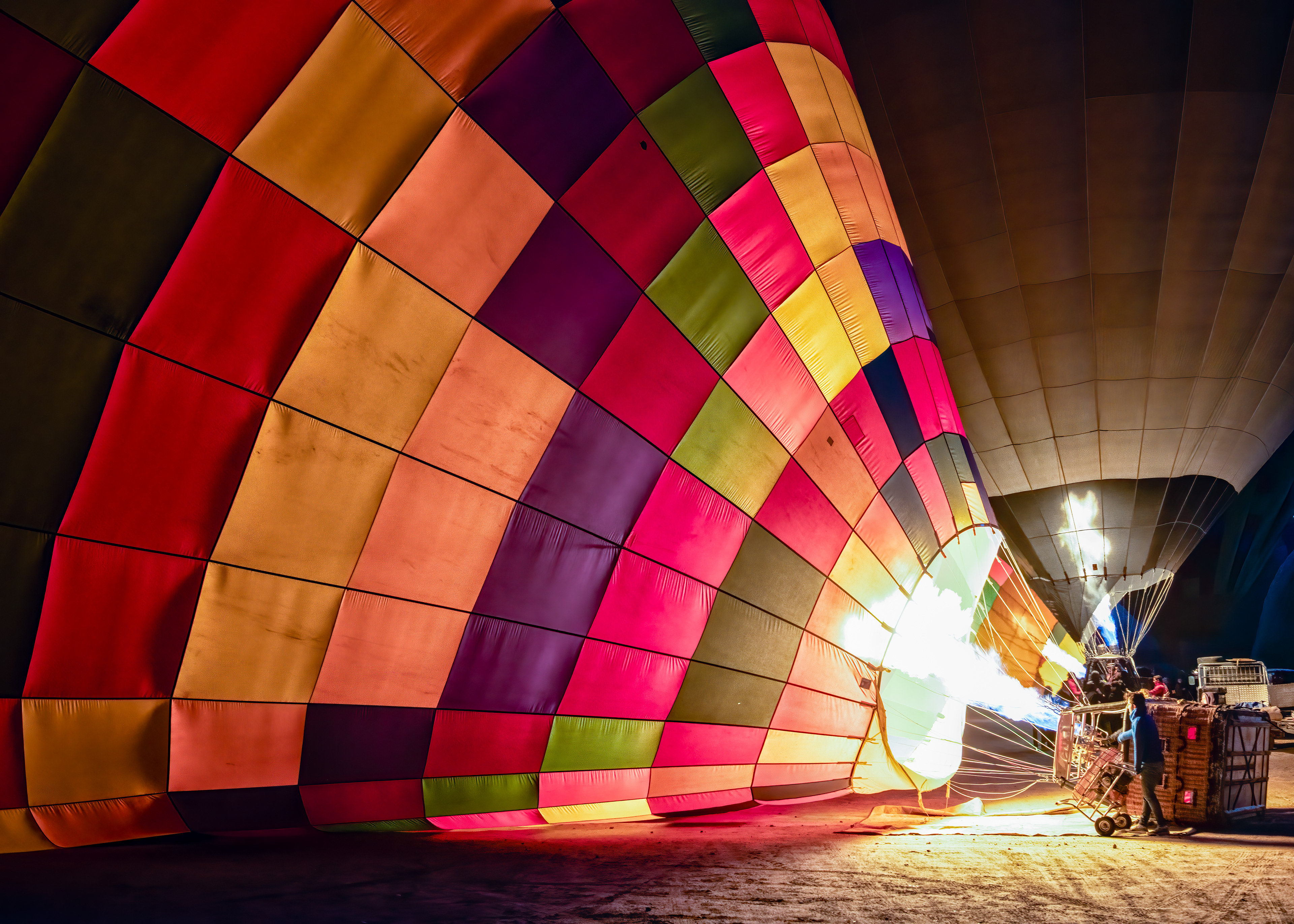
Cappadocia balloon, mid-inflation, burner firing straight into the fabric. Ballooning here only started in 1991, and now something like 150 balloons lift off on a good morning, always before sunrise — the coldest air of the day is also the densest, which is what actually gives a balloon its lift, so the whole spectacle is scheduled around physics, not aesthetics. A few minutes earlier this was just a few thousand square feet of nylon lying flat on the ground.
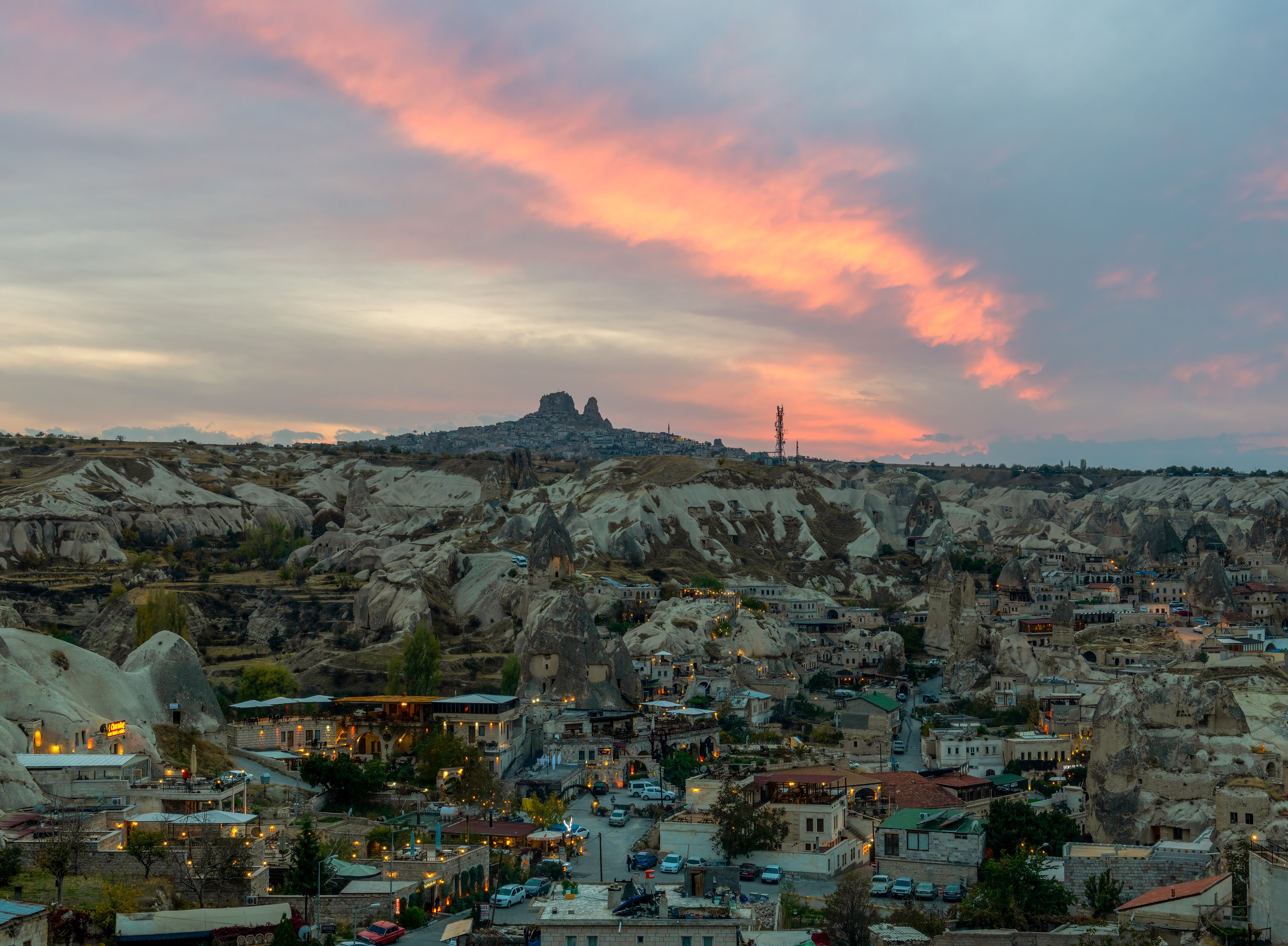
Uçhisar Castle at dusk, in silhouette — the tallest fairy chimney in Cappadocia, 196 feet of volcanic rock, carved rather than built, hollowed by hand over centuries into a warren of rooms and tunnels that once held as many as a thousand people. Nobody lives inside it now. The rock itself is soft enough to carve with hand tools and hardens once exposed to open air, which is the entire reason this region is riddled with places just like it
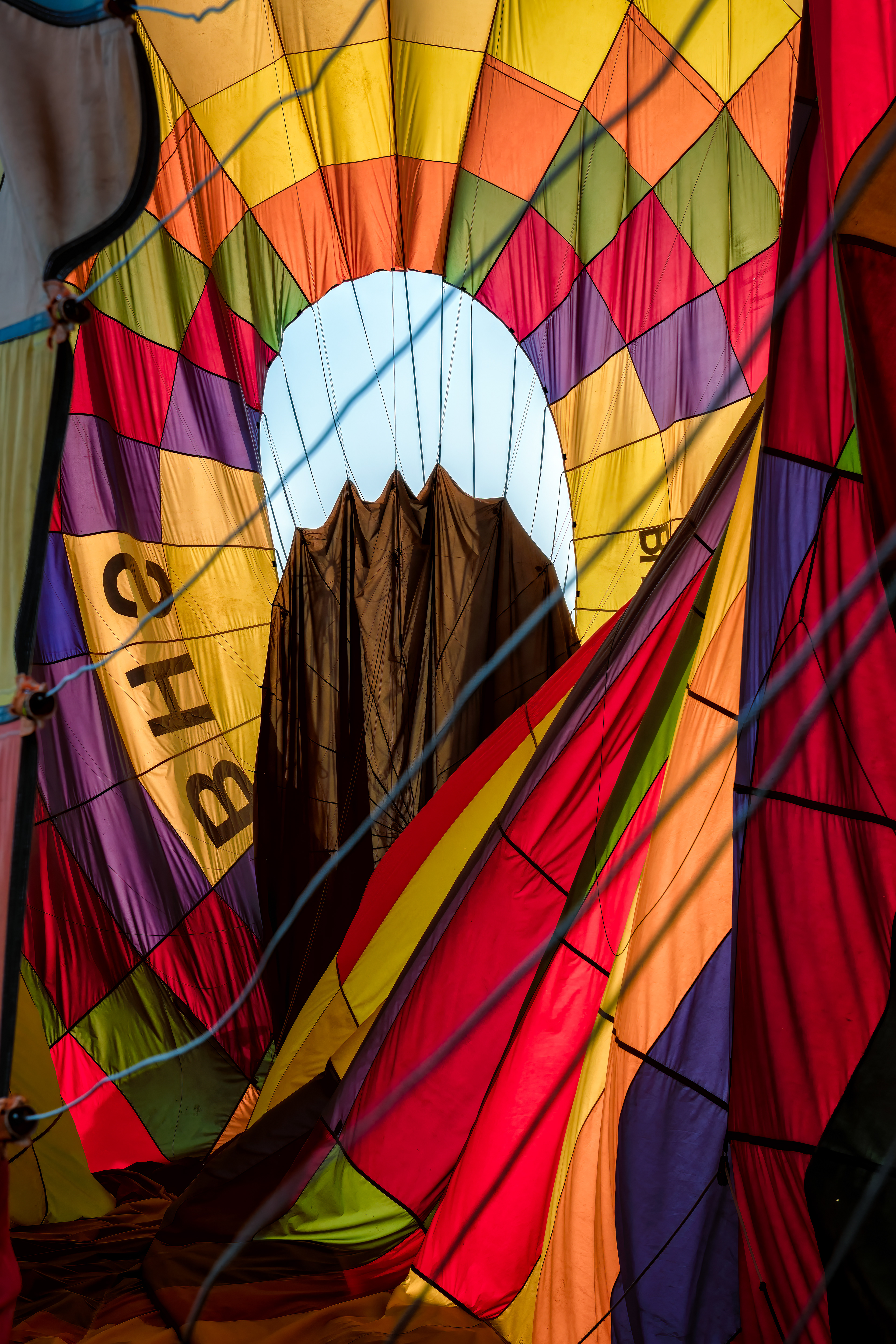
Looking straight up into a balloon's canopy — the pattern radiating outward is gores, individual fabric panels of nylon and polyester, cut and sewn together (diagonal cuts waste the least material, which is why most balloons use them) into a shape that holds air rather than water. An envelope like this is good for roughly 400 hours of flying before it's retired. The basket underneath, meanwhile, is still just rattan and willow woven together, the same material it would have been a century ago.
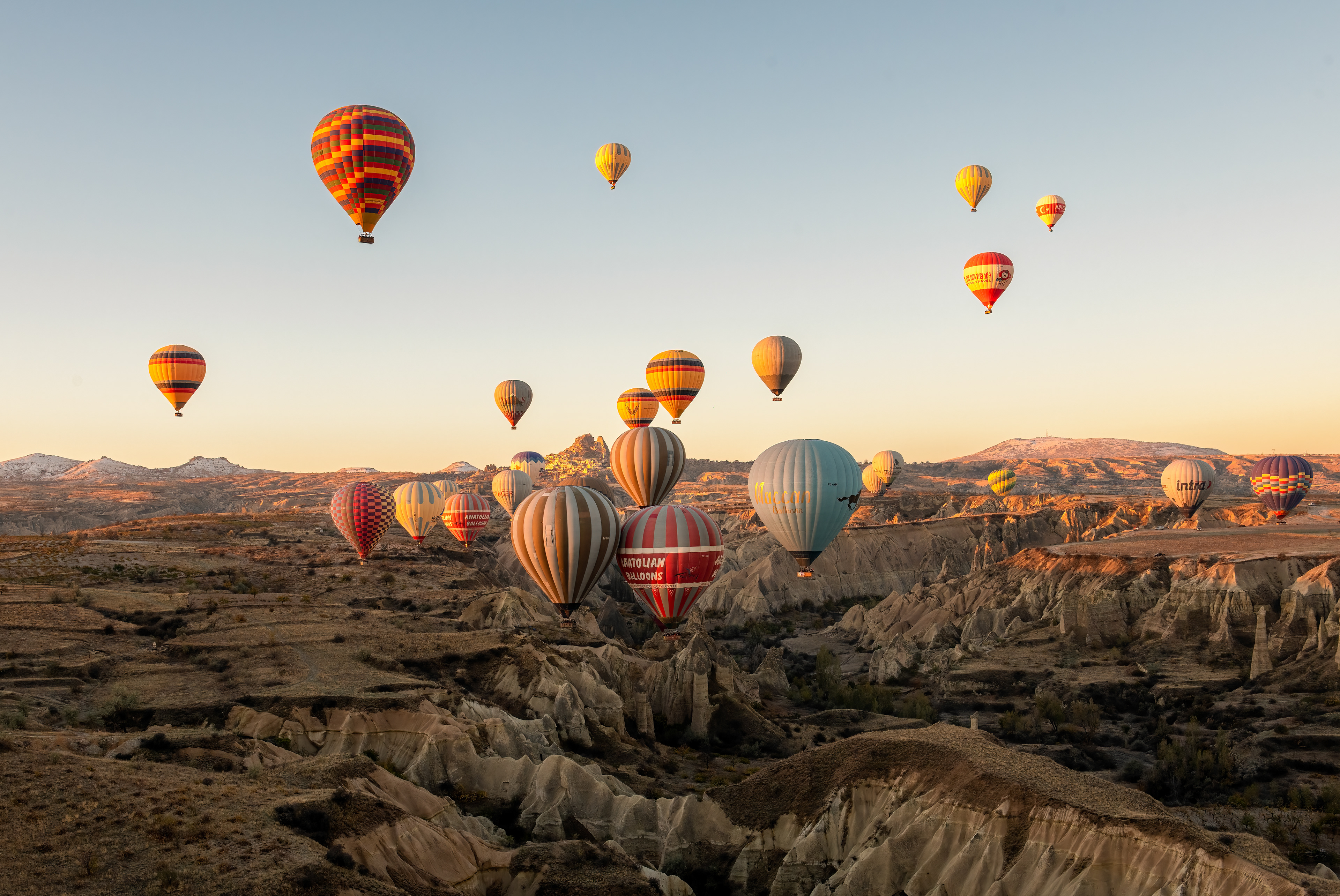
Golden hour, and specifically the morning half of it, the only half Cappadocia's balloons ever fly in, since the cooler, denser air right after dawn is what gives them their lift in the first place. Two dozen or so scattered across the sky in this one frame, each catching that same low, warm light on its own schedule, already drifting apart the way a fleet this size always does within a few minutes of launch — the spacing and light landing together.
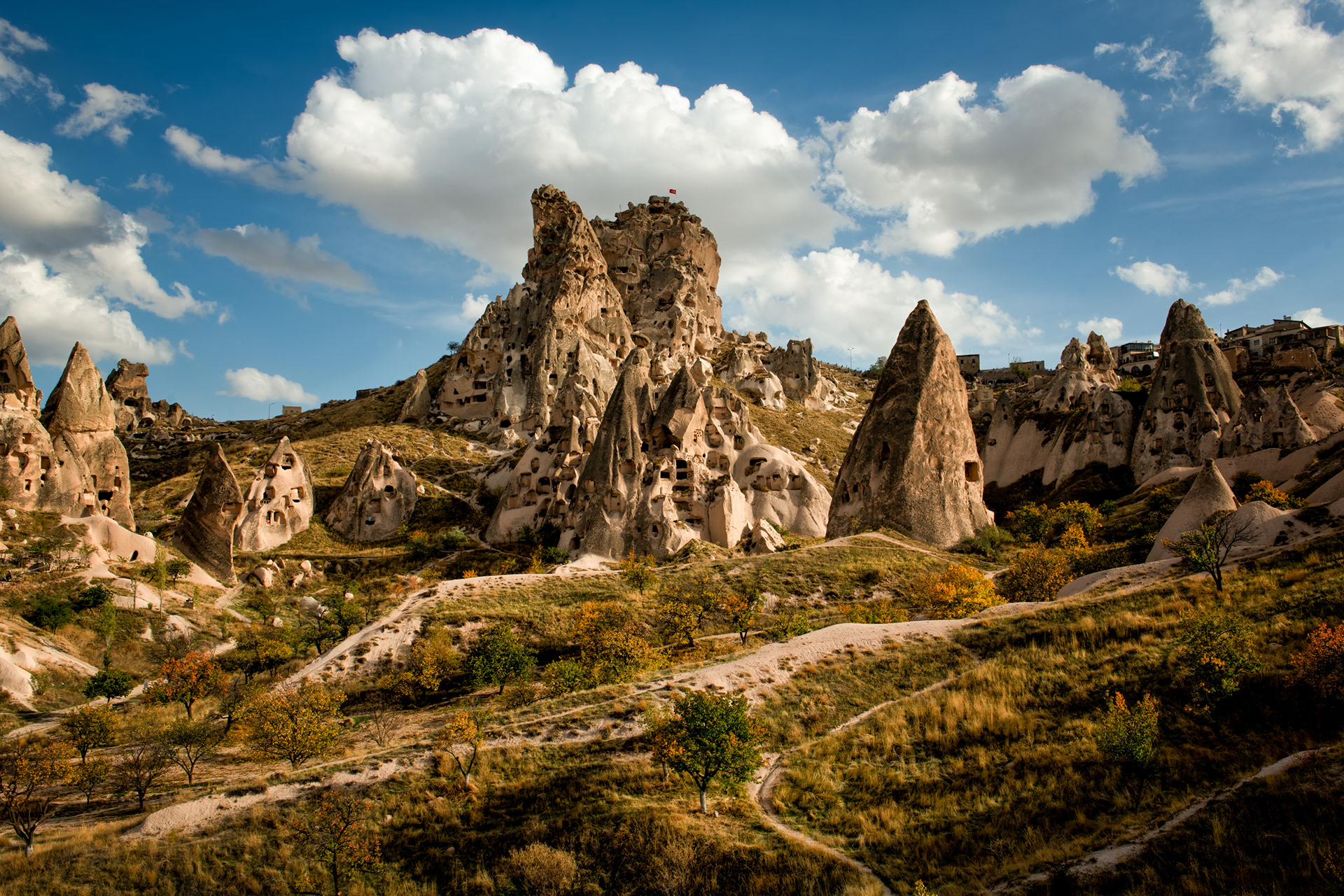
Fairy chimneys — peri bacaları, in Turkish, and that's the literal term geologists use for them too — each one a soft cone of compressed volcanic ash laid down by eruptions millions of years ago, capped by a disc of harder rock that erodes slower than everything beneath it. That mismatch is the whole shape: the cap shields a shrinking pedestal the way an umbrella shields the ground under it, right up until erosion undercuts the pedestal too far and the cap finally tips off — at which point the chimney underneath is just as exposed as its bare, capless neighbors and starts wearing away for good. The ones still standing this tall simply held onto their caps longer. The flag on top isn't geological. That's just Turkey, claiming the highest available point, the way it does on ridgelines and minarets across the whole country.
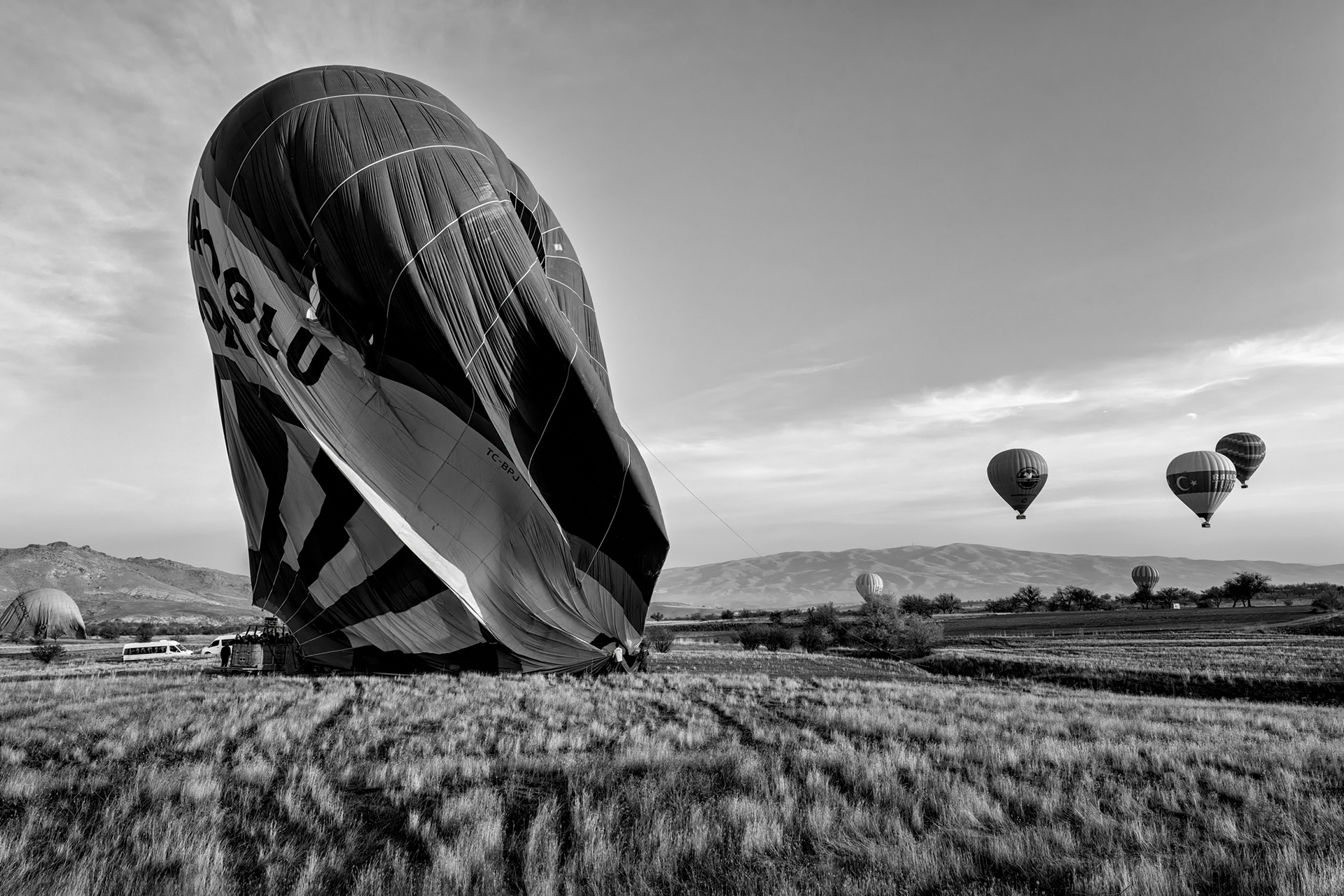
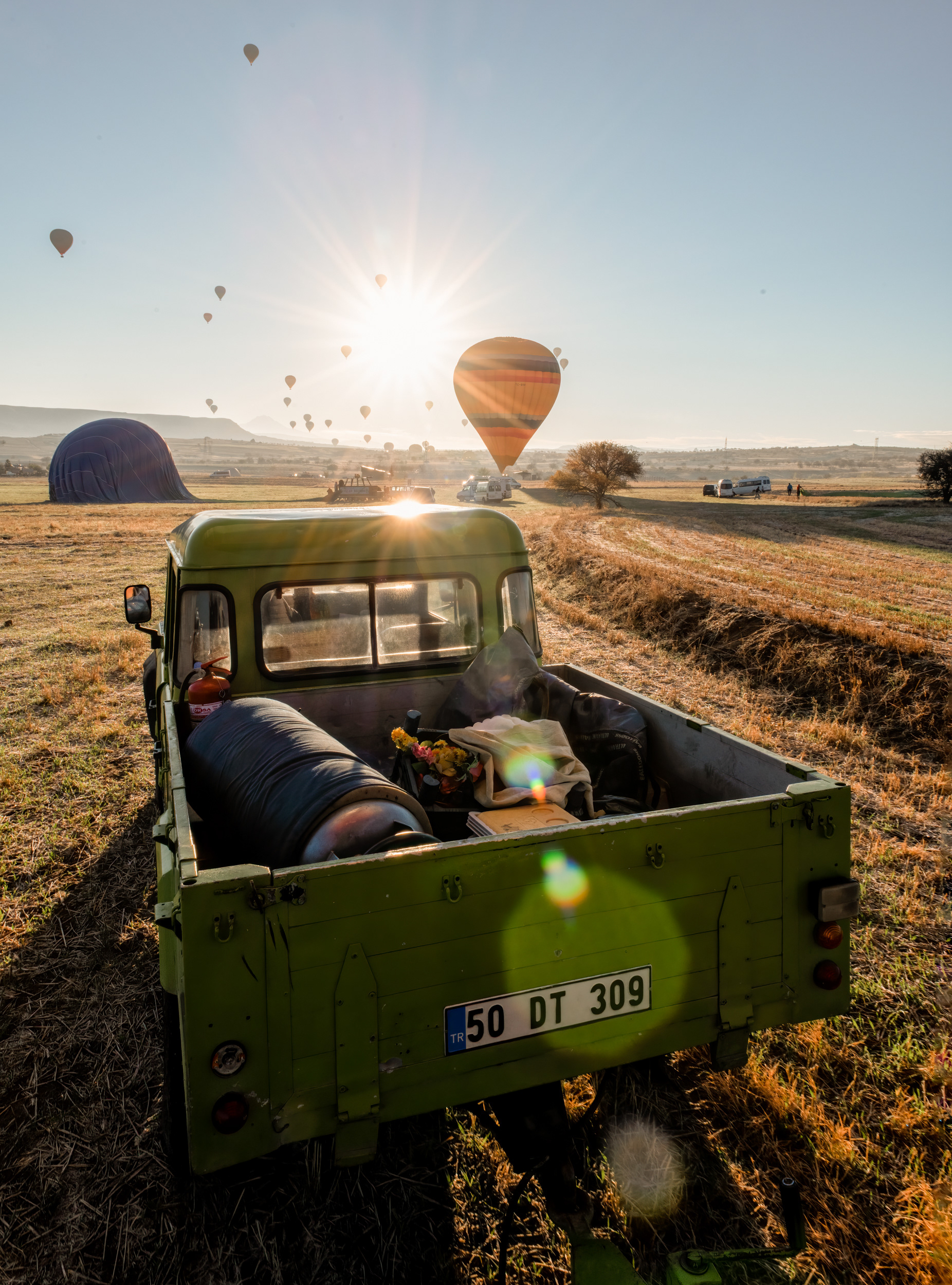
Deflation, not just descent. Landing pulls a parachute vent open at the crown of the envelope — a panel that swings fully open instead of just easing shut, so what took twenty minutes to inflate collapses in under one. Whatever field it happens to land in is where it stays until the ground crew arrives to fold it. Tradition holds that a champagne toast follows every flight here, a custom that supposedly traces back to eighteenth-century France, when early balloonists kept landing, uninvited, in random farmers' fields and needed something better than an apology to hand over.