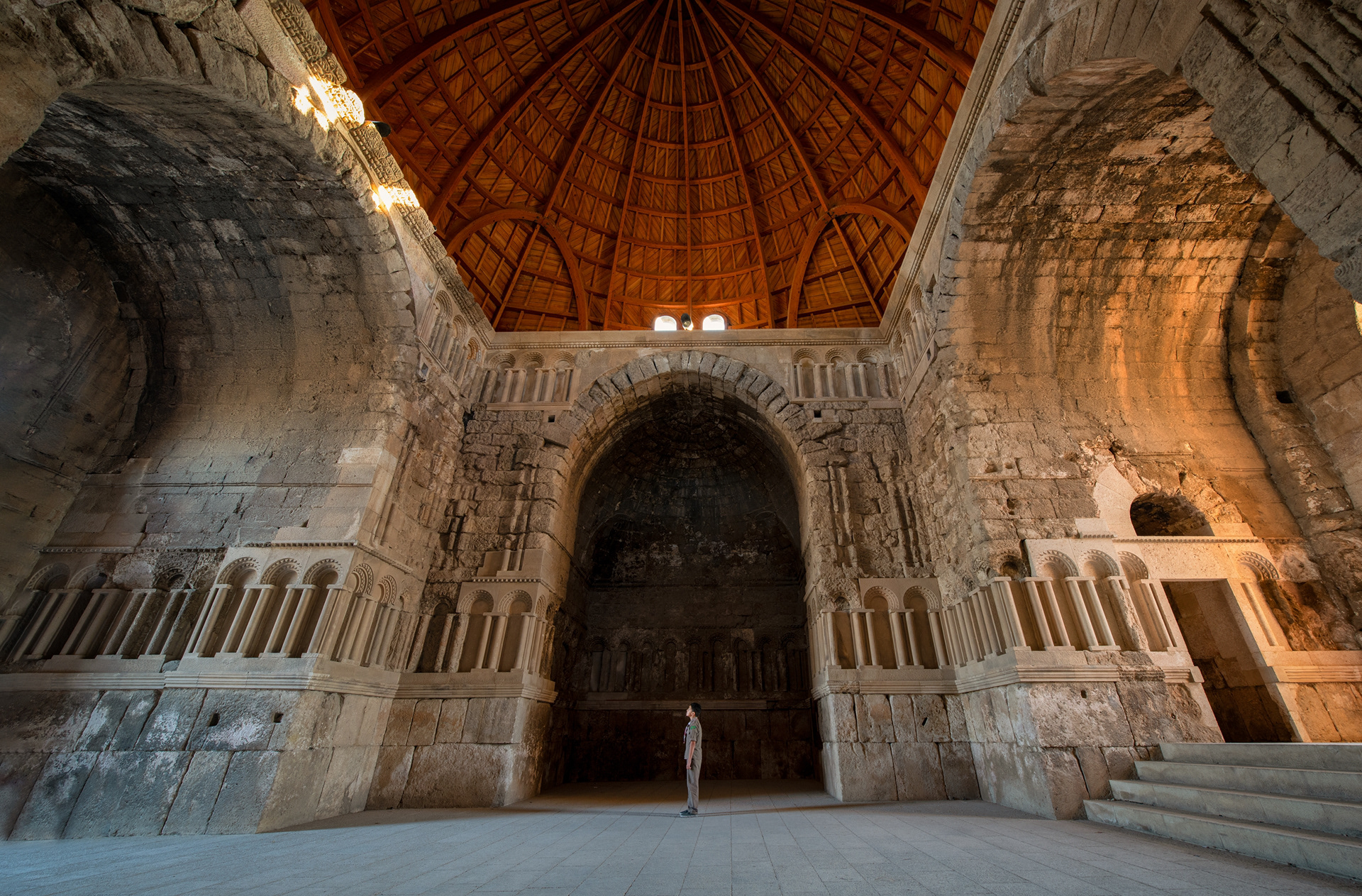
Triconch hall interior — the Umayyad Palace at Amman Citadel. A single figure stands dwarfed in the central apse, the eye drawn up into the dome's warm color while the ancient stone below stays dark and quiet.
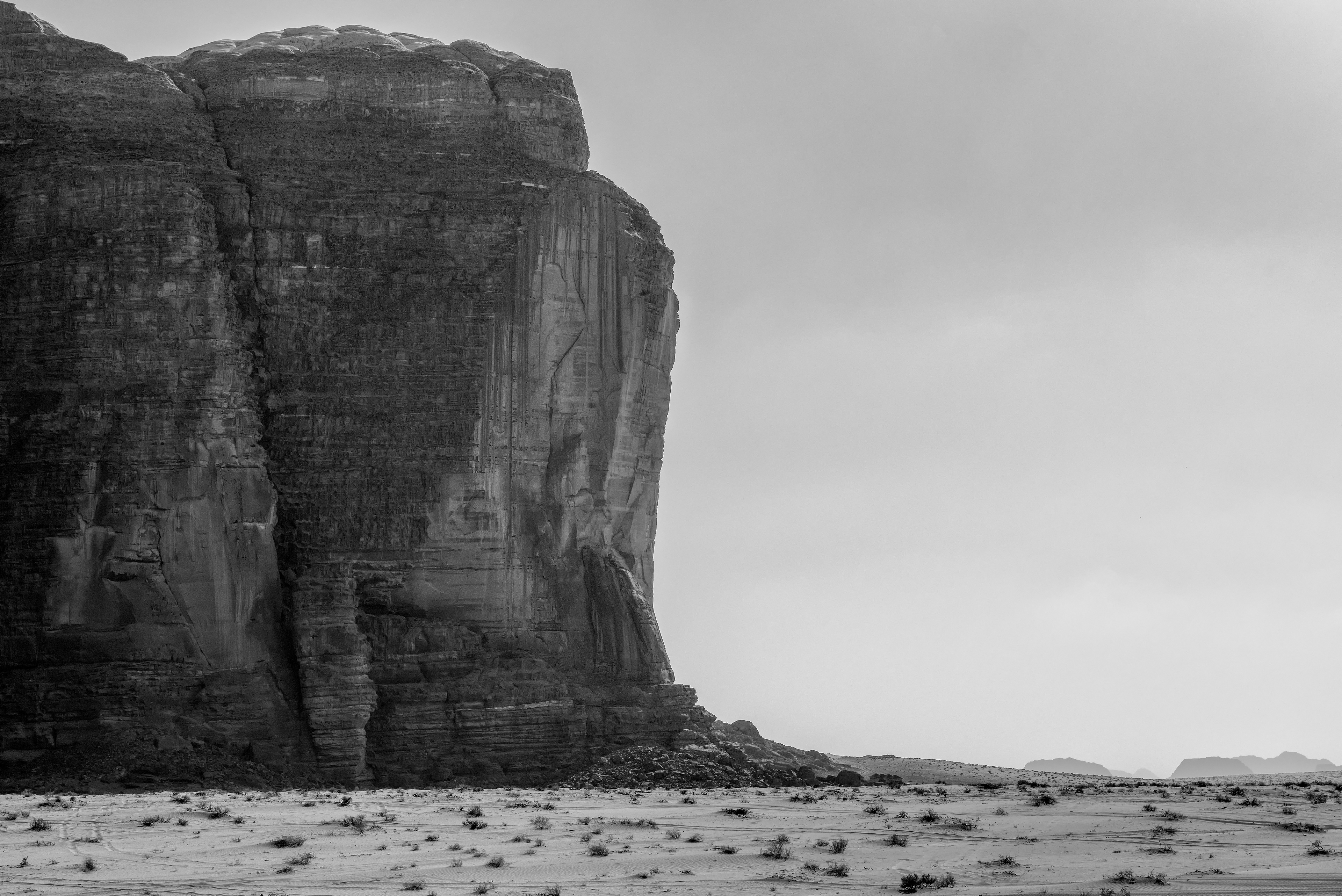
Sandstone monolith, black and white — Wadi Rum. A weathered cliff face streaked dark with desert varnish against an empty, hazy sky.
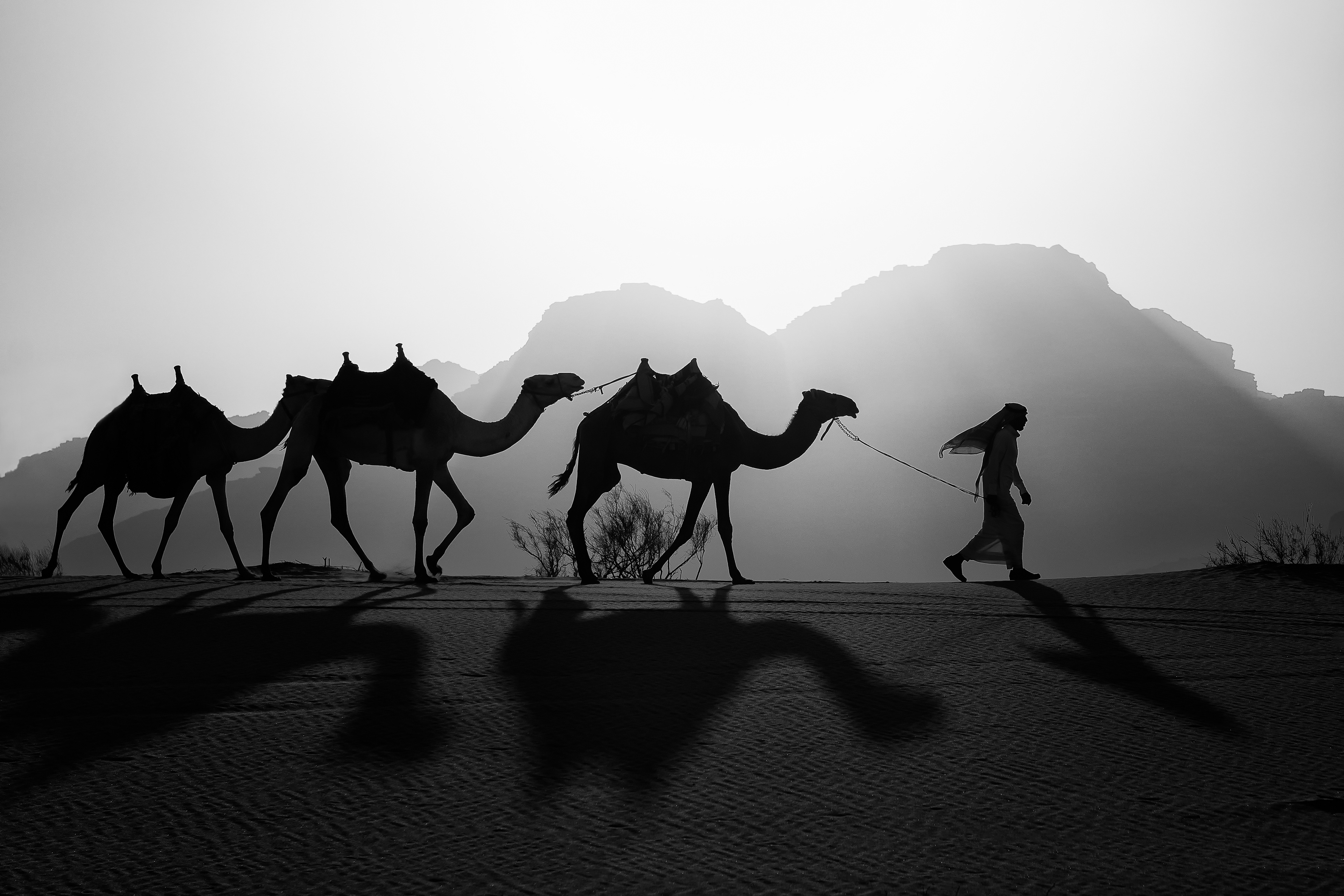
Camel caravan, silhouette — Wadi Rum, part of the ancient incense route carrying frankincense and myrrh from Arabia toward Egypt and the Levant, used by the Nabataeans and later formalized by Rome as the Via Nova Traiana.
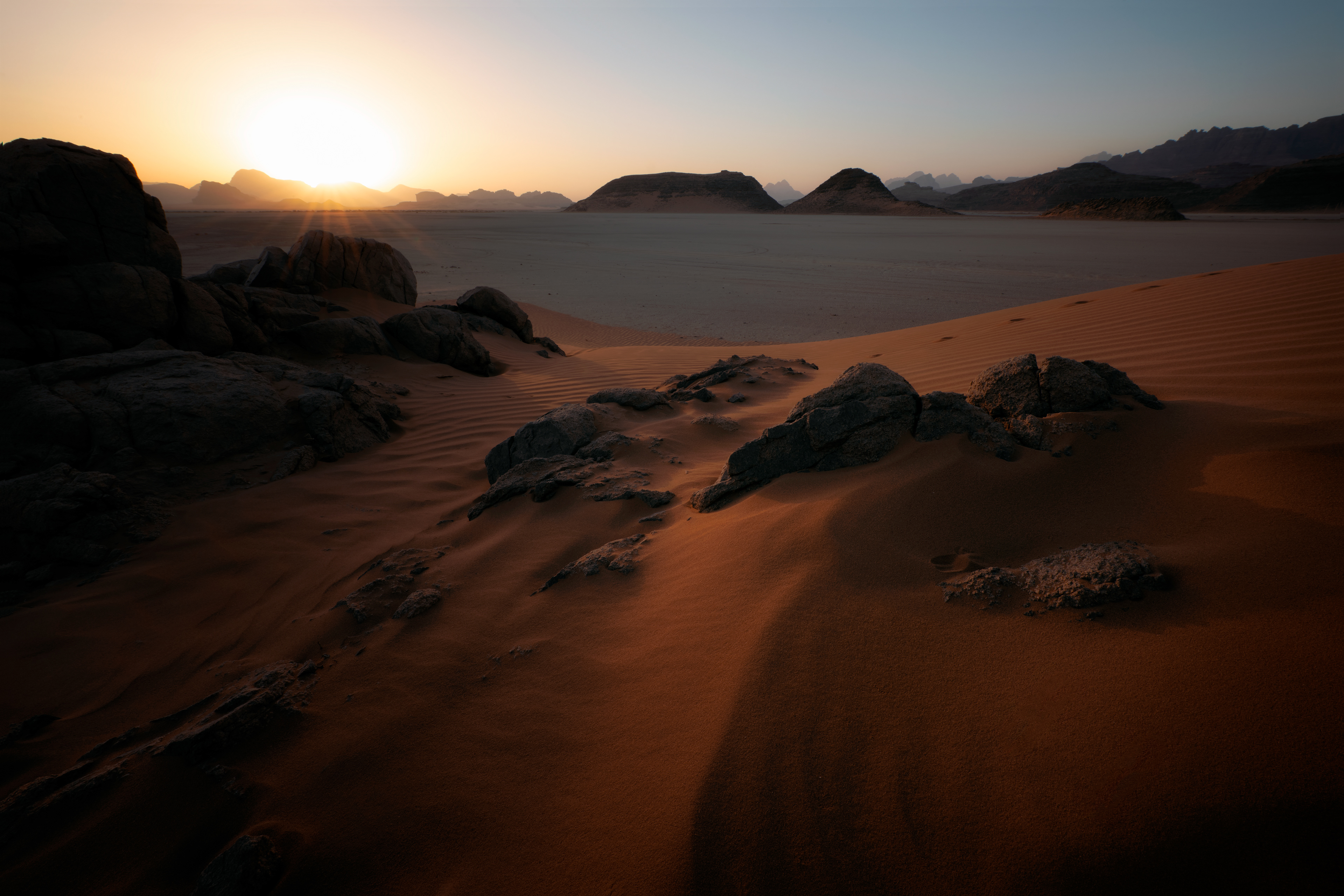
Dune with sun flare — Wadi Rum. A long wait in the sand for the sun to break the horizon, until the light finally turned warm across the dune.
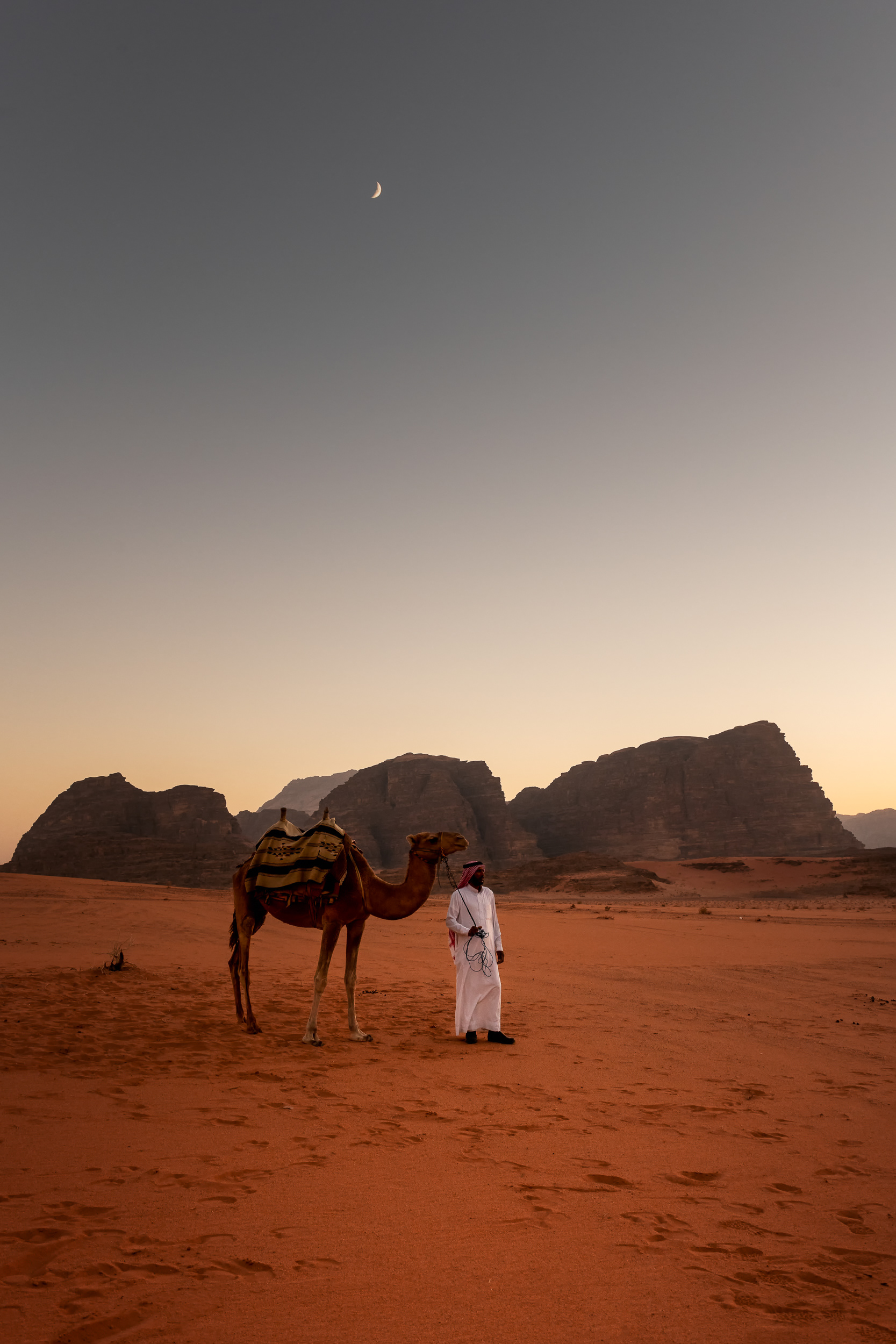
Man, camel, and crescent moon — Wadi Rum. Called the "ship of the desert," the camel made life here possible for thousands of years, when nothing else could cross this sea of sand. Man and camel stand together in the day's last warmth, a crescent moon rising above them.
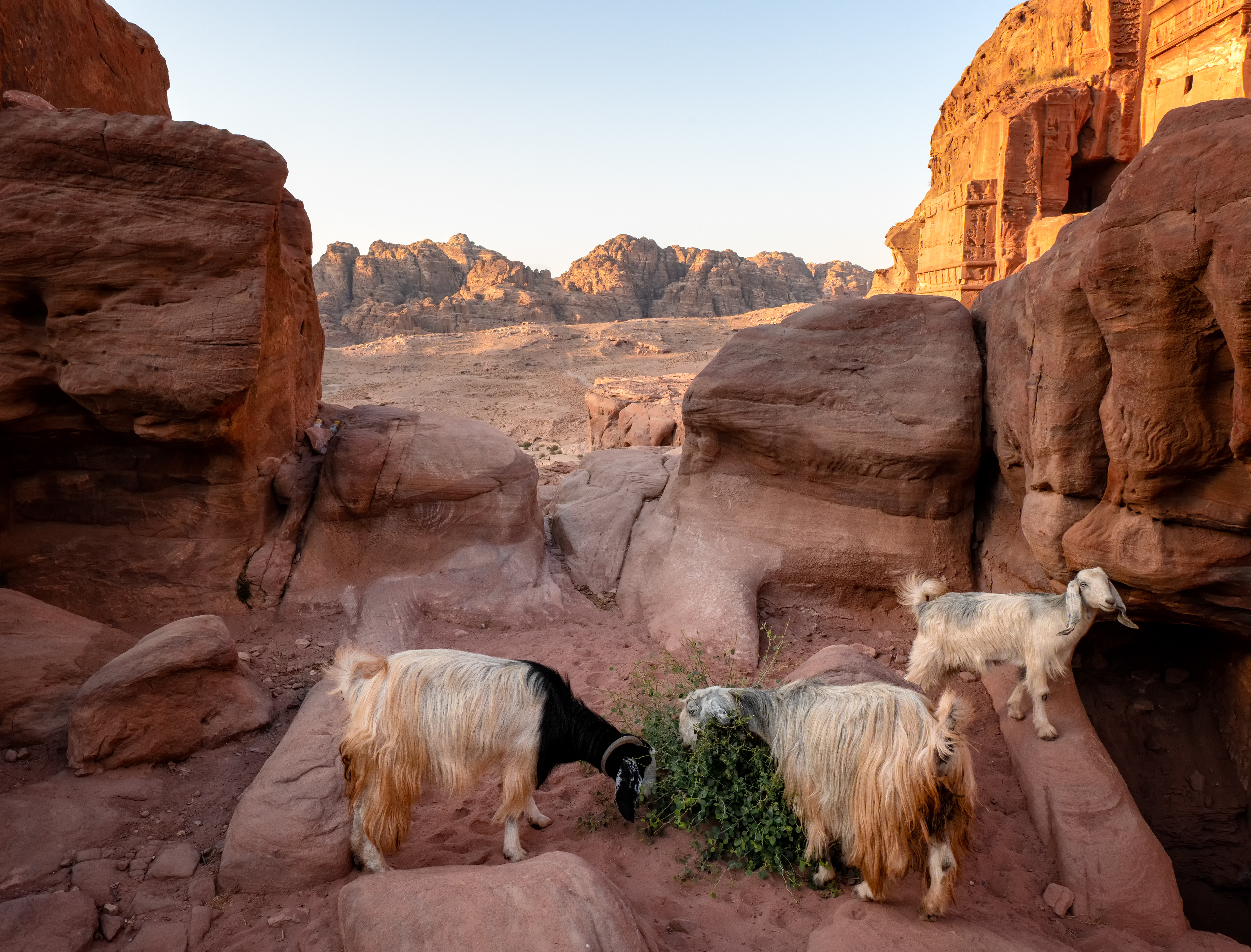
Goats at Petra — likely Black Bedouin goats, a breed still herded by Bedouin families in this part of Jordan, picking through the sandstone and browsing a caper bush rooted straight out of the rock.
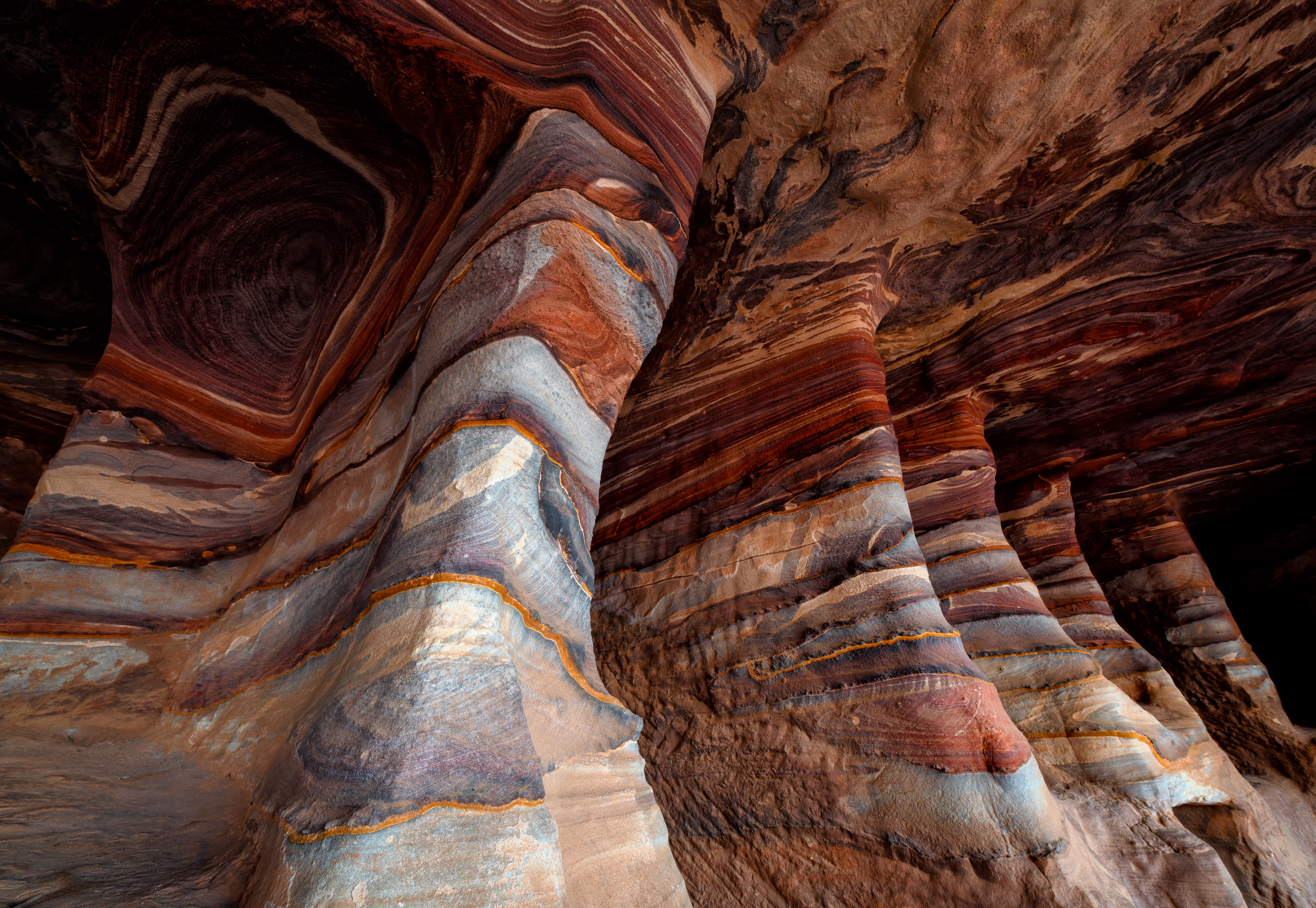
Inside one of Petra's Royal Tombs — the sandstone swirls in natural mineral bands, some of the most striking color in the whole necropolis.
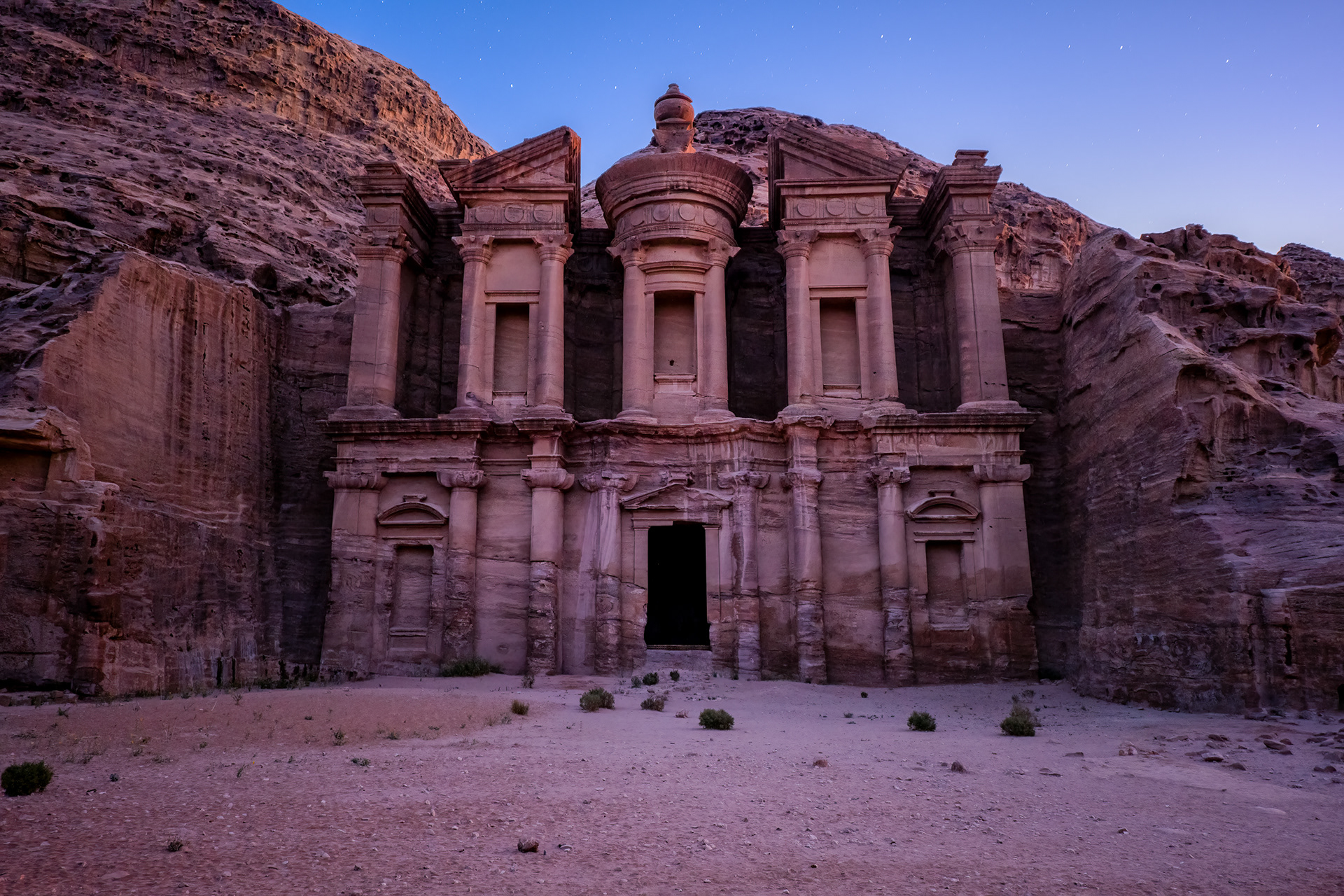
The Monastery. Carved in the first century, a hall for a dead king's feast. Later the monks came and cut crosses into the stone, and it took a new name — Ad Deir. I went up in the dark, before the sun, eight hundred steps of it. Women sold silk scarves out of the shadows. At the top, the façade stood in the last blue light.
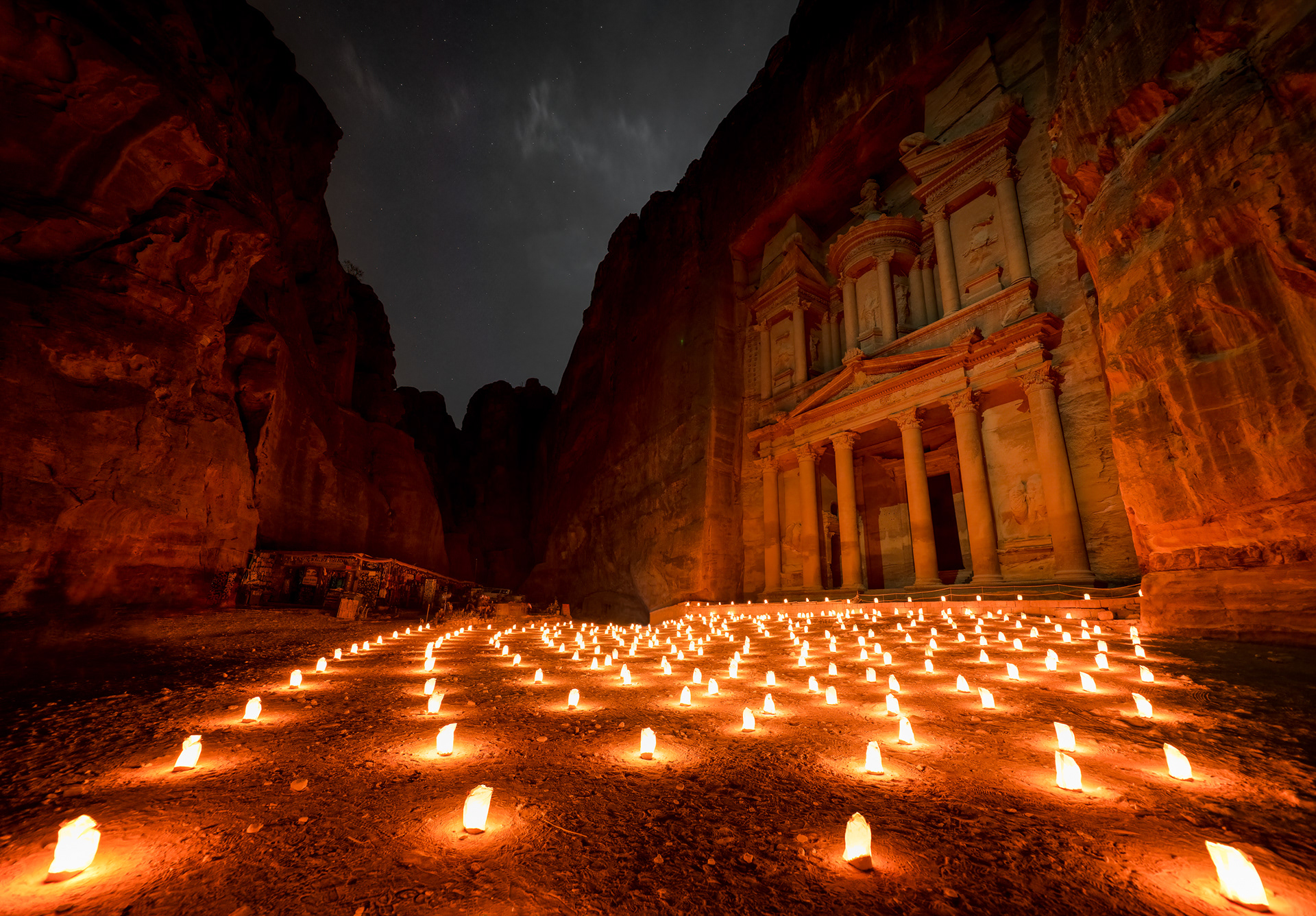
The Treasury by candlelight. Three nights a week, Jordan lights the Siq for tourists. That night the tourism board held the doors, and I had the courtyard to myself — just warm candlelight and weathered stone.
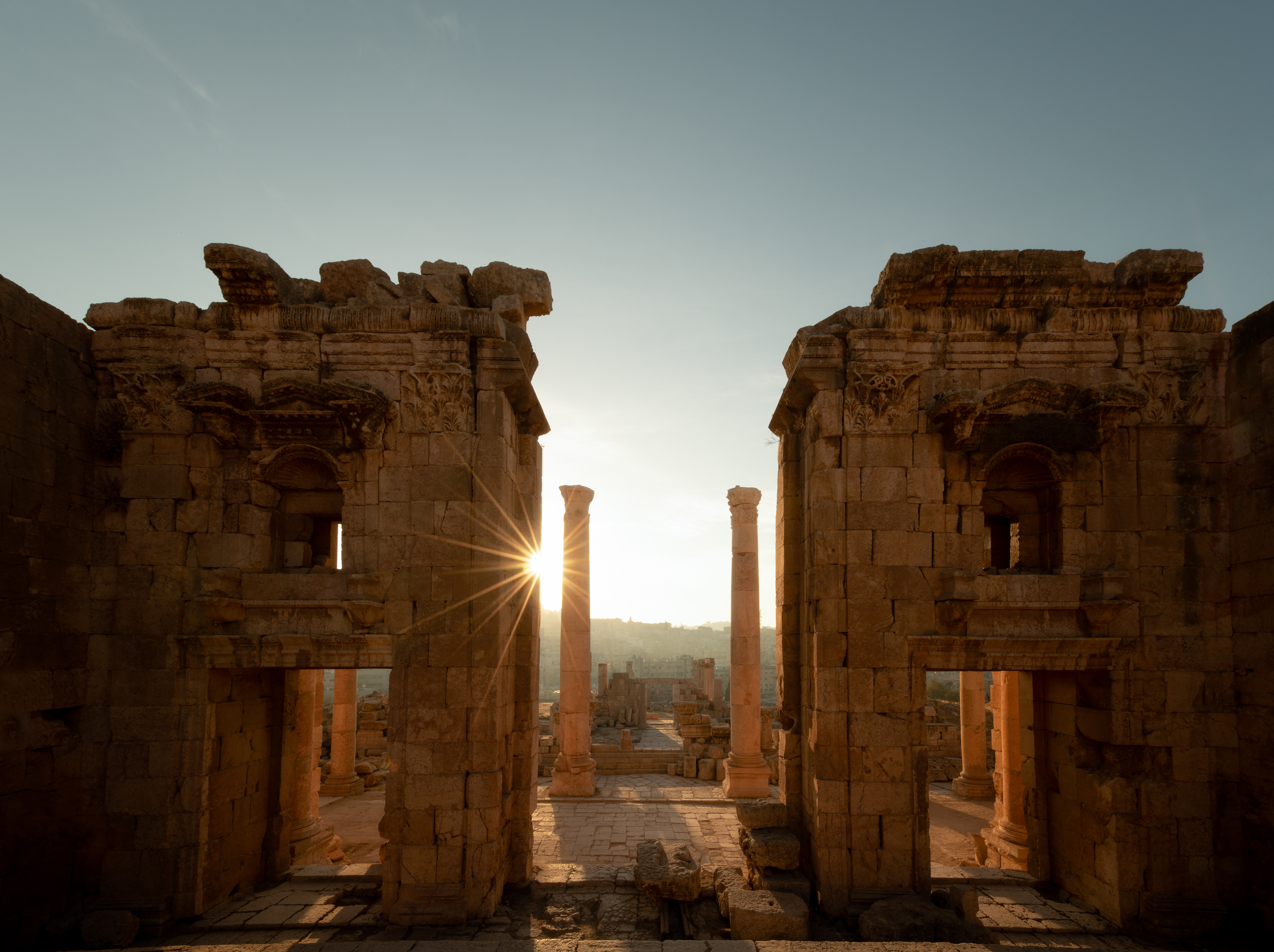
Jerash, the Temple of Artemis — built for the city's patron goddess, and never finished. The columns aren't rigid: stacked stone drums pinned on an iron dowel, built to sway in an earthquake rather than crack. The sun found the gap between them, the modern city waiting just beyond.
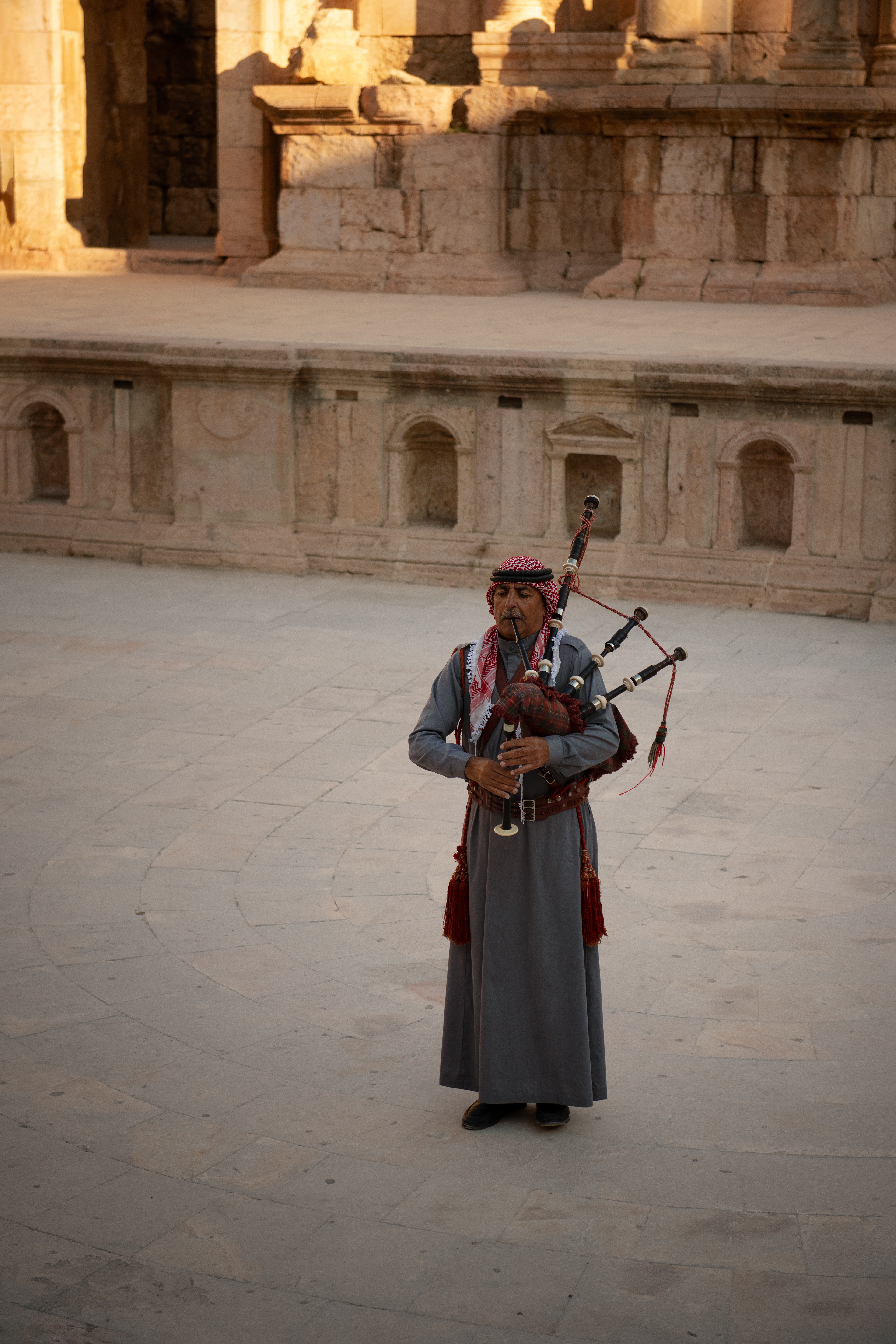
Jerash. A piper in keffiyeh, standing alone on the stage of a Roman theater. The British brought bagpipes here in the 1920s while training Transjordan's army; the Mandate ended, the pipes stayed, and they've been Jordan's own ever since.
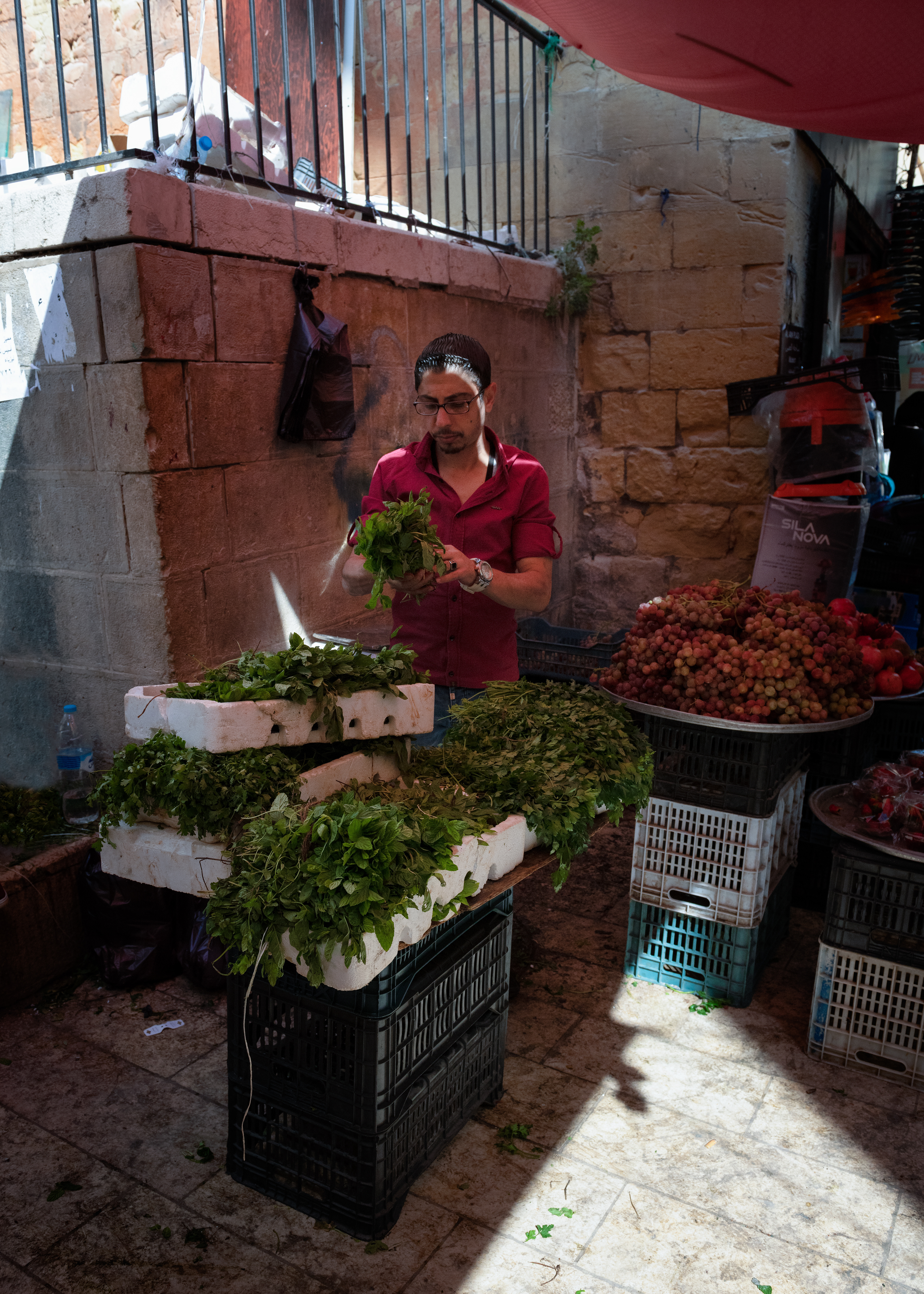
Al-Balad, downtown Amman. No ruin lit gold here, no ancient façade — just a man, a crate of mint, a wall of cut stone. I stopped, we talked, and I put my face down close to the leaves and breathed them in.
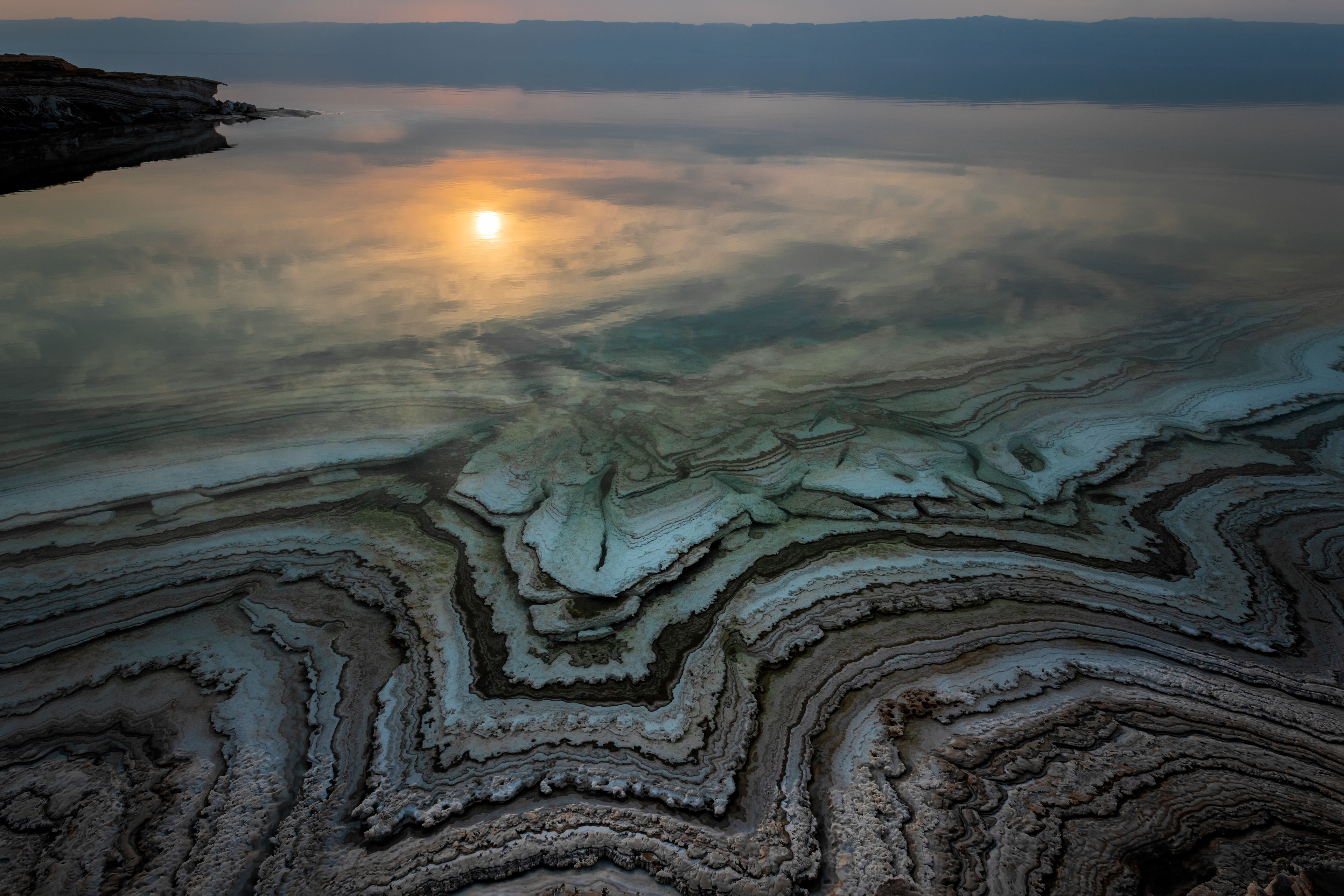
Dead Sea, sunrise. Ten times saltier than the ocean. Nothing lives in it, only salt. We stayed on the shore two days and rubbed the mud into our skin. I swam out and floated — you cannot sink here, not even trying. Each year the water pulls back a little more, and leaves these terraces behind
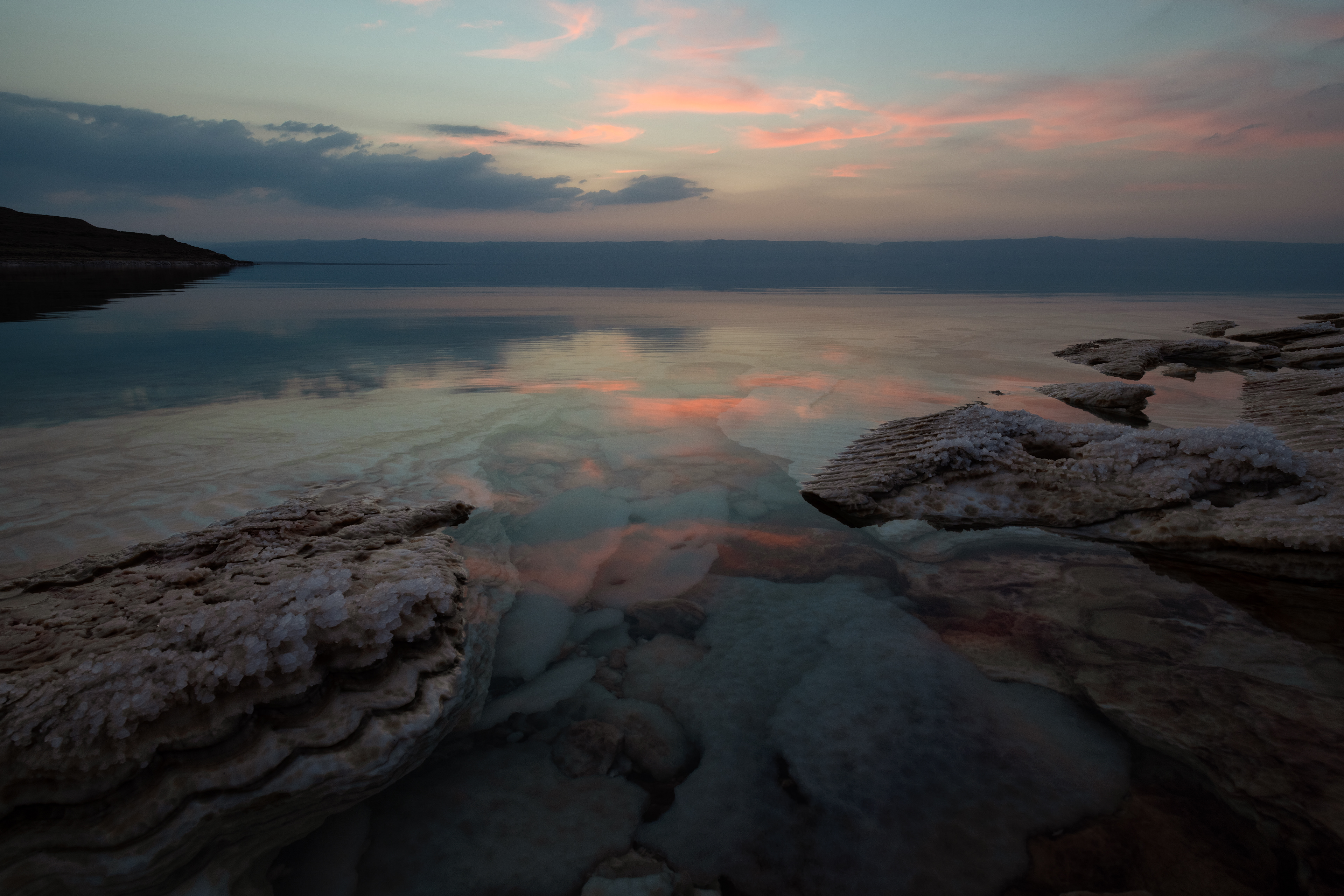
Dead Sea, dusk. Salt crusts the rocks like frost that never melts. Across the water, just visible in the haze, sits the West Bank. The sky went pink, and the sea held still enough to show it twice