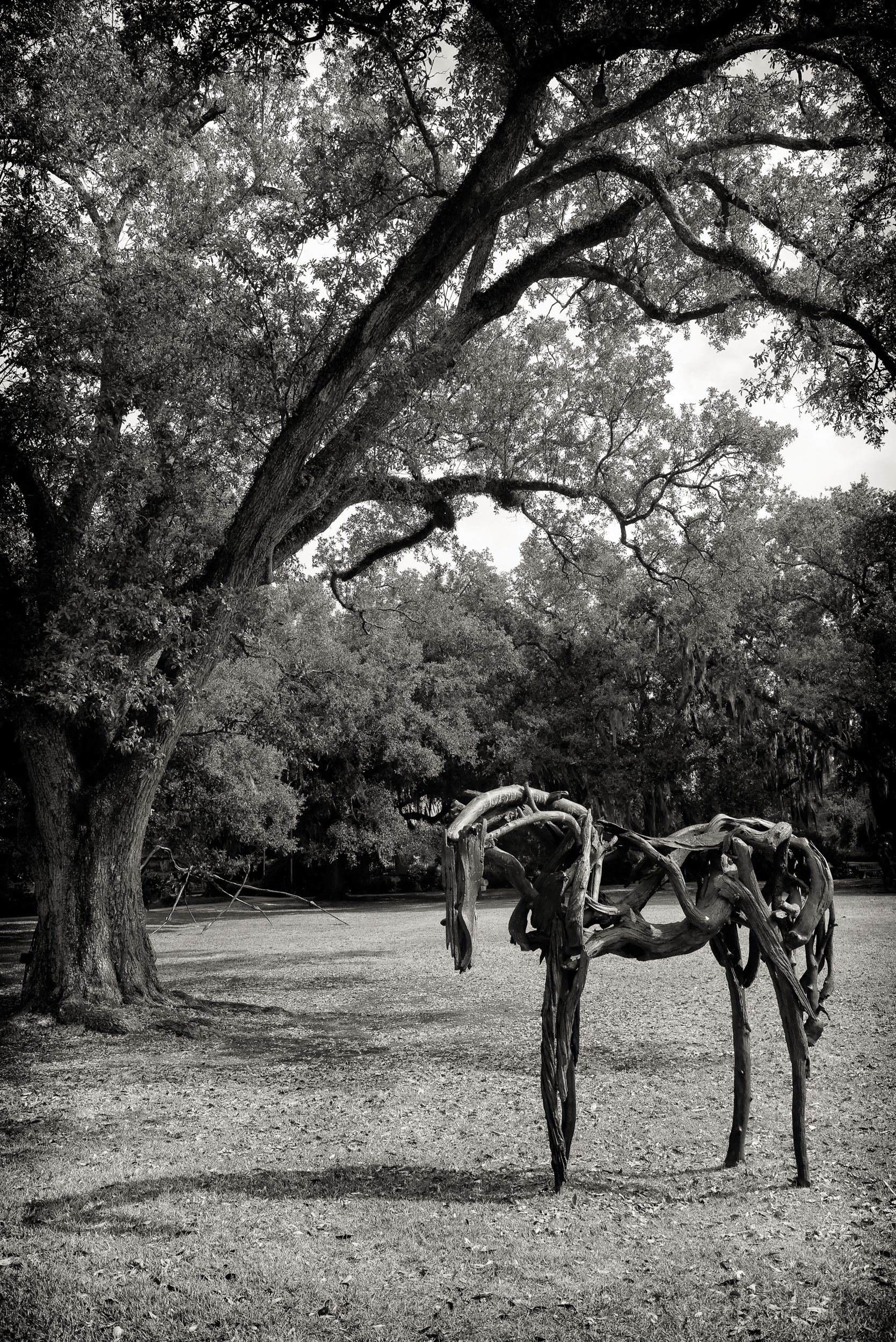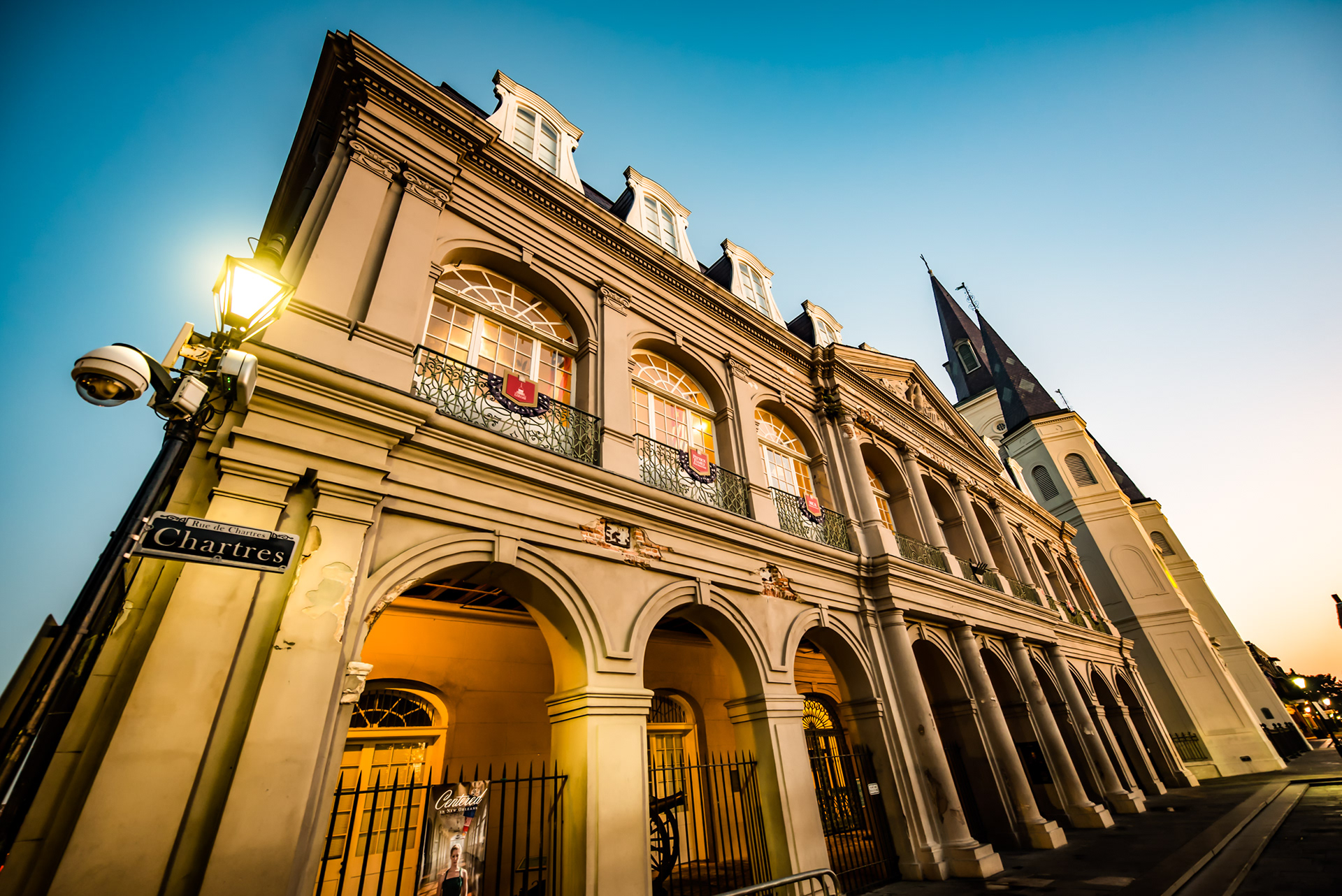
This is the Cabildo, on Chartres Street, in the last blue minutes before sunrise. Built 1794–1799 as the seat of Spanish colonial government, it's where France took Louisiana back from Spain in 1803, only to hand it to the United States twenty days later — the paperwork that doubled the country's size. It burned in 1988, a welder's spark on the copper gutters, and took six years to rebuild. None of that is visible in the photograph, of course, which is the trouble with old buildings: they hold their history quietly, and you have to already know it's there to see it.
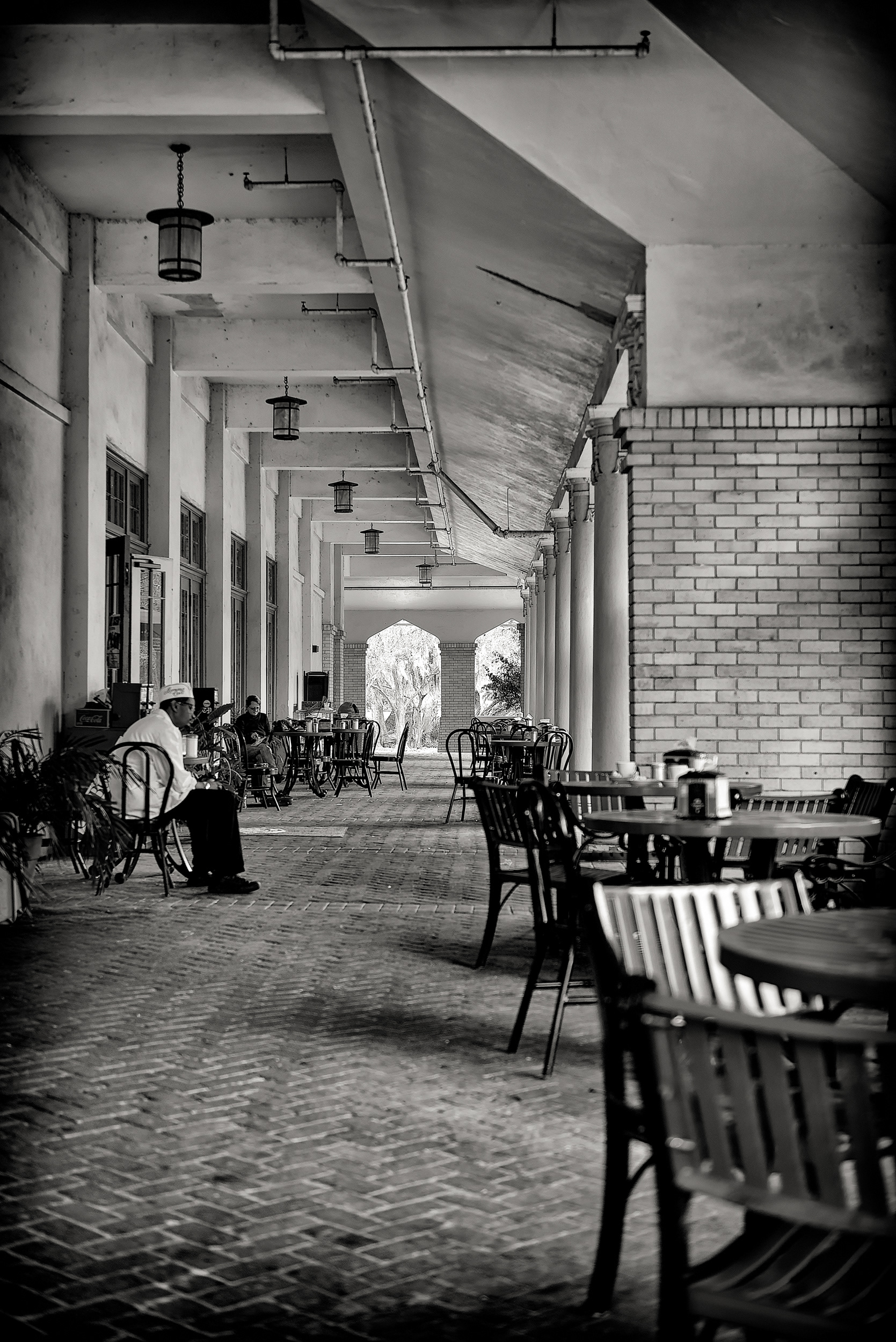
This is the arcade of the Casino Building in City Park, built in 1913 as a refreshment pavilion — which is a nicer way of saying it never actually had gambling in it, whatever the name promises. For six years, starting in 2012, this corner of it belonged to Morning Call, the 1870s coffee-and-beignet stand that got run out of the French Market by rising rent and came here looking for calmer water. It didn't find it. In 2018 the city put the lease up for bid and Café du Monde, its old French Market rival, won it outright, and Morning Call was gone by January 2019. The oaks through the archway back there don't know any of this happened and don't care.
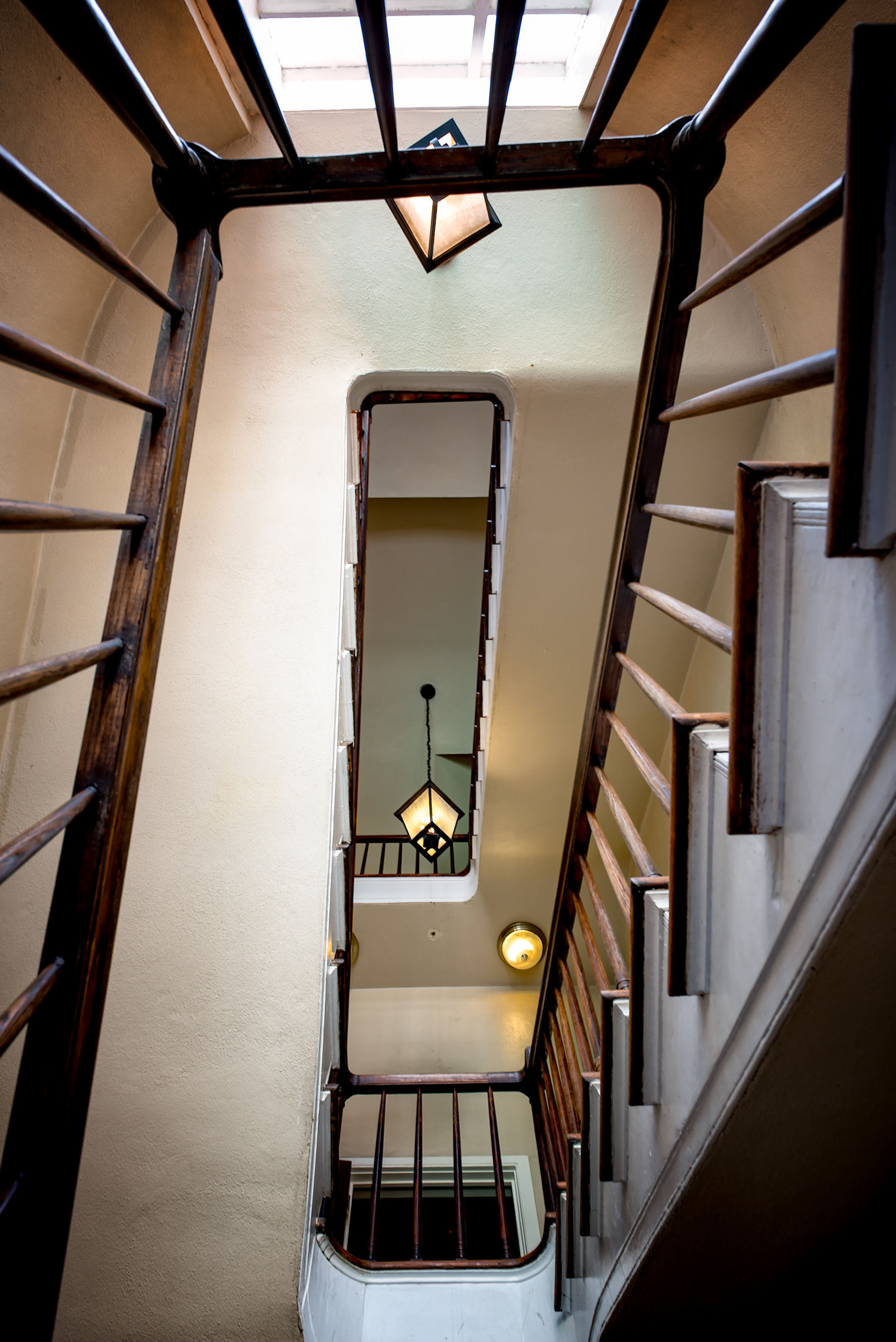
No idea whose stairwell this is — I never asked, and by the time it occurred to me to, I'd already been standing in someone's building longer than a stranger reasonably should. French Quarter townhouses run long and narrow, which starves the middle floors of light, so builders added stair towers like this one, with a skylight at the top pulling daylight down through every landing. Whoever's building this is, it's doing exactly what it was built to do.
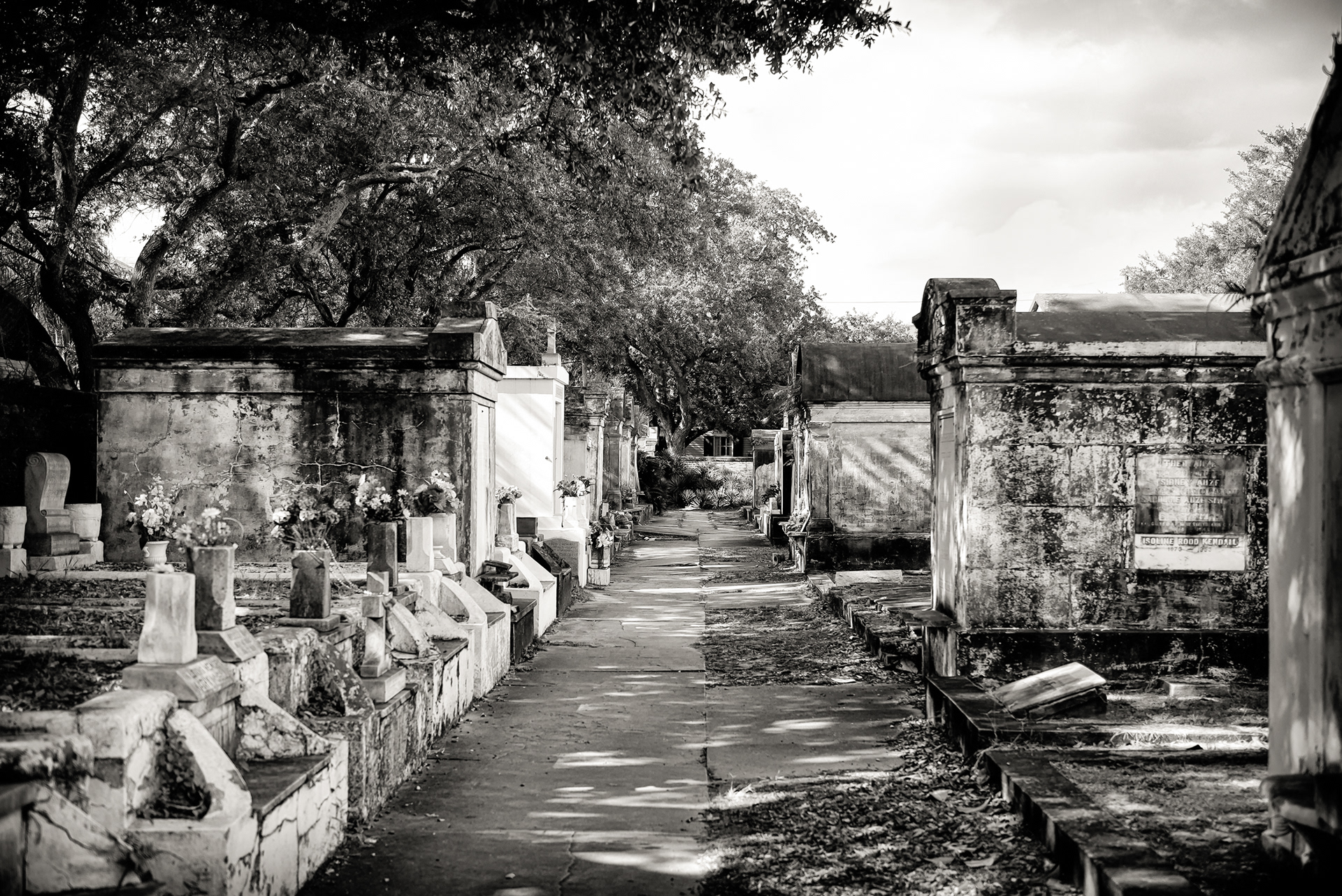
This is Lafayette Cemetery No. 1, dedicated in 1833 for the town of Lafayette, which got swallowed into New Orleans proper in 1852 and took its cemetery along as a dowry. The tombs are all above ground because the water table here doesn't leave much choice — bury a coffin and it has a way of floating back up, so the city borrowed a French and Spanish habit of building house-sized ovens for the dead instead. The tradition inside them is stranger than the architecture: a body sits for a year and a day, and then it's pushed to the back to make room, ashes and bones settling into a communal vault at the bottom so the same tomb can serve a family for a couple hundred years without ever running out of room. It works out to a kind of efficient afterlife, everyone taking turns.
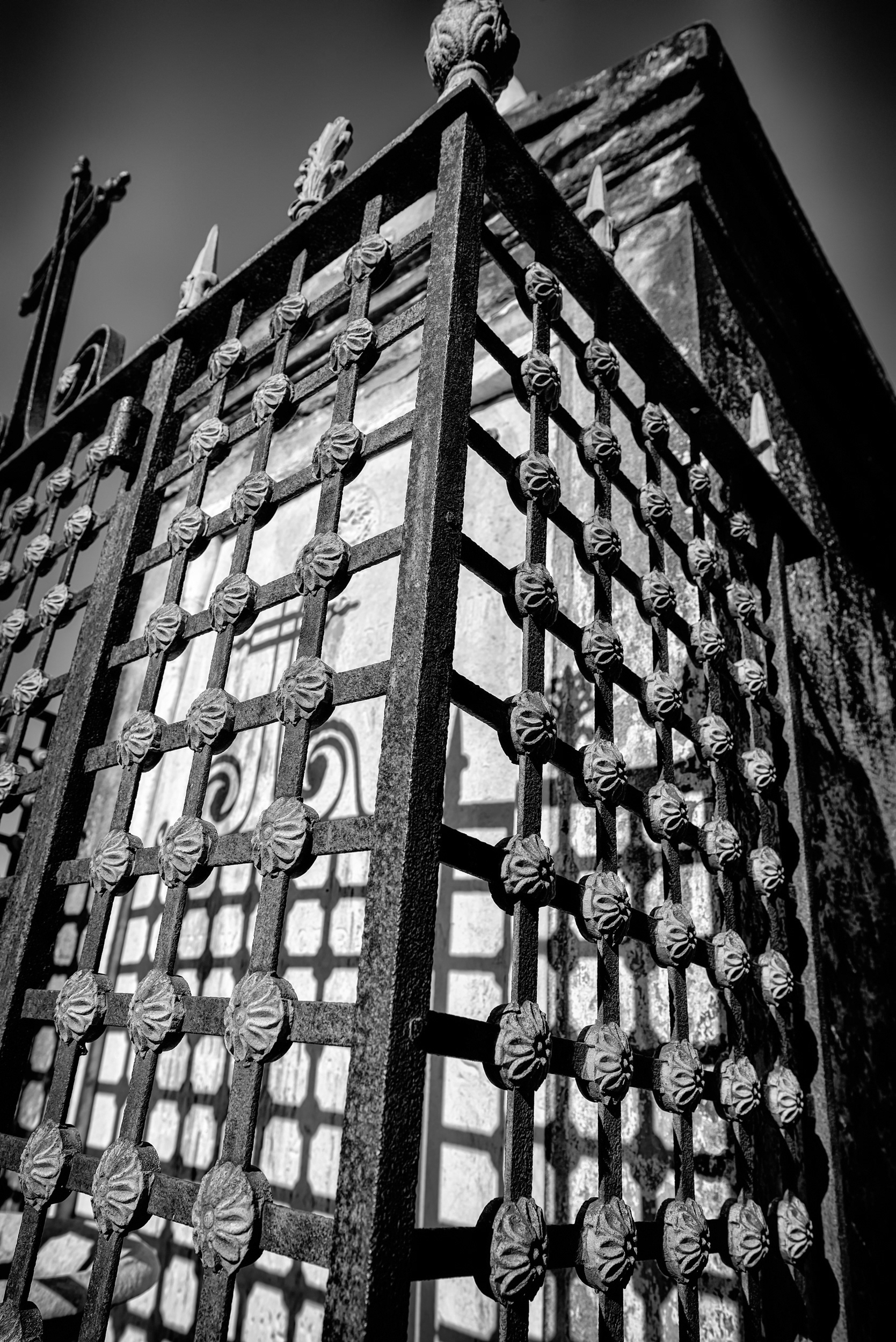
An iron security grille bolted over a tomb front — common in New Orleans cemeteries, where marble tablets and decorative ironwork have a long history of walking off. The city's ornamental ironwork tradition runs deep (inverted torches for the eternal soul, gryphons for guardianship), but this one's plain enough to suggest it was built to do a job, not be admired.
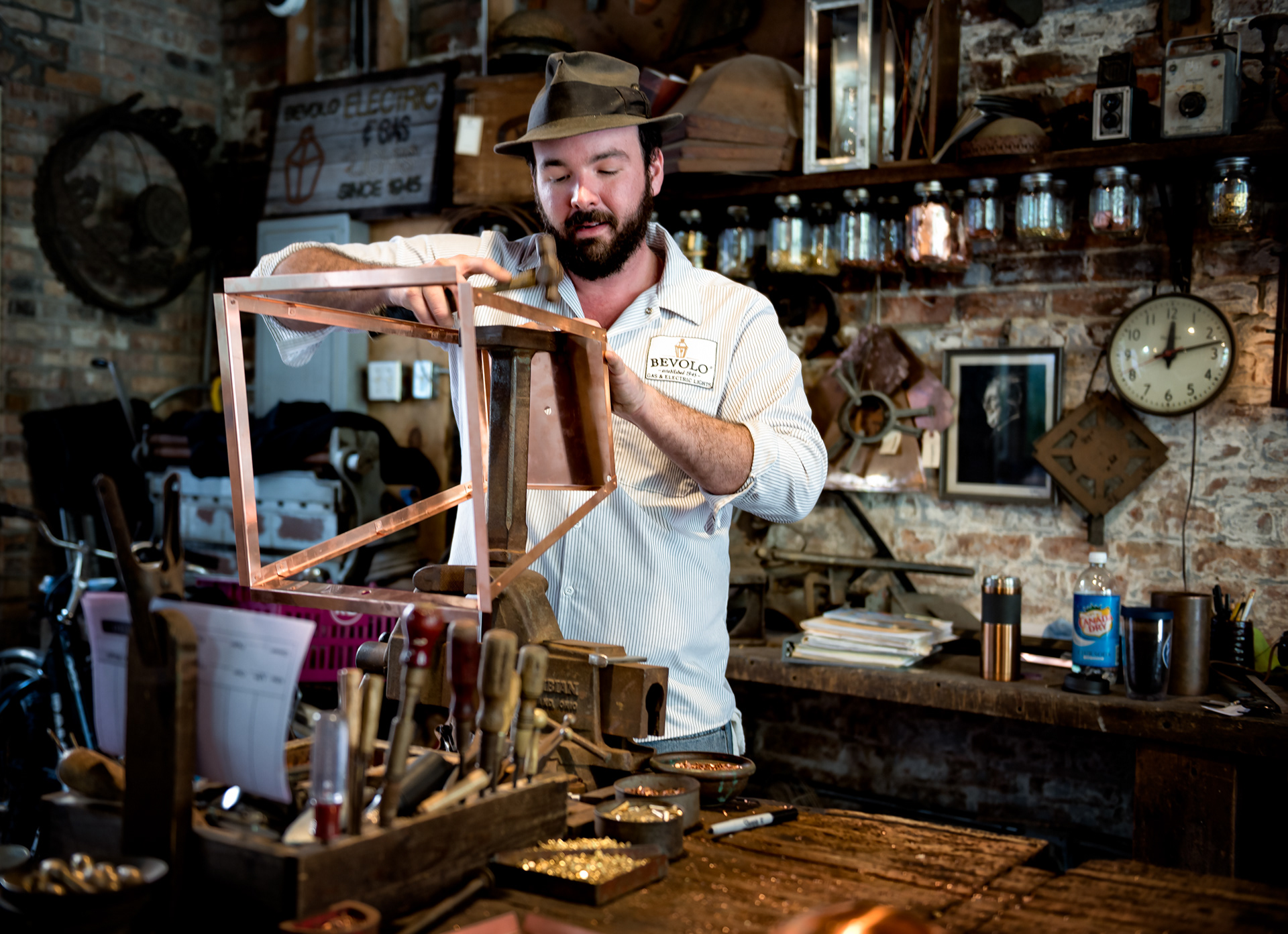
This is a Bevolo lantern going together, hand-riveted rather than soldered, which is the whole point of the company — solder gives out eventually in this climate, rivets don't. Andrew Bevolo Sr. started the business in 1945 after working for Andrew Higgins, the New Orleans boat builder who spent the war turning out the landing craft that got the Army onto beaches at Normandy and Iwo Jima. Bevolo took that same practical, built-to-outlast-you sensibility and pointed it at copper gas lamps instead. Eighty years later his grandson runs the company, and the lanterns hanging over half the balconies in the French Quarter and the Garden District came out of a shop that still looks more or less like this one.
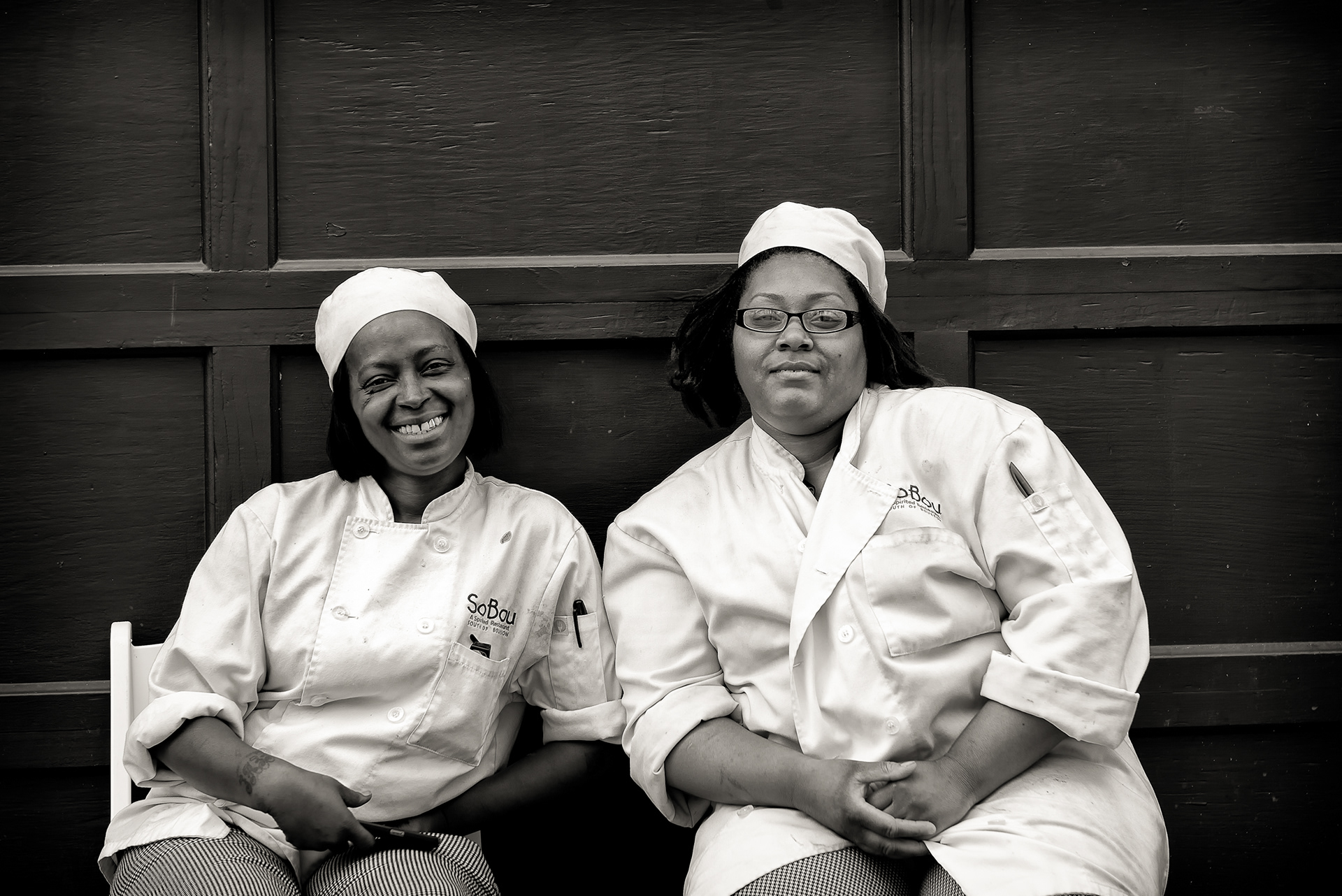
These two worked at SoBou, the Commander's Palace family's cocktail-and-Creole spot inside the W Hotel on Chartres Street — the name is just a location, South of Bourbon, though it always sounded like it should mean something grander. It opened in 2012 with the kind of pedigree New Orleans restaurants either have or don't (the Brennans, several generations deep into running this city's dining rooms), and it's closed now, one more kitchen that outlasted the trend it opened into and then didn't outlast the next one. Whatever this shift looked like from their side of the pass, it's over.
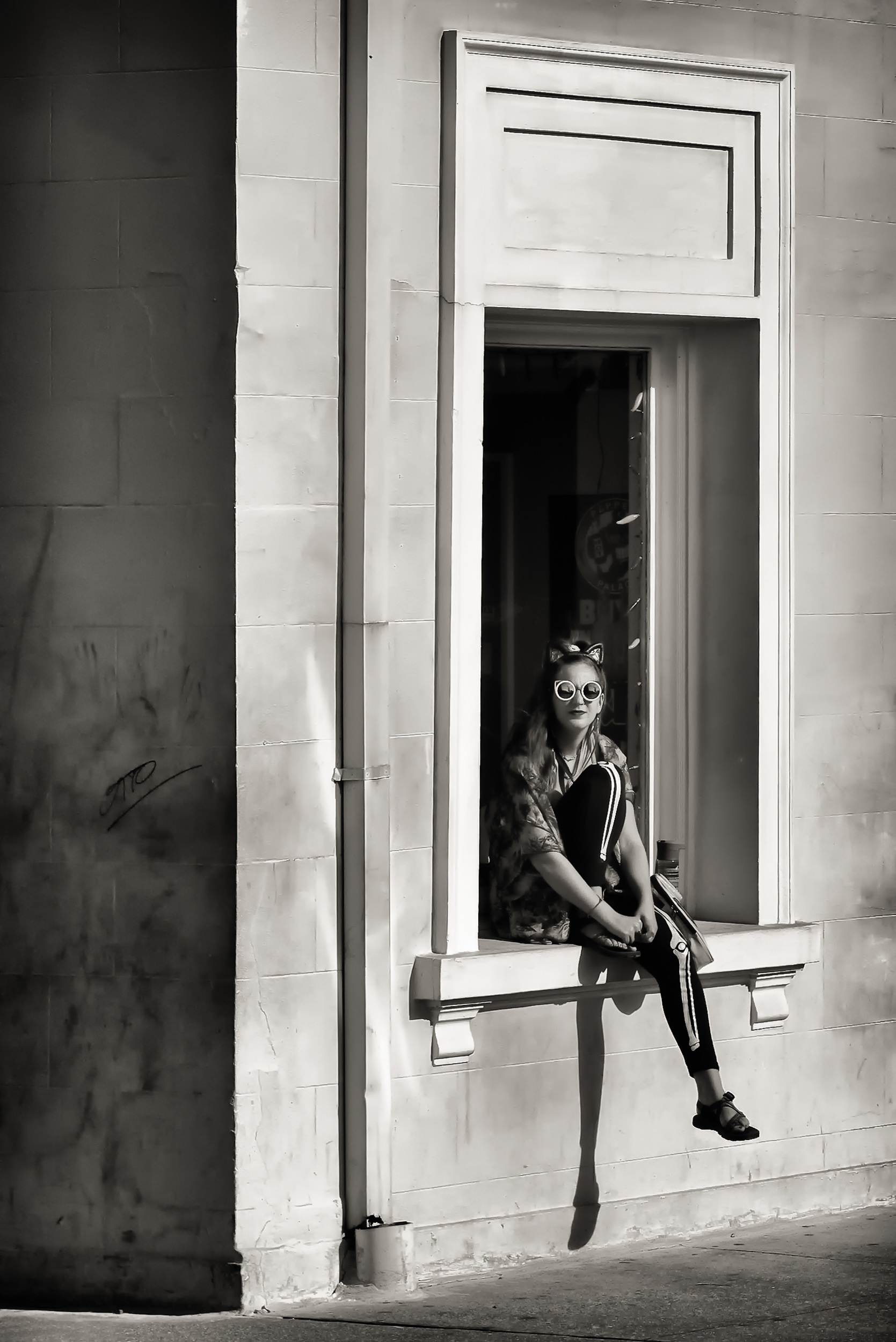
I don't know anything about her — not her name, not why she'd picked that window ledge to sit in like it was furniture, not whether she noticed me taking this before or after I'd already taken it. That's most of street photography, honestly: you get one frame of somebody's afternoon and none of the rest of it, and you're stuck making guesses about a person who owes you nothing and gave you nothing except, in this case, a very good hat.
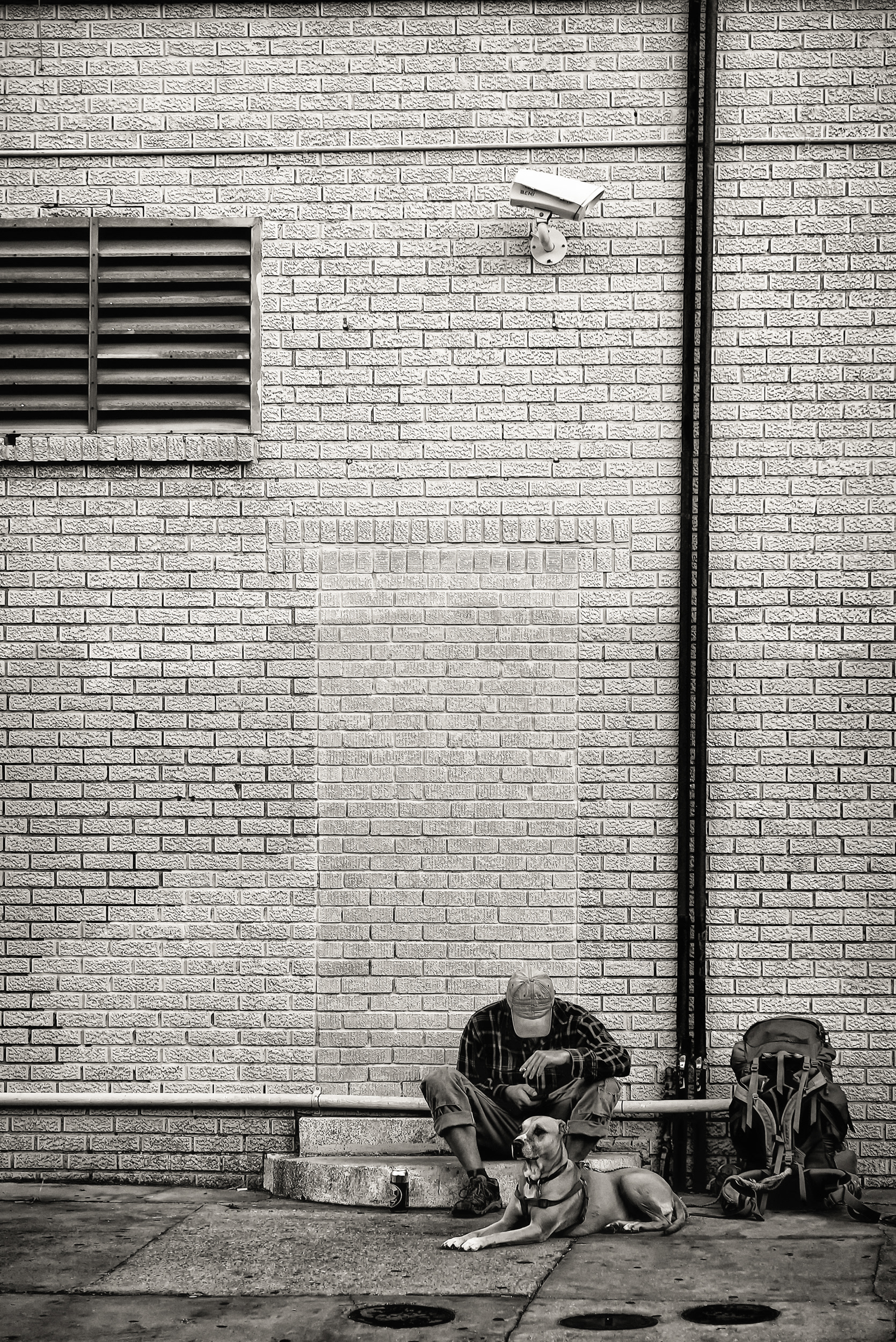
A man and his dog on a stoop, backpack beside them, a security camera watching from above. I don't know their story — just the irony of the camera
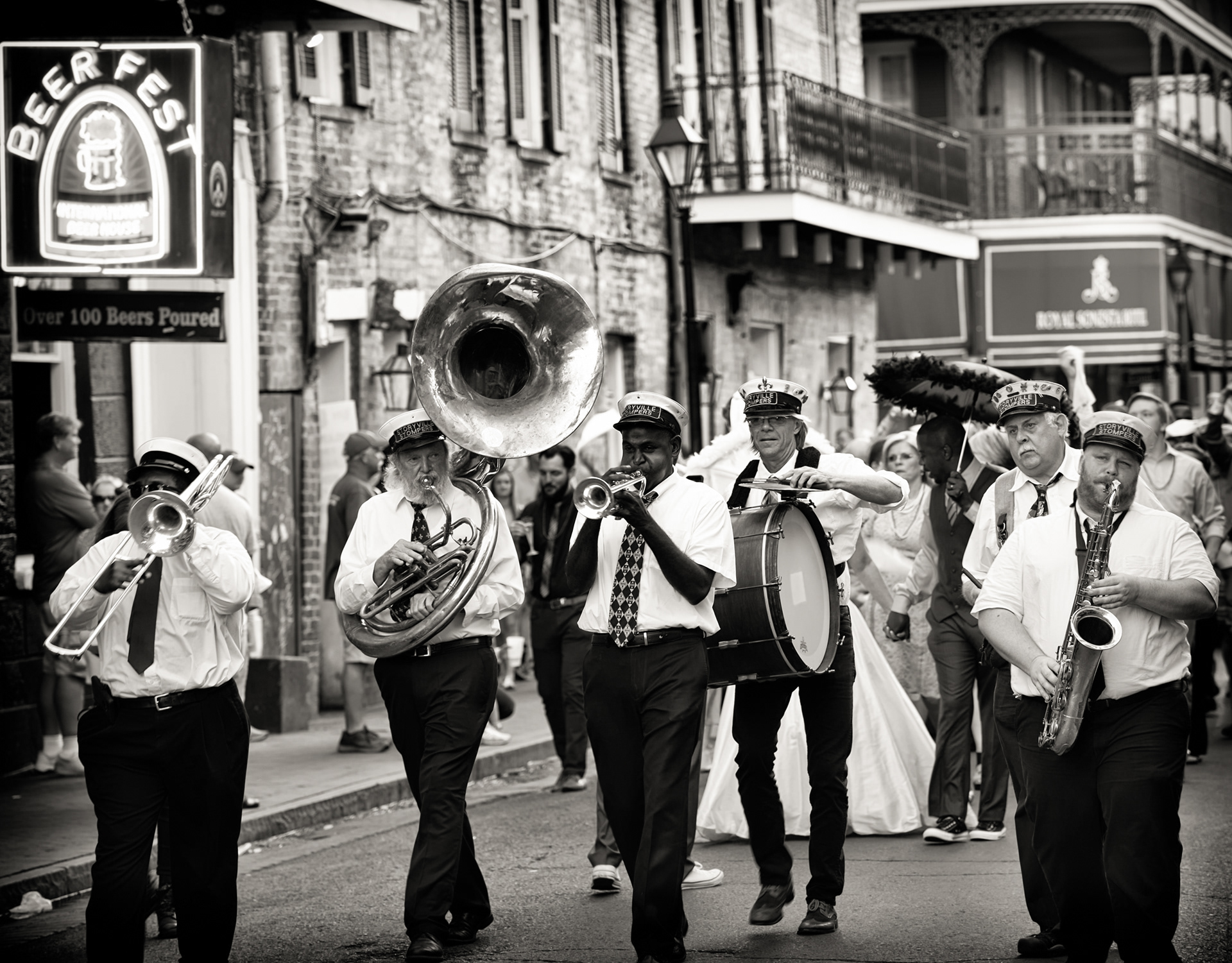
Their hats say Storyville Stompers — the band's actual name, thirty years and six thousand gigs in — leading a wedding second line down a French Quarter street: tuba, trombone, trumpet, snare, sax, the bride trailing behind in white under an umbrella that's tradition, not rain gear. New Orleans brass bands trace to emancipation-era parade and funeral societies, and jazz grew straight out of that sound. A band leading a bride and groom past a Beer Fest sign isn't a novelty for tourists — it's the same tradition, just pointed at a wedding instead of a funeral.
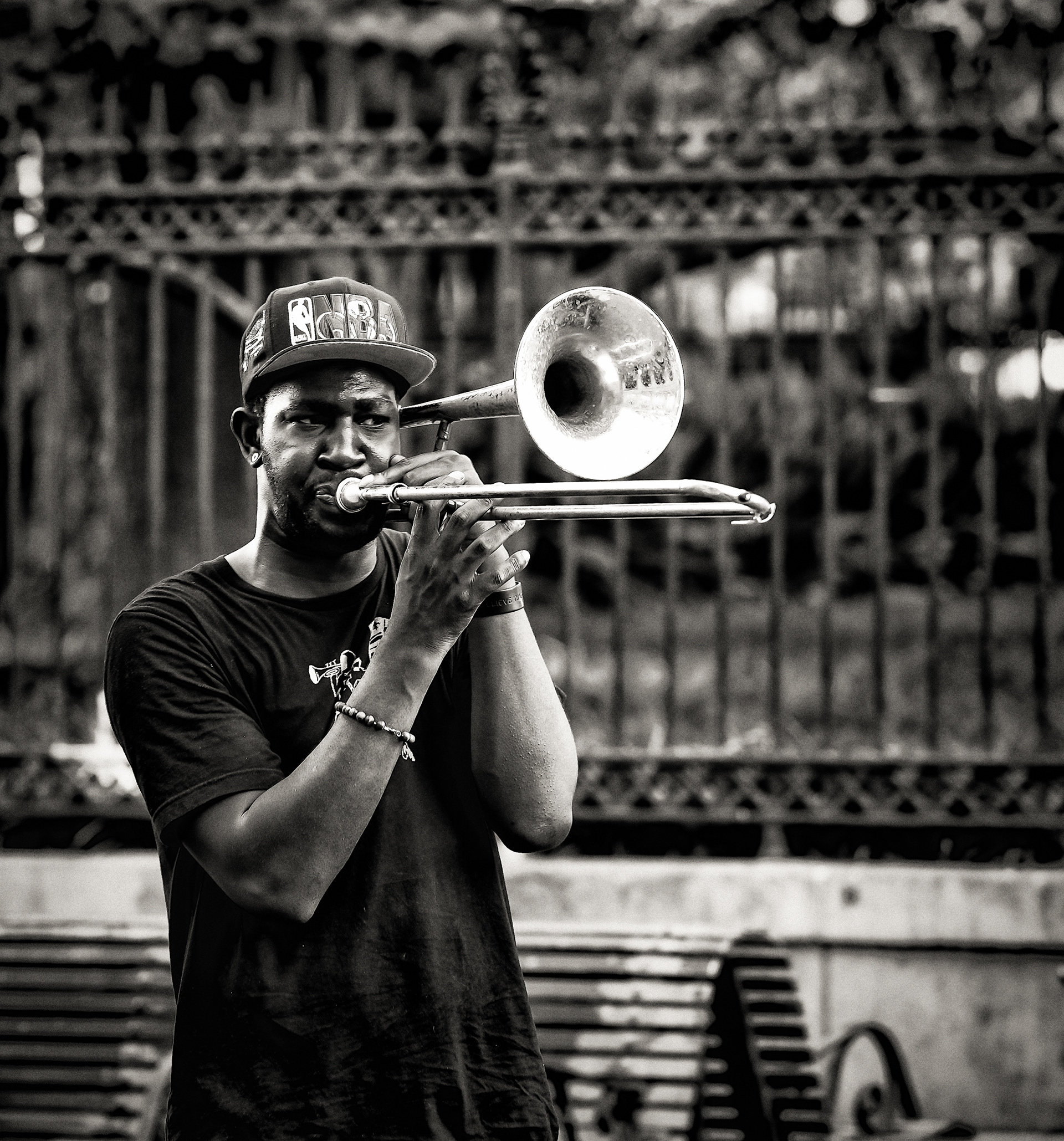
No band this time — just him, a trombone, and an iron fence. Working New Orleans brass players mostly come up this way: busking alone on Quarter sidewalks, a stop between the school band program and a booked gig. He's not settling for a street corner. This is how you get good enough to leave it.
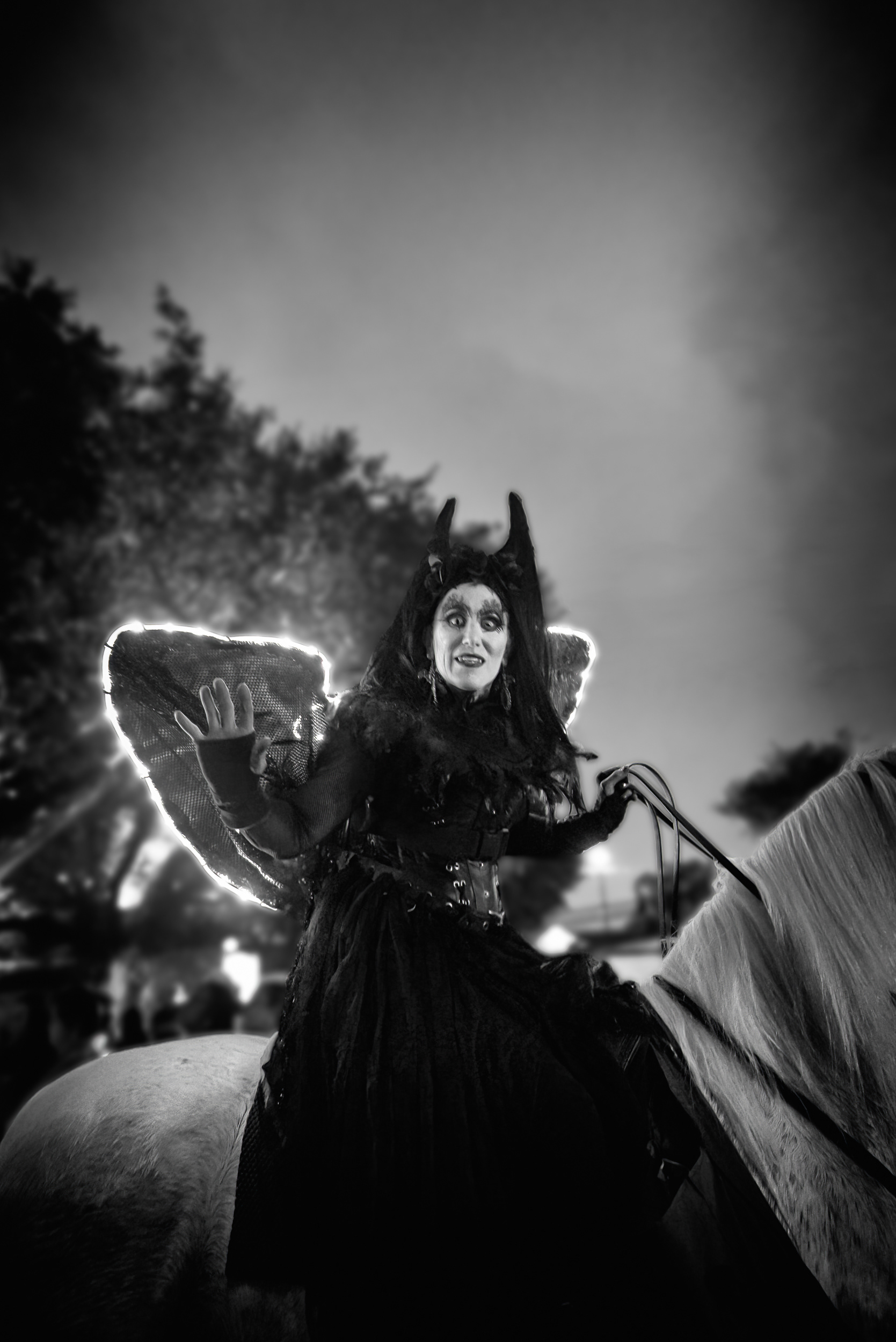
Somebody's excellent Maleficent, on an actual horse, riding in the Krewe of Boo — New Orleans's official Halloween parade, founded only in 2008, a relative infant by local krewe standards. I don't know her role in the krewe, but mounted riders have been part of New Orleans parades for a long time, this one included.

Same parade, same night — a woman with a skull-painted face holding up a pole rigged with two paper lanterns, and behind her, out of focus, a line of women in matching corsets striking the same pose in unison. That's an actual New Orleans institution: independent all-female dance troupes that started showing up in parades in the early 2000s, marching as their own unit instead of riding a float. I don't know which specific troupe this one is.
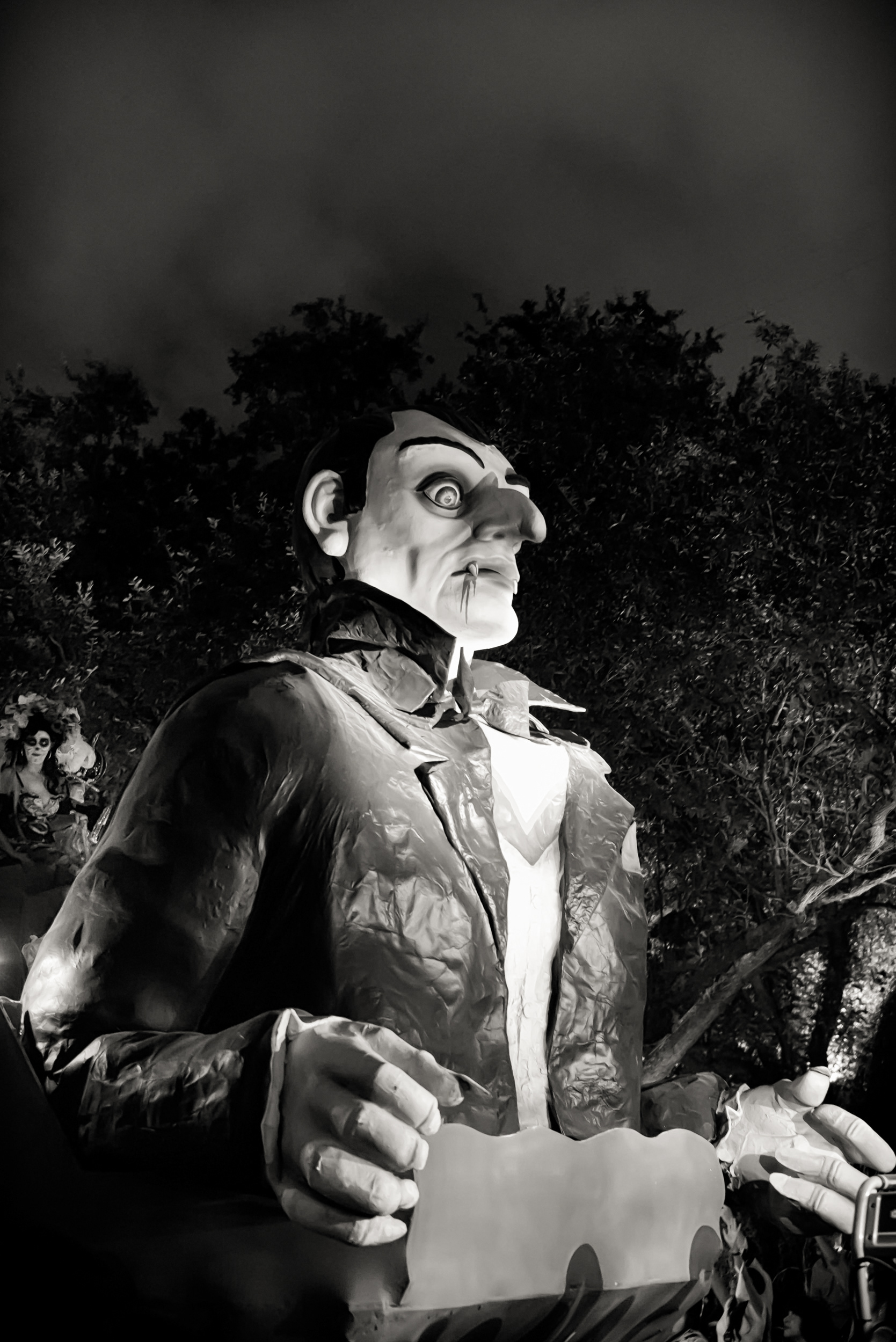
This one looks mounted on a vehicle or some motorized rig rather than carried by a person underneath — an update on a much older New Orleans trick. In 1873, the Mistick Krewe of Comus staged the city's first fabricated Carnival parade using giant papier-mâché figures, some twelve feet tall, walked by krewe members inside them. Same basic idea, different engine.
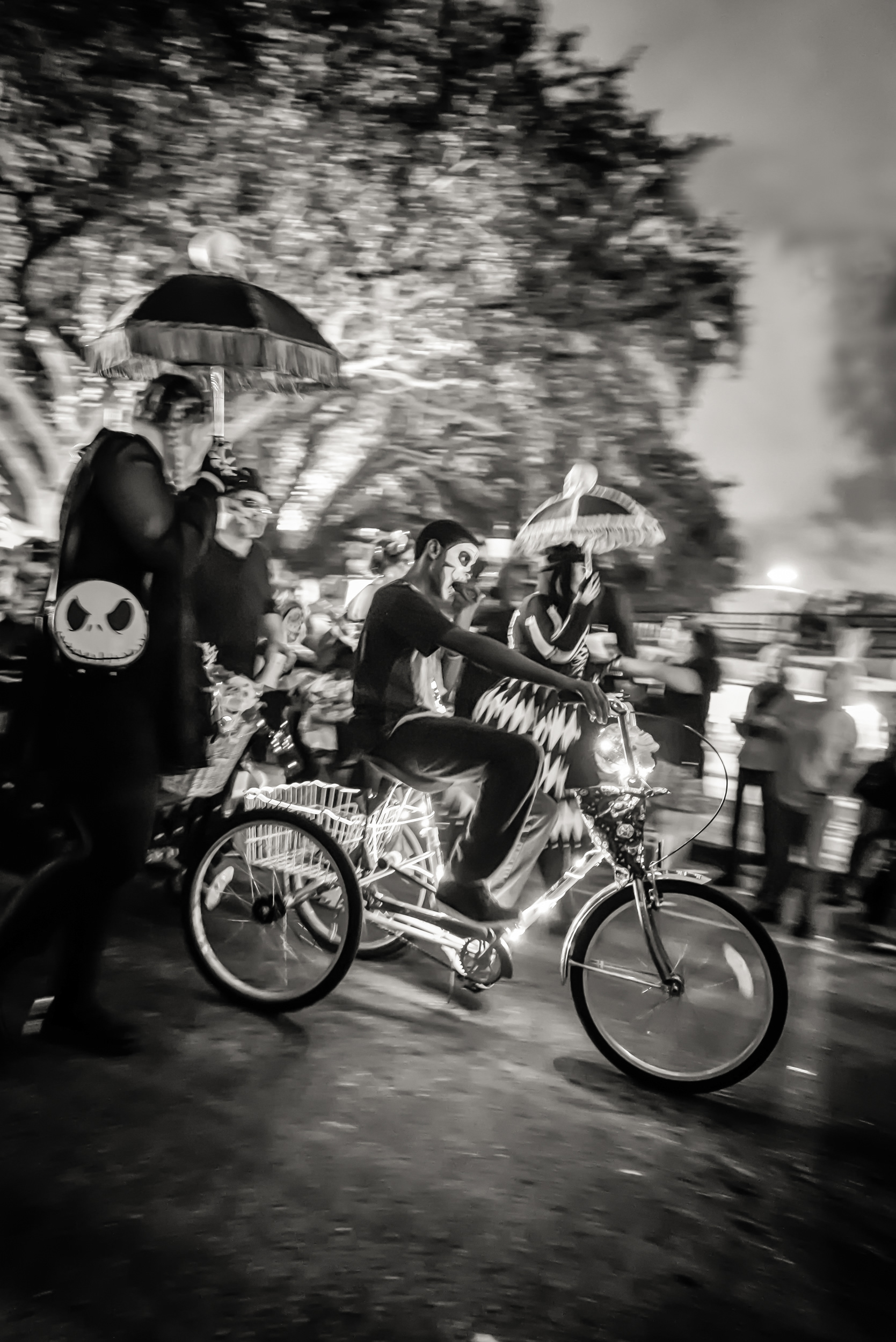
A man pedals a decorated tricycle through the crowd, face painted into a skull, and he's not even the densest part of the frame — there's a parasol behind him, another parasol-and-skeleton-mask combo to his right, a zebra-striped harlequin dress somewhere in the mix, which is to say the actual subject here might just be how much costume a single frame can hold before it stops registering as "a lot" and starts registering as, simply, the ambient condition of the evening (there's a term for this in crowd photography, probably, though I don't know it)