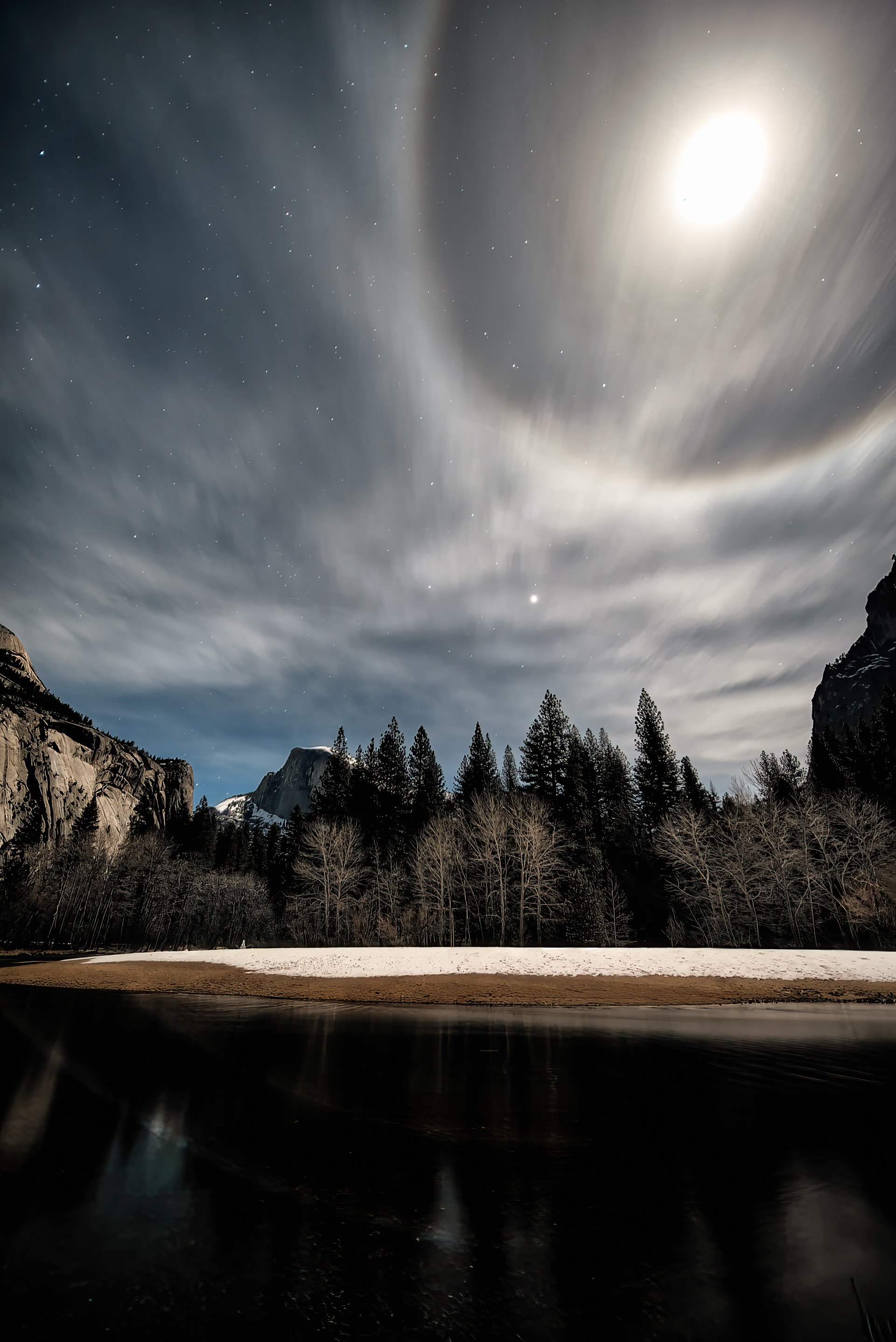
Moon halo over the valley, night: A 22-degree halo — that's not an approximation, it's ice crystals in a cirrostratus deck twenty-some-thousand feet up, each one bending moonlight at almost exactly 21.84 degrees, which is why you get a ring instead of a smear. Old weather lore reads a halo like this as a warning: storm within a day or two. Whether one actually showed up is a detail I'm missing.
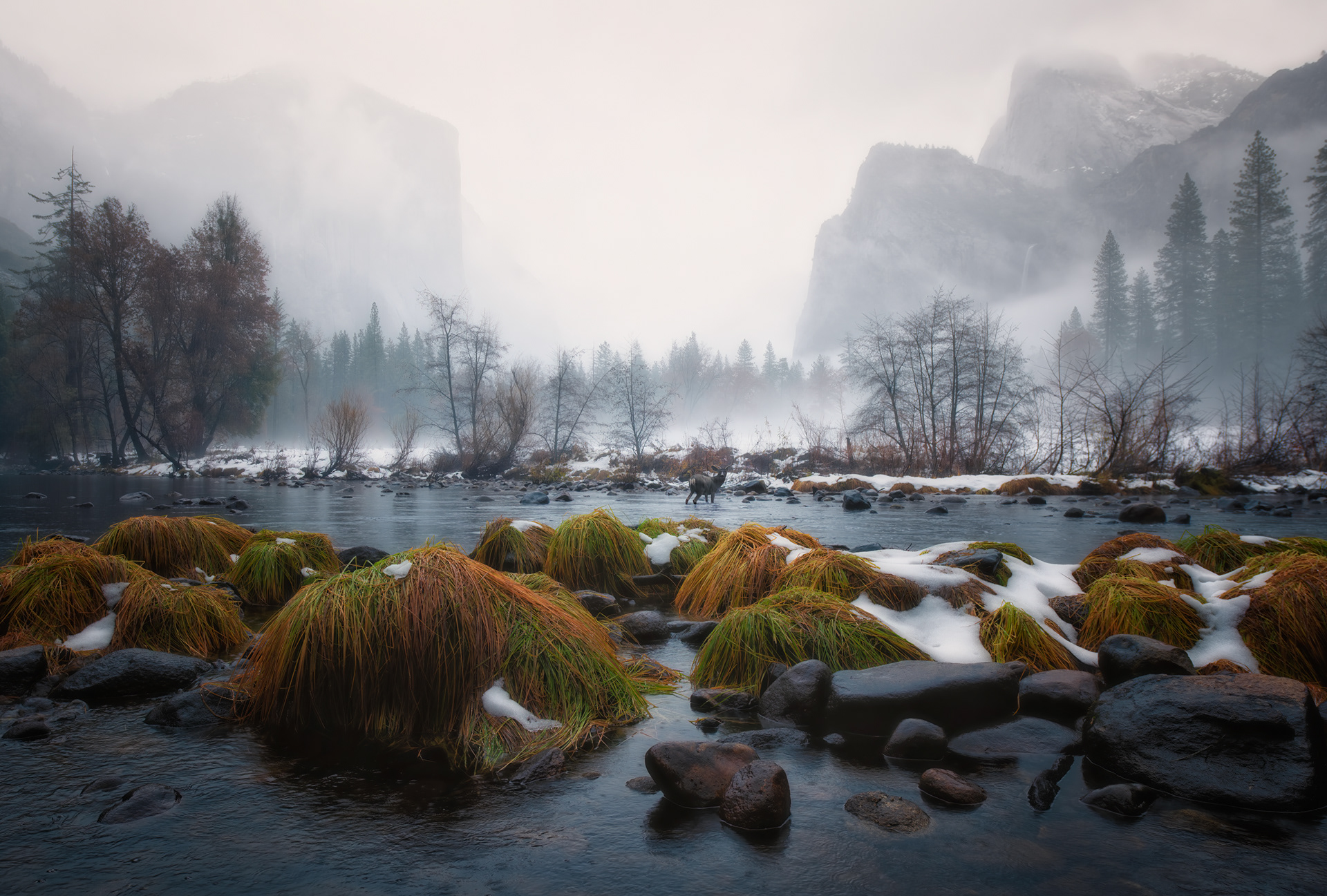
You get up before it's light, alone, sometimes into weather nobody sane would call optional, because that's the toll for a morning like this one. Everyone else is still asleep. And then a mule deer picks its way across the Merced, unhurried, moss still green on the rocks despite everything — and you're the only person awake to see it happen.
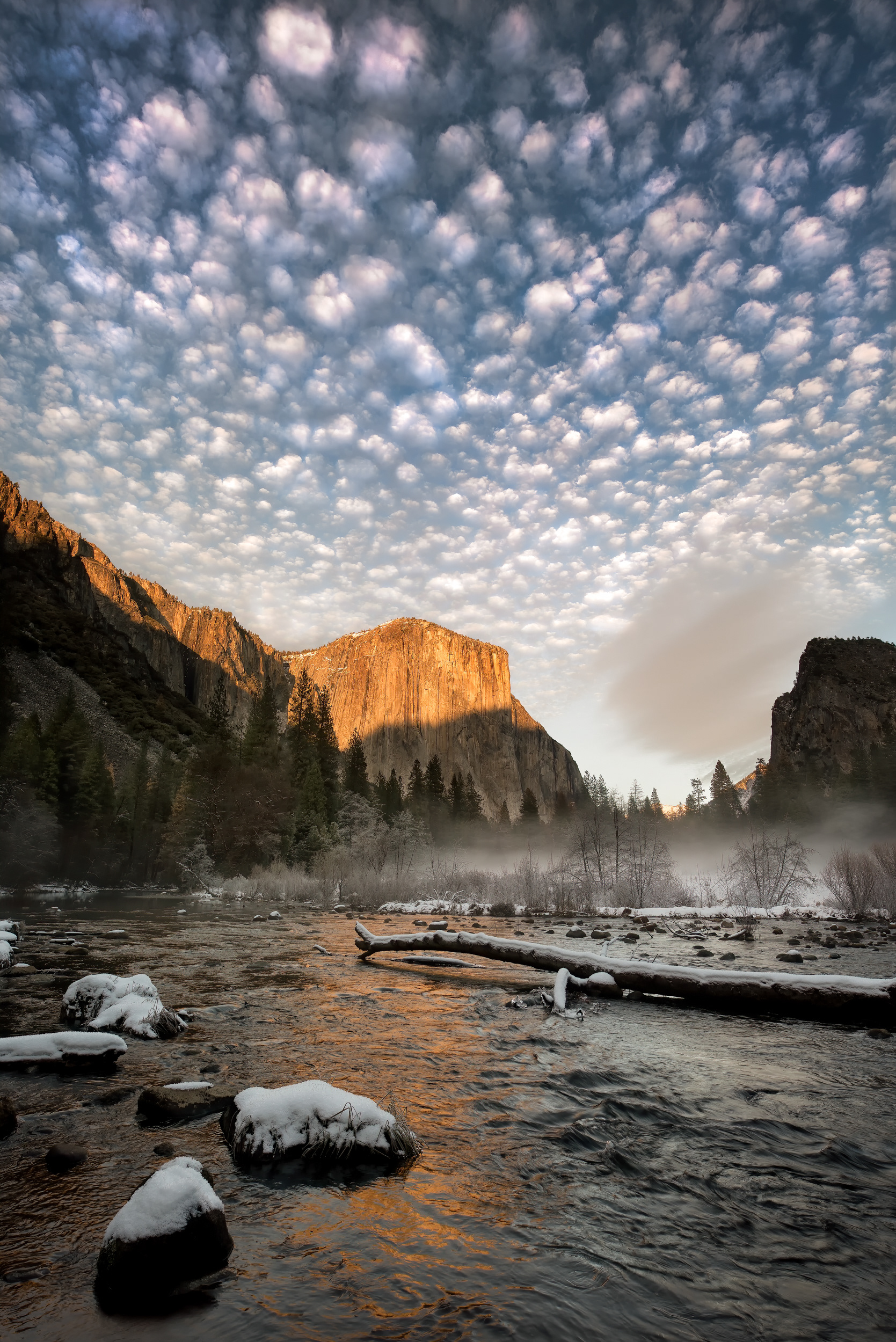
That sky, for what it's worth (and it's worth exactly as much as knowing the name of something helps you enjoy it more, which — debatable, but let's proceed as if yes) is altocumulus: mid-level, 6,500 to 23,000 feet, cloudlets bigger than a fingernail at arm's length, each one gray-shaded on its underside like it's self-conscious about something. It's the deck you get behind a clearing storm, specifically. Underneath it, for a few minutes nobody scheduled, El Capitan goes gold and the river's still steaming off last night's cold.
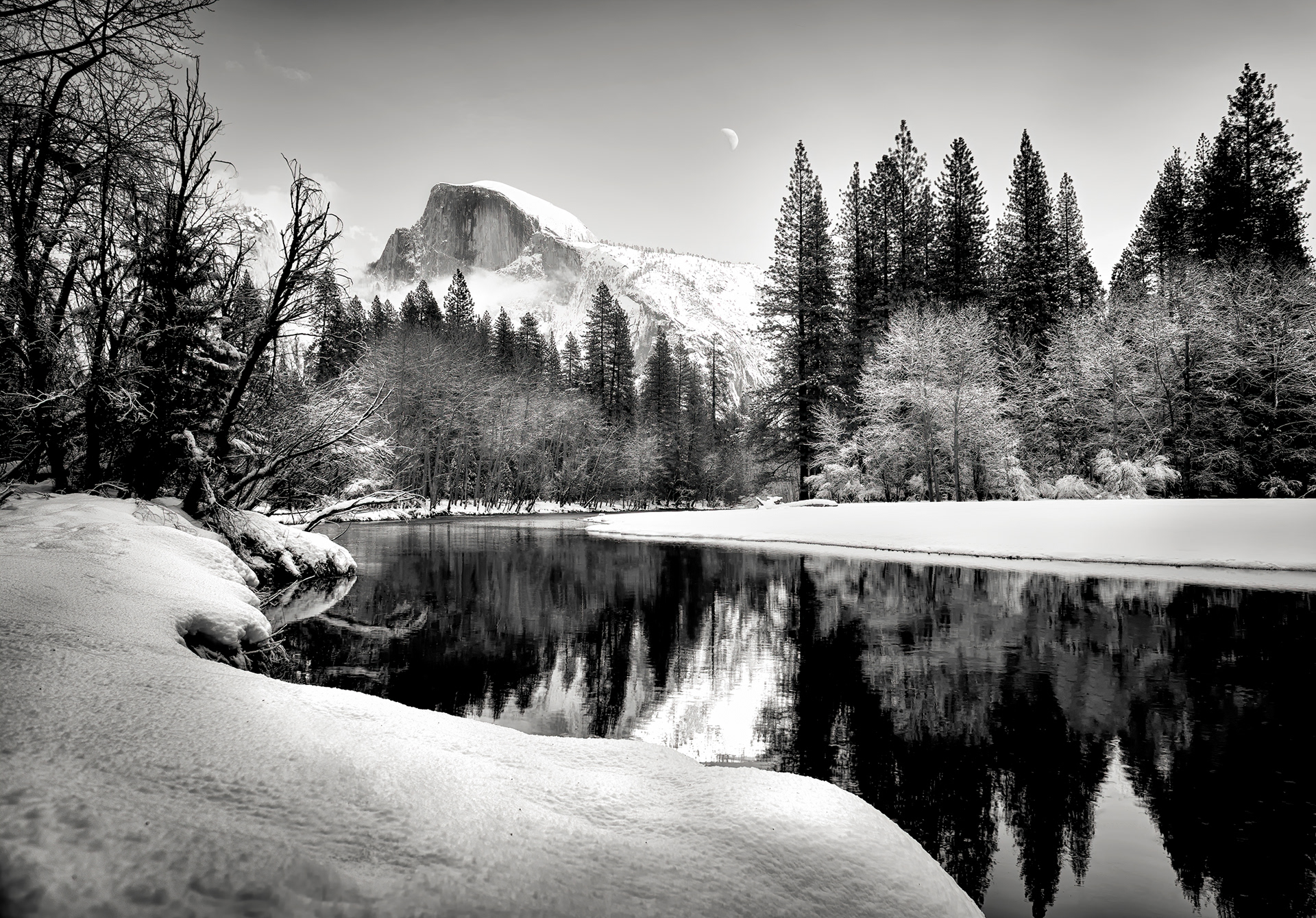
Half Dome isn't missing a half — never was, actually, though try telling that to your eyes right now (they're very committed to the bit). From the valley it reads like something sheared it clean off, but geologists figure as much as 80 percent of that "missing" northwest face might still be sitting right there; what you're seeing is a thin ridge of rock turned edge-on, ordinary erosion and jointing taking credit for what looks like one catastrophic decision. That's a crescent moon parked just off the summit, by the way, doing exactly what it does every day whether or not the sun's out to make it feel awkward about it — daytime moons aren't rare, we just don't look up enough to catch one. The Ahwahneechee called the dome Tis-sa-ack. Those dark streaks are lichen. One older account insists they're a young woman's tears instead, and of the two explanations, I know which one I'd rather have caption duty on
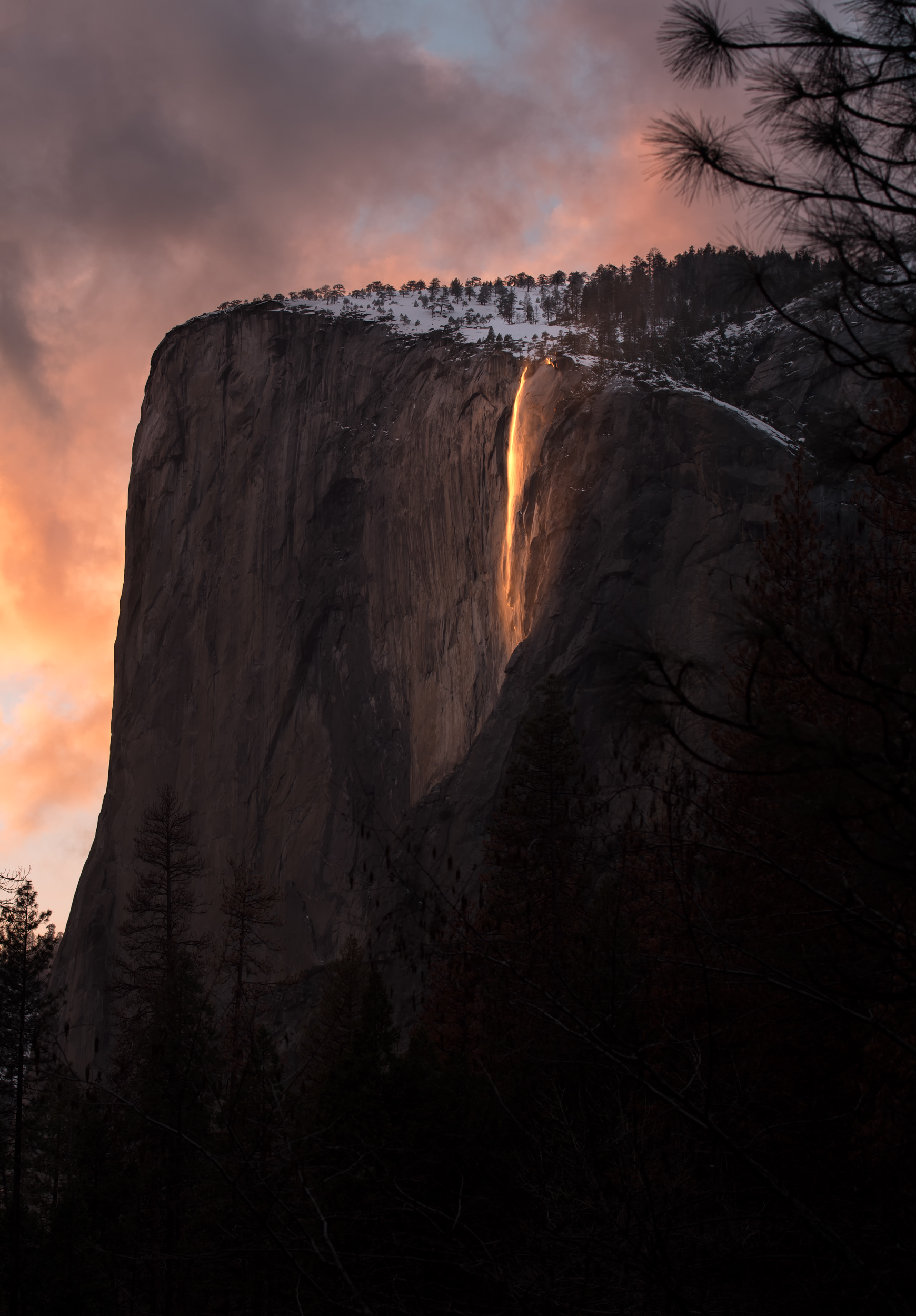
For about ten minutes on maybe fourteen afternoons a year, Horsetail Fall goes the color of a coal fire — snowmelt lit from behind at the one sunset angle that makes water look like something it isn't. None of that depends on you. The snowpack feeding the flow fell weeks earlier and thousands of feet higher; the sky has to stay clear not overhead but along the entire western horizon, sometimes a hundred miles off, or the light never arrives at the right color to begin with — which is a version of an old argument about tennis: that what looks from the stands like one player's singular, earned, dazzling moment is usually just the visible tip of an enormous submerged pile of circumstance. You show up with a camera. The rest got decided somewhere else, earlier, by weather you never met.
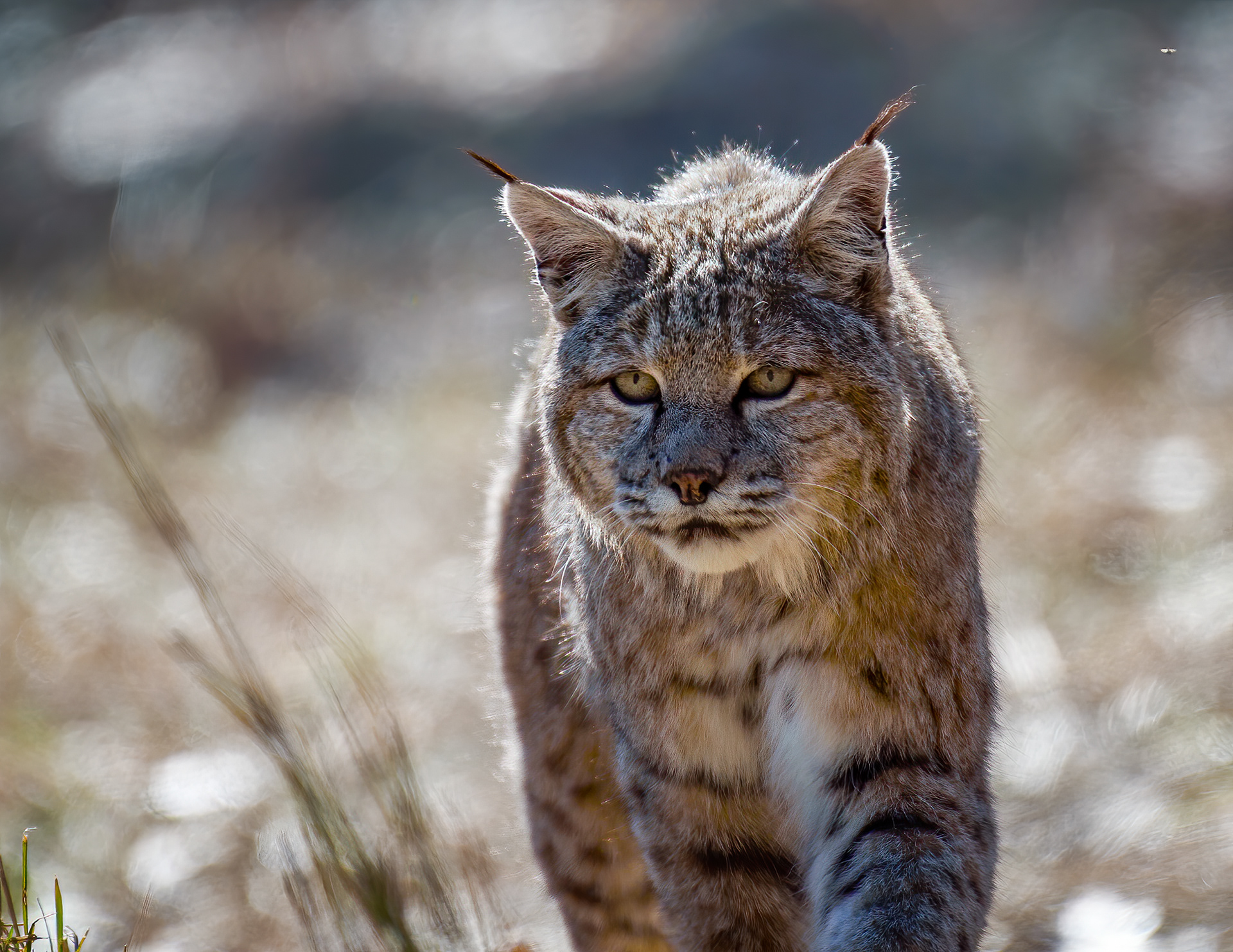
Bobcat, valley floor, a little after eight in the morning — later than these cats are supposed to be doing this. It had a hole staked out in the grass, crouched dead still over it, then wasn't crouched anymore — it was walking straight at me with a pocket gopher in its mouth, plucked out of the exact hole it had been watching. No bait, no blind. Just a wild cat working a late breakfast
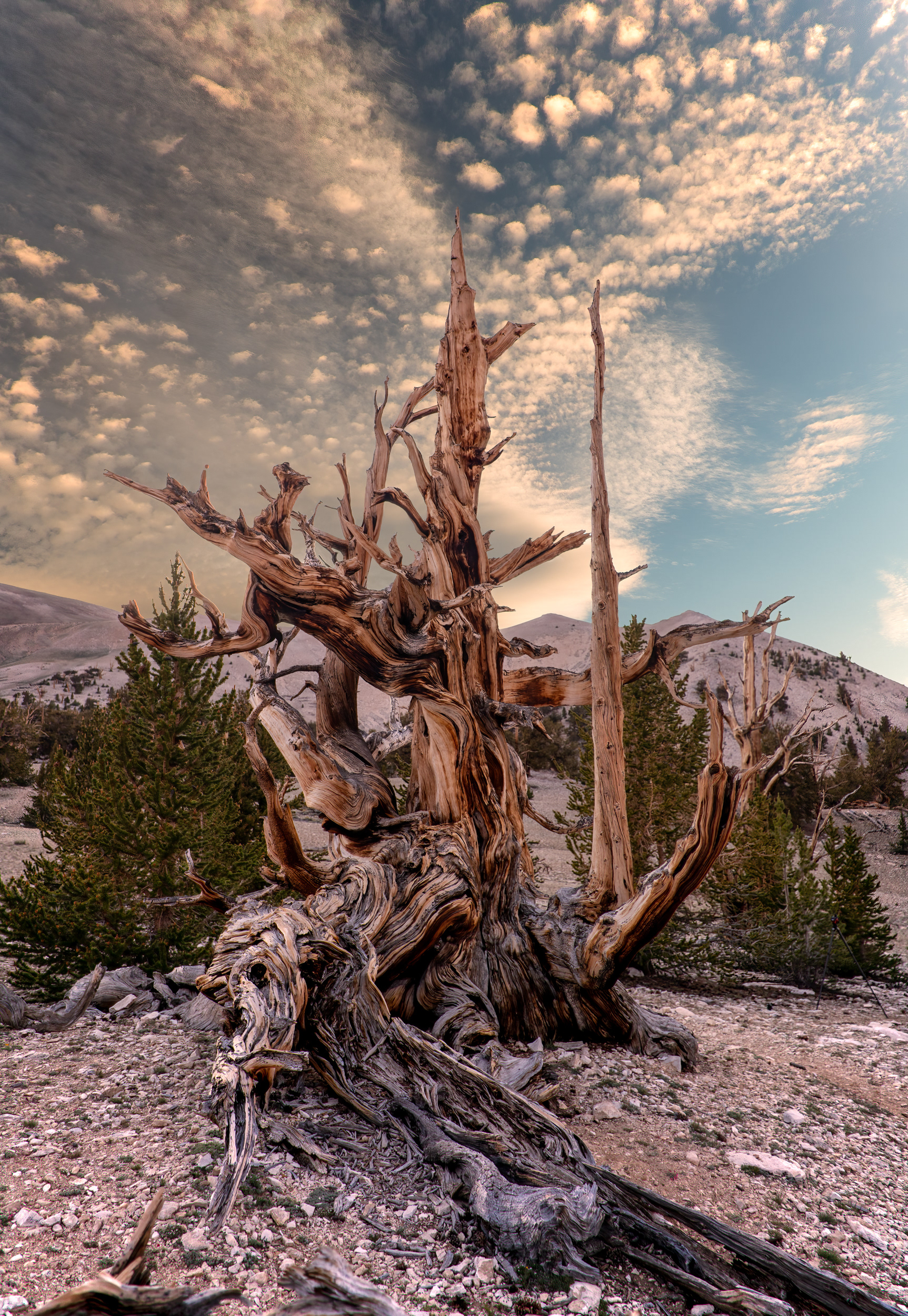
Great Basin bristlecone pine, White Mountains, above 9,500 feet — reached this one in 4-low, off the beaten path, with a drop-off steep enough to keep you honest. A species that includes the oldest known non-clonal living things on Earth, some pushing 4,850 years, already old when the pyramids were new. The trick isn't surviving despite the hardship up here. It's surviving because of it — cold, almost no rainfall, and soil too alkaline for much else to compete for, forcing growth so slow the wood turns too dense for rot or insects to bother with
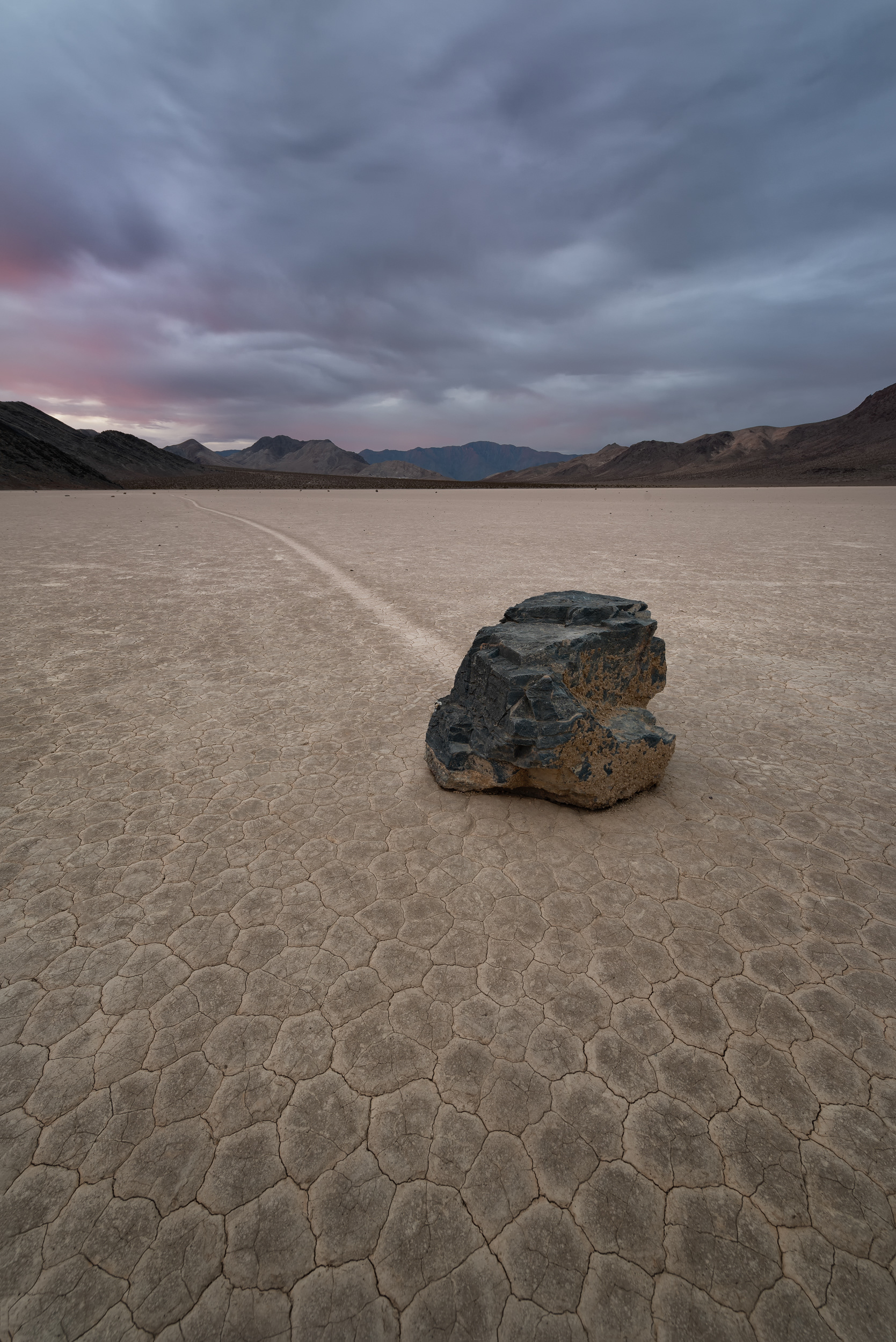
Racetrack Playa, dawn, a 4-second exposure to pull enough light out of the sky. The rocks here move on their own — trails scratched into the mud stretch up to 1,500 feet — and nobody actually knew why until 2014. Turns out it takes a thin sheet of ice from an overnight rain, morning sun to melt it just enough to float, and wind to do the pushing. Take away any one of the three and the rock just sits there being a rock, the way it does everywhere else on Earth.
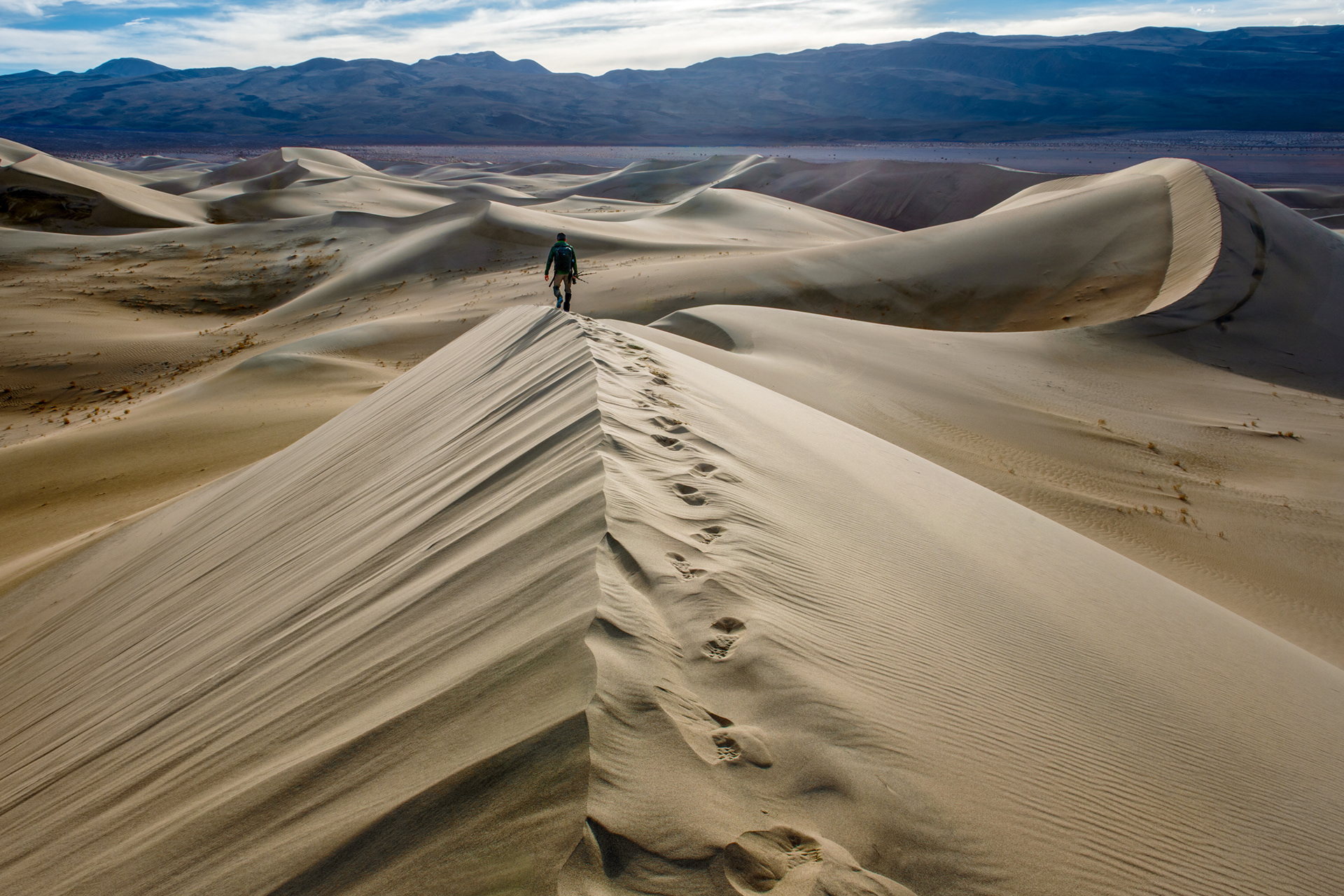
Mesquite Flat, Death Valley, late afternoon, the ridgelines throwing the kind of shadow only a low sun gives you. Despite the name of the park, dunes like this are rare here — it takes loose sand, wind to move it, and mountains on both sides to keep it from just blowing away, and that combination barely exists in Death Valley at all. One figure walking the ridge, one line of footprints the wind will have opinions about by morning.
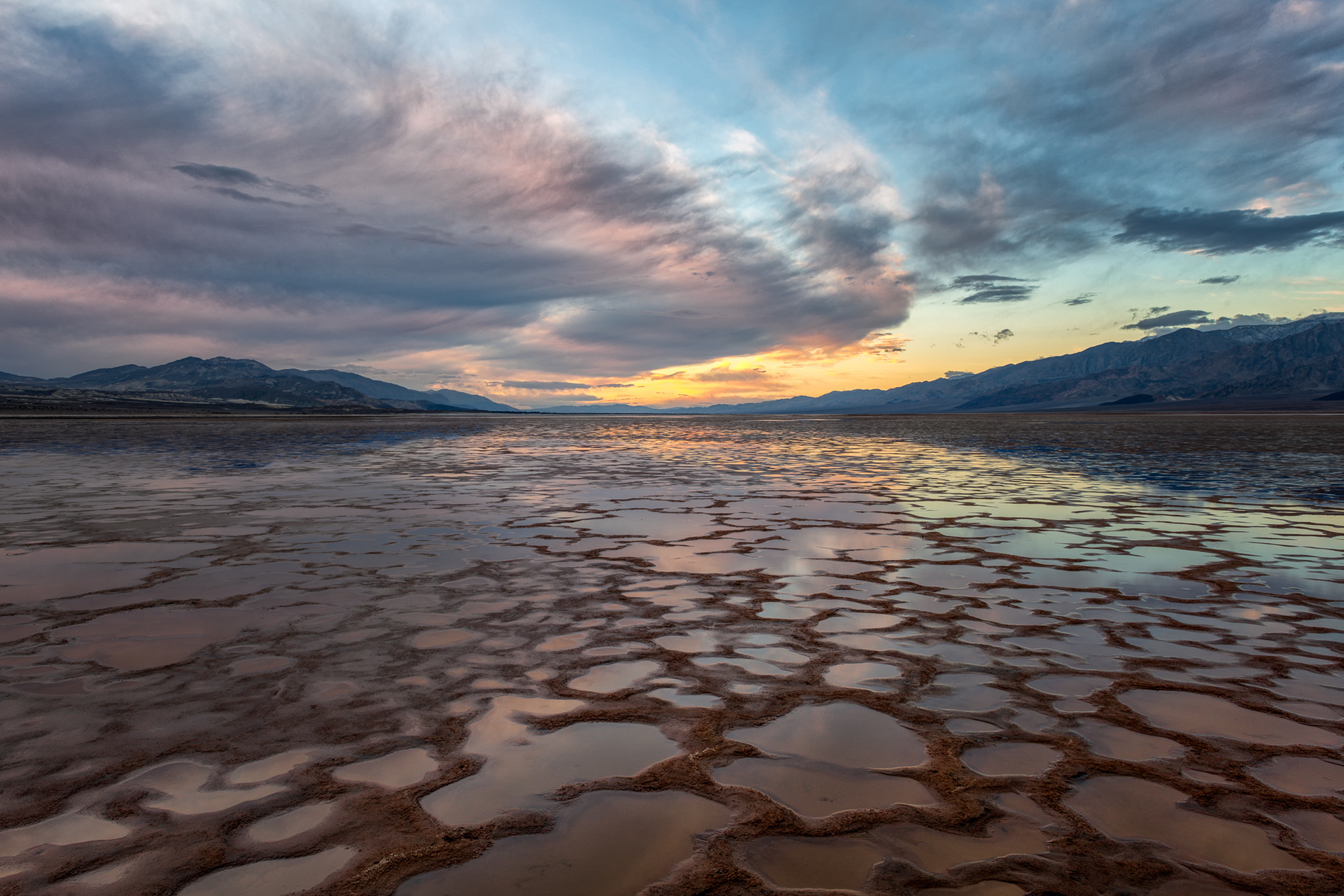
Badwater Basin, Death Valley, mid-morning — 282 feet below sea level, the lowest point in North America, with a small sign bolted to the cliff face above marking where sea level actually is, in case the couple hundred feet of air over your head weren't making the point clearly enough. The polygons underfoot aren't carved or arranged by anyone. Groundwater rises up through the salt deposits, evaporates, and leaves the crust a little thicker each cycle, over however many years it took, until the cracks settle into a pattern that looks too geometric to be an accident and is one anyway. The name traces back to a nineteenth-century surveyor whose mule flatly refused to drink from a spring-fed pool here. Turns out the water's just salty, not actually bad — but nobody circled back to rename the place once that got sorted out, so it's been Badwater ever since, on the word of an unimpressed mule
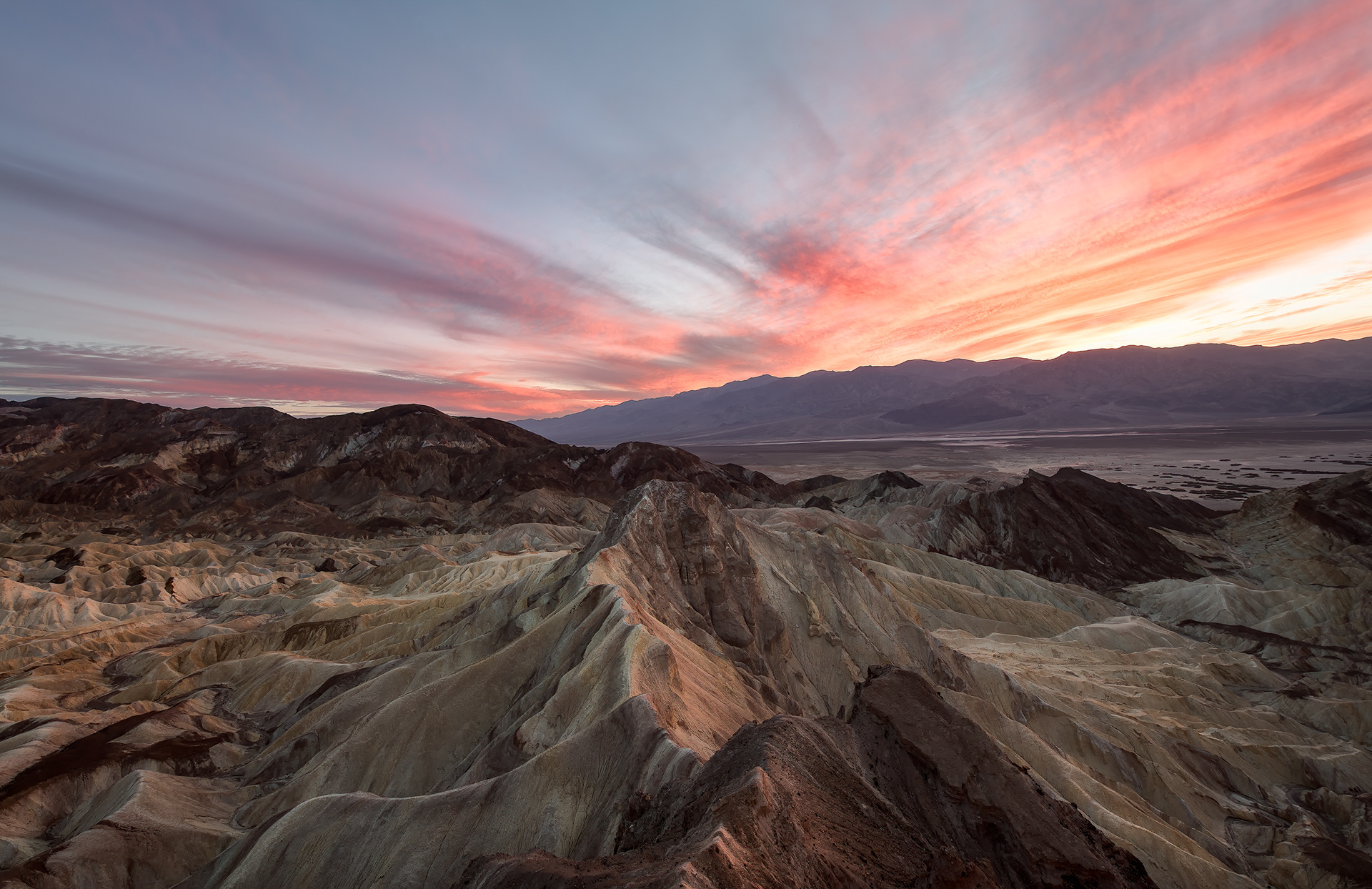
Zabriskie Point, sunset, Death Valley — shot from a ridge above Golden Canyon, near Red Cathedral, well off the paved overlook everyone else uses. These badlands are the floor of a lake that started filling in roughly nine million years ago: saline mud, mountain gravel, layer after layer of volcanic ash, all left high and dry once the climate turned and the lake just stopped existing. Manly Beacon stands taller than everything around it not because the rock's any tougher, but because a hard cap of 3-to-5-million-year-old lava happened to land on it and slow the erosion down. Named for Christian Zabriskie, an executive at the borax company whose twenty-mule teams once hauled ore out of this same valley
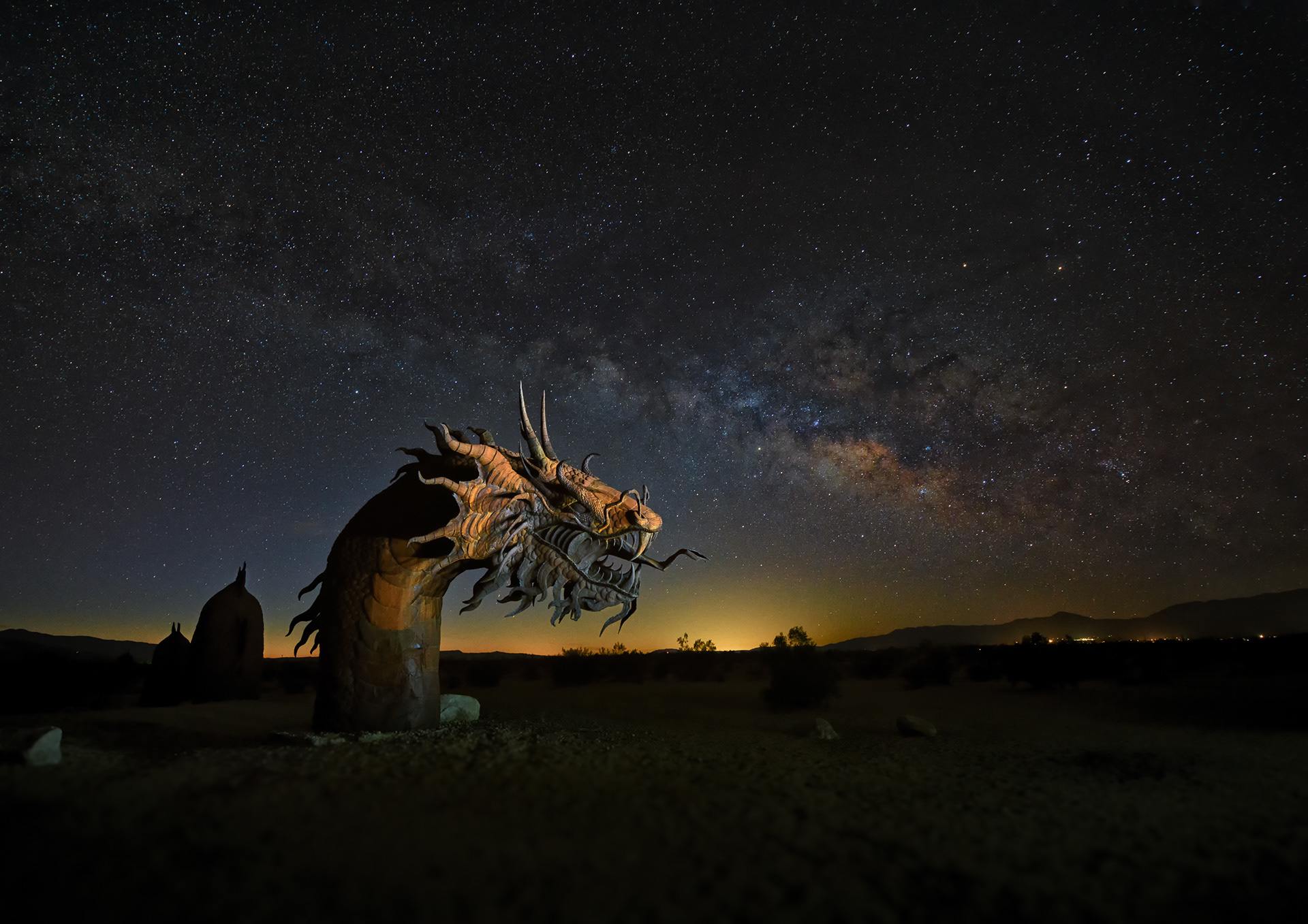
Galleta Meadows, before dawn — 350 feet of welded-metal dragon snaking through the sand under the Milky Way, a 20-second exposure at ISO 3200 doing the work a normal shutter never could. Most of the roughly 130 sculptures scattered across this private, unfenced estate are modeled on animals whose actual fossils were once dug out of this exact desert. The dragon isn't one of those — no fossil, no science, just a dragon. Made by Ricardo Breceda, a self-taught welder who started all of this by building his daughter a 20-foot Tyrannosaurus rex for Christmas because she'd just seen Jurassic Park III and asked.
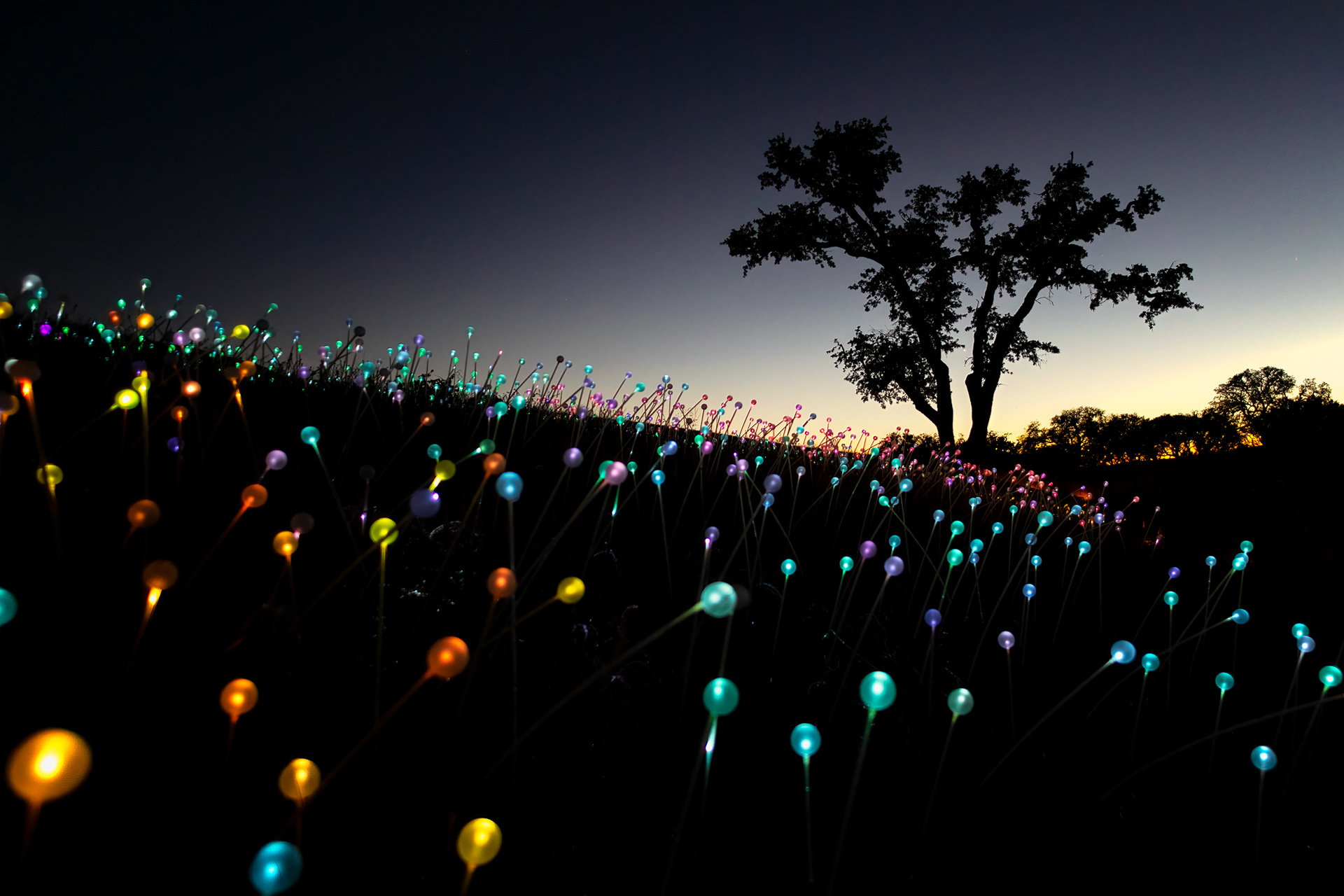
Field of Light, Sensorio, Paso Robles, dusk — roughly 100,000 solar-powered fiber-optic stems across 15 acres, all of it running on 92 solar panels and nothing else. Bruce Munro sketched the idea in 1992, standing at Uluru on a road trip with his fiancée, picturing stems that wait through the day like dormant seeds and only bloom once it's dark. Then he did nothing with it for twelve years — the drawing just sat in a sketchbook, waiting, which is either a coincidence or exactly the point.
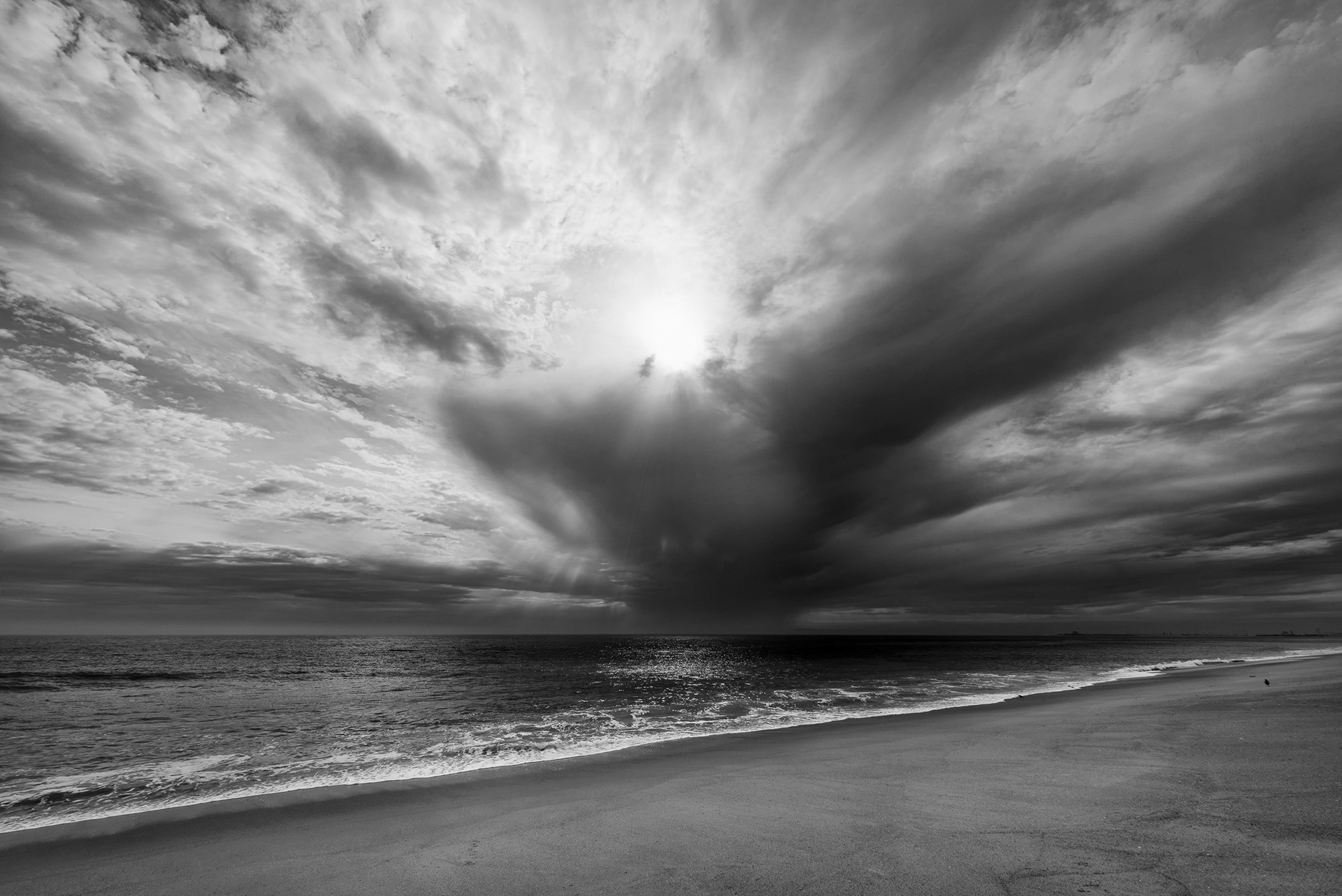
A storm cell off the Southern California coast — genuinely rare here. Thunderstorms need moisture, instability, and lift, all three, at the same time, and this coastline can usually only manage one or two. September is the one dependable window, when the tail end of the North American monsoon drags tropical moisture up from Mexico and the ocean, for once, stops being the thing that shuts the whole process down. Black and white, because the storm did the composition's work on its own.
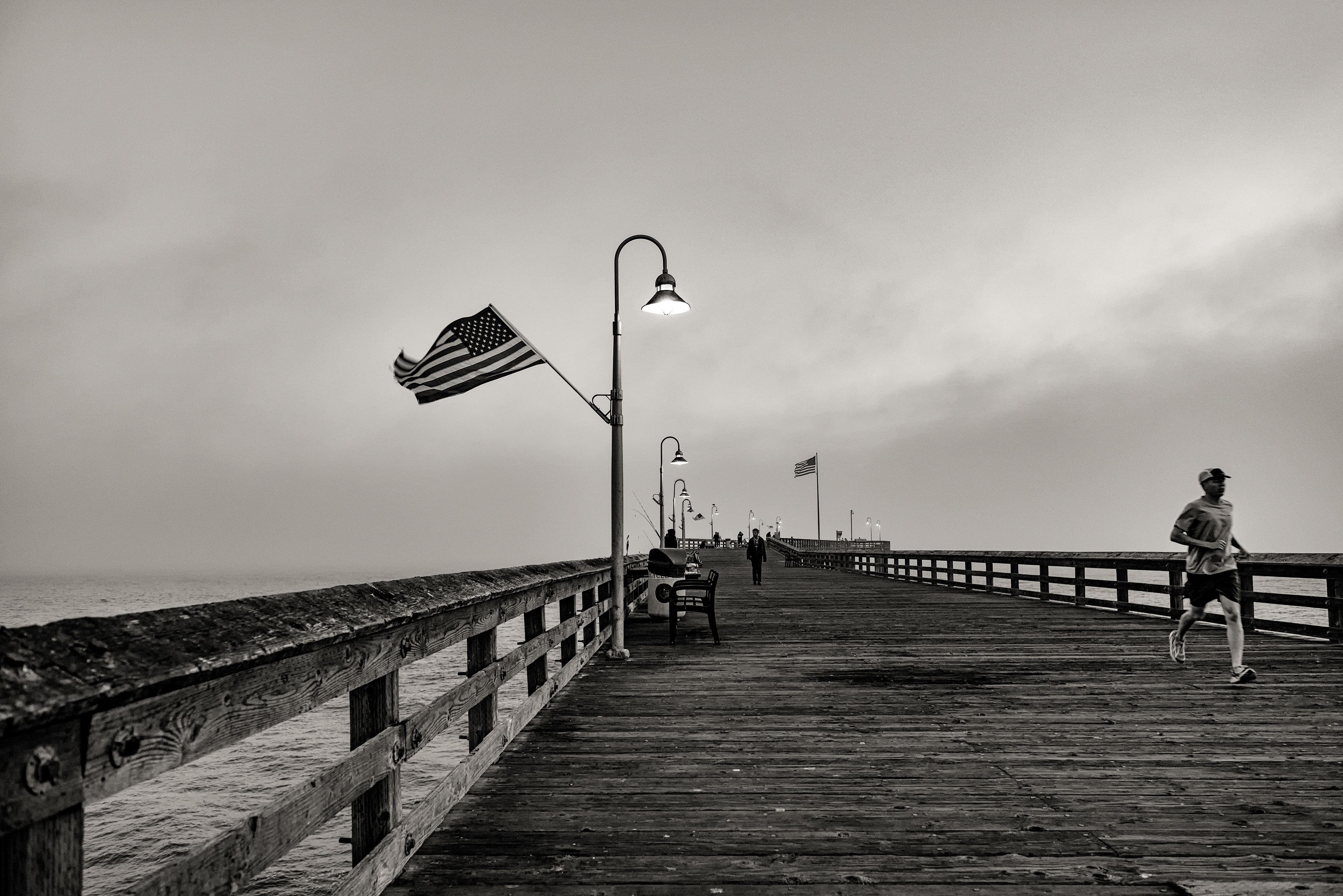
Ventura Pier, evening fog, black and white. Built in 1872, first as a commercial wharf for shipping lumber, produce, and crude oil out before roads made that unnecessary. Once California's longest wooden pier, just under 2,000 feet — until a December 1995 storm sheared off 420 feet of it in a single night, on top of a ship fire, a steamer collision, and half a dozen other storms across the century before that. What's left still stands, now used for fishing, walking, and, here, a jog through the fog
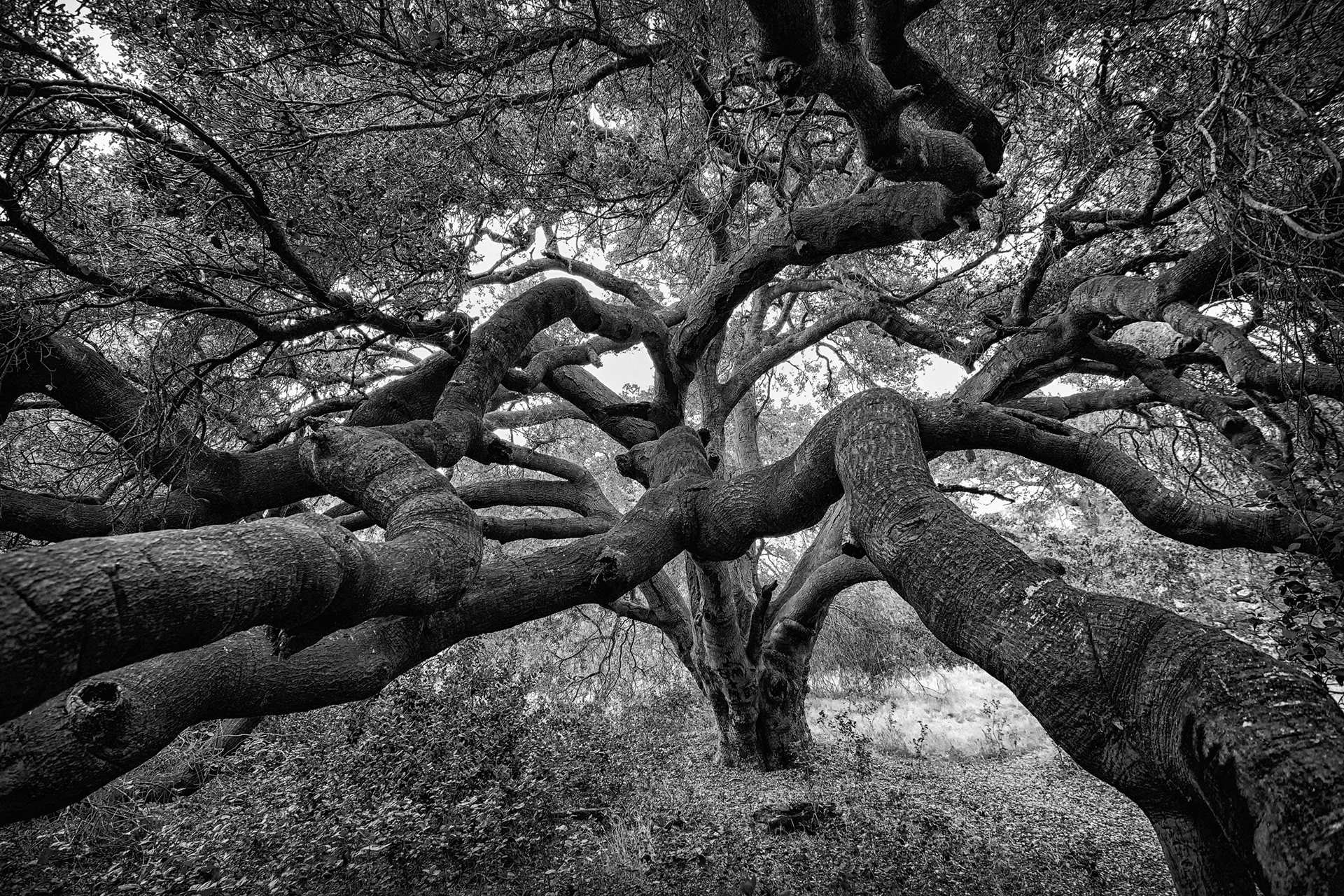
Coast live oak, black and white, evening light. The gnarled shape isn't damage — it's just what these do: a short trunk giving way almost immediately to branches that spread wider than the tree is tall, until the whole thing looks less like it grew and more like it was wrestled into position. Evergreen year-round, unlike most oaks, so it never actually goes bare. Acorns were a staple here once, leached of their bitterness in running water and ground into flour, long before it occurred to anyone else that a bitter, inedible-looking nut was worth the effort